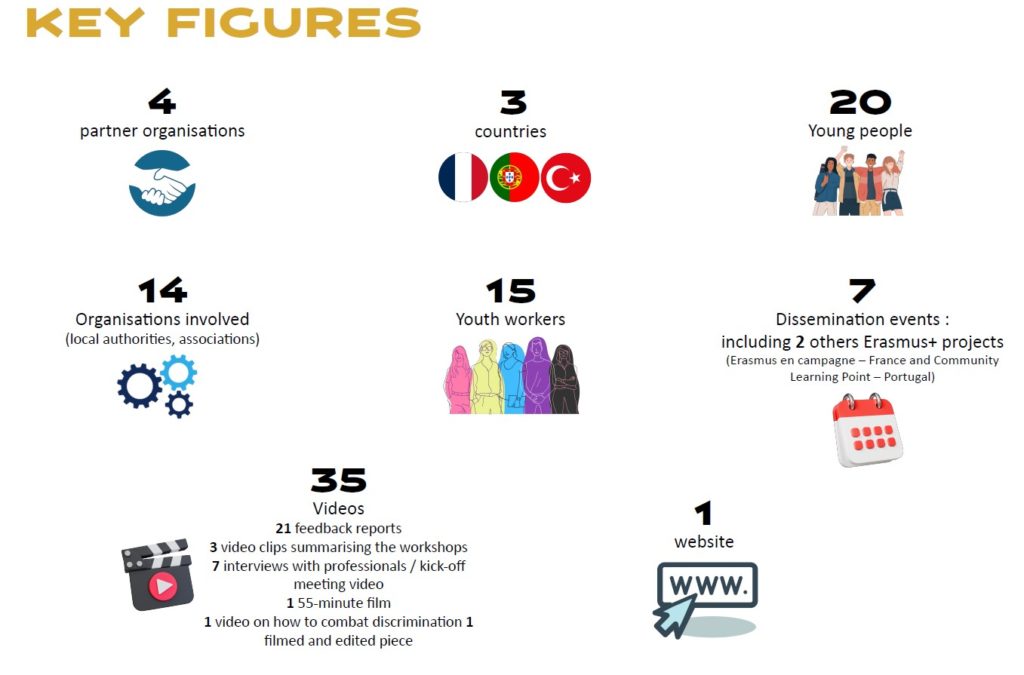
Our project was born in France in 2019. In 2025, we are giving it an international dimension. With the complicity of ÉTUDES ET CHANTIERS, we are forming a partnership with two other structures to develop this project in Europe. In Portugal, ACRADE SALAMANDRA ACTIVA ; in Türkiye, IKOS.


This project benefits from the support of the European Union.


Funded by the European Union. Views and opinions expressed are however those of the author(s) only and do not necessarily reflect those of the European Union or the European Education and Culture Executive Agency (EACEA). Neither the European Union nor EACEA can be held responsible for them.
Kick Off Meeting
From March 15th to 17th, 2025, we met for a three-day workshop. This kick-off meeting allowed us to get to know each other better and to project ourselves more concretely into this project.
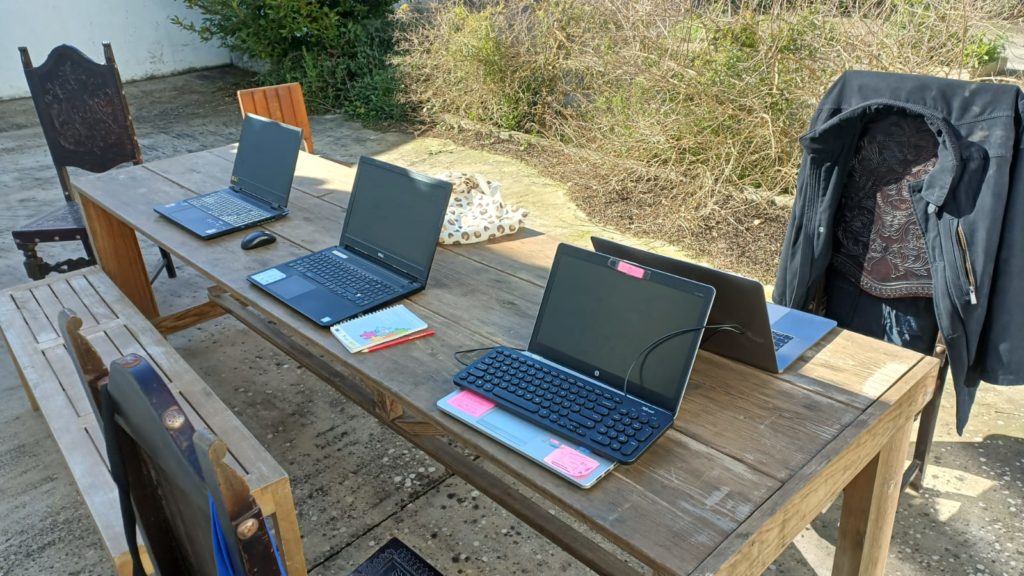
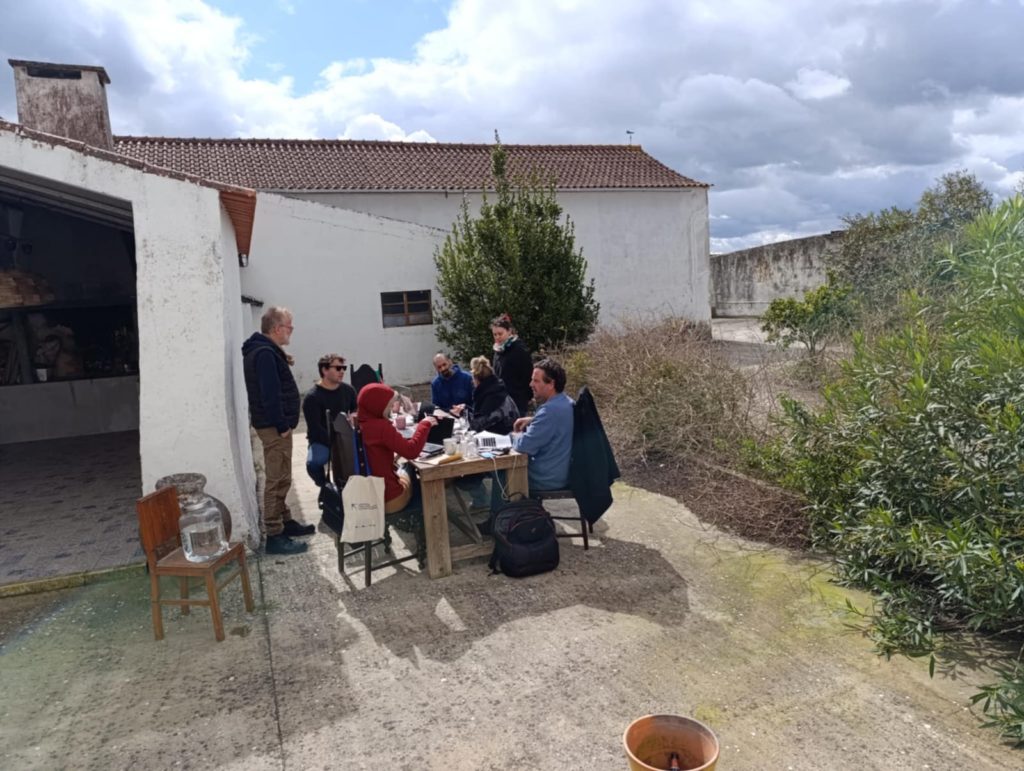
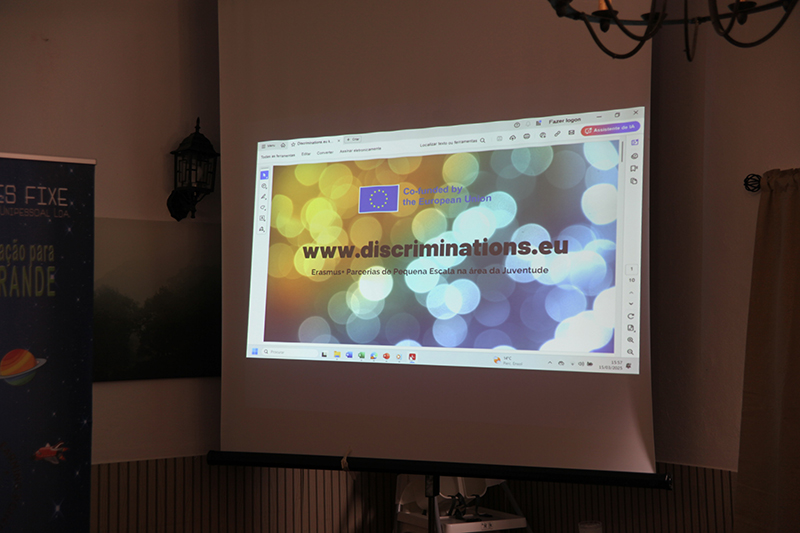
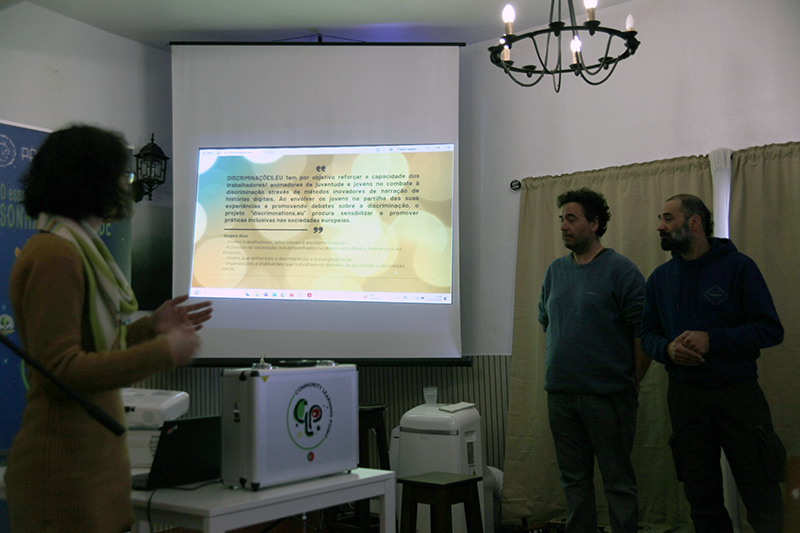
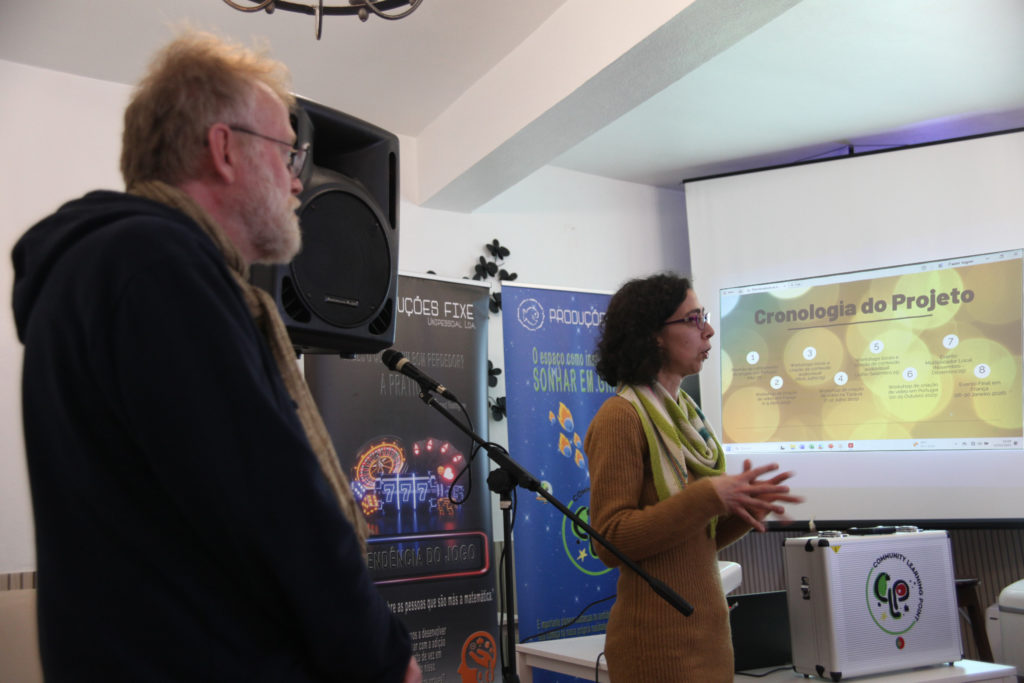
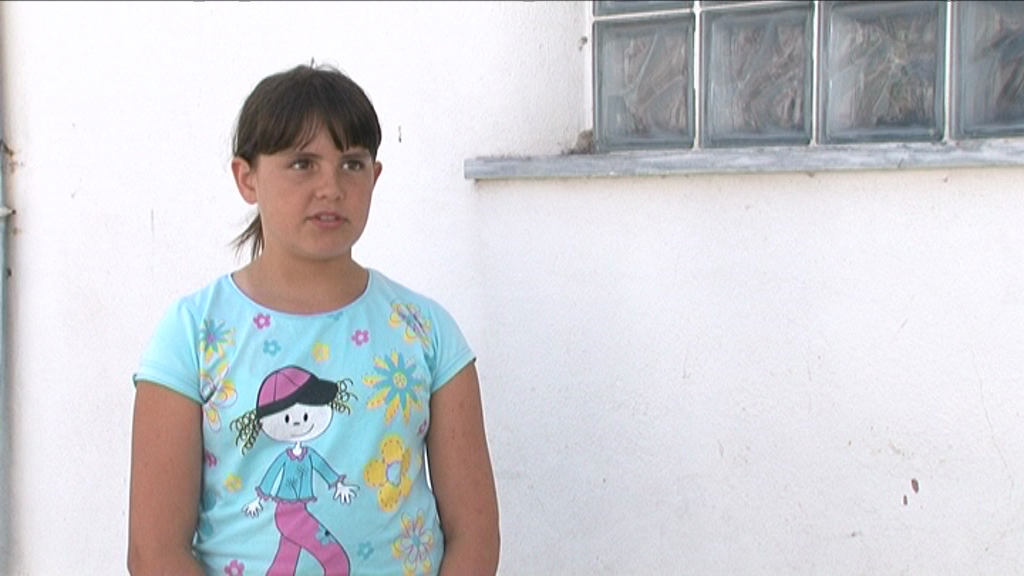
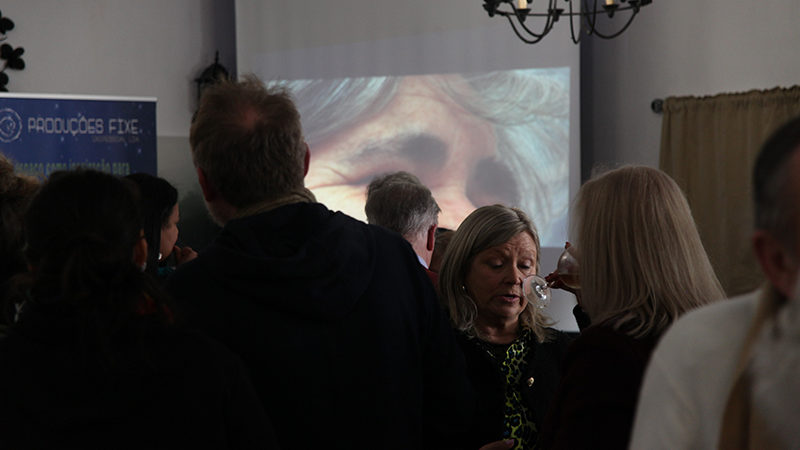
Our meeting took place in Vila de Marmeleira, Portugal, where we were offered to present our project during a local event organized by Produçoes Fixe. This presentation brought together more than fifty people. On this occasion, we were also able to screen a film, “Vila de Marmeleira faz um filme!”, which POINT BARRE had made in 2012 with the help of children from the village. Some of them were present in the audience.
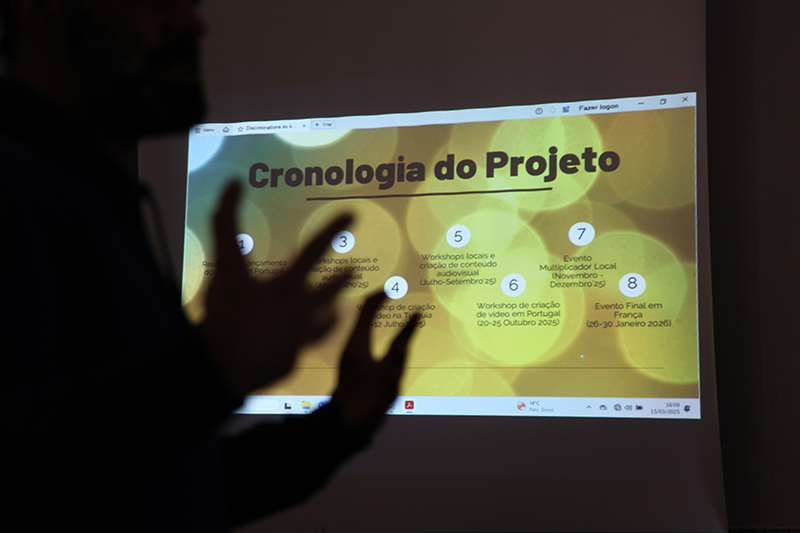
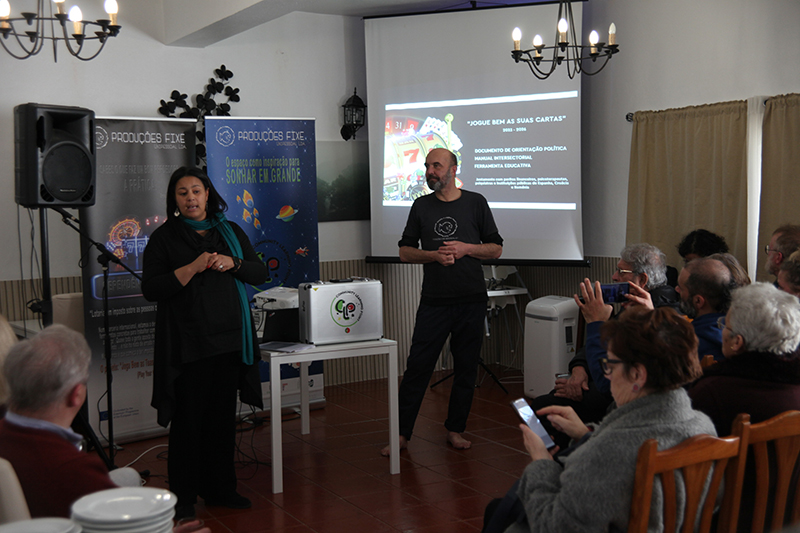
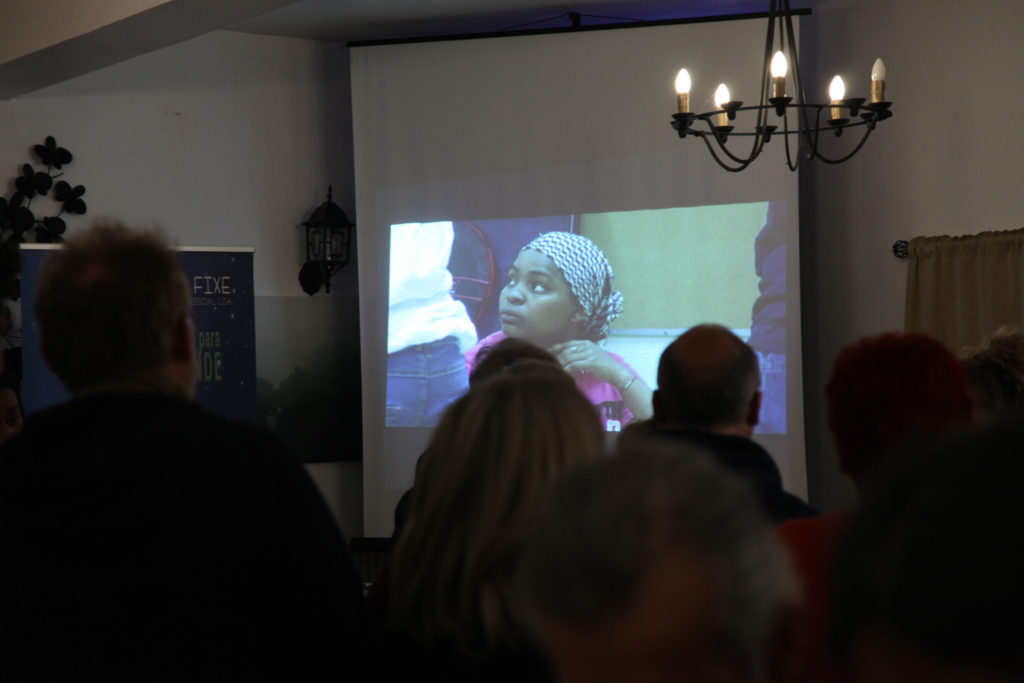
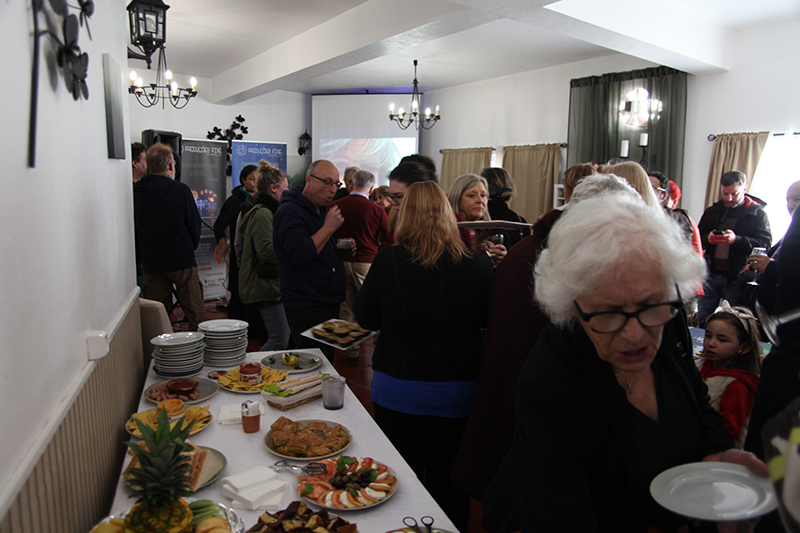
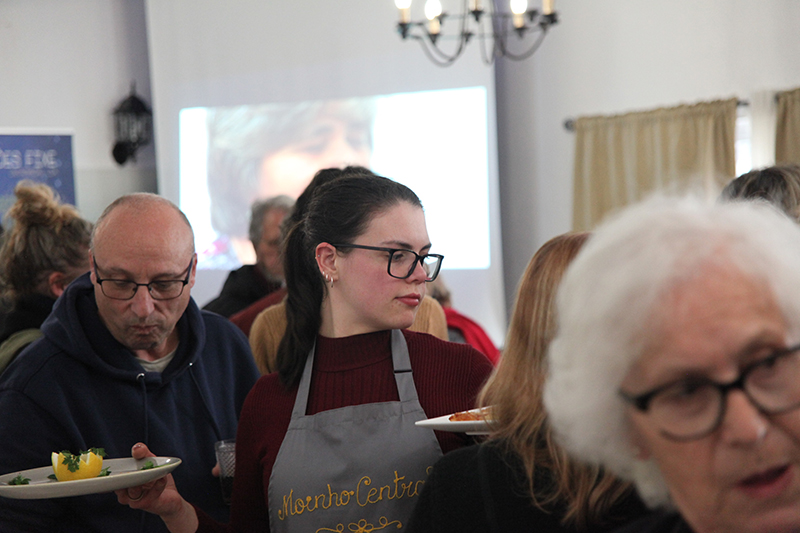
The event continued with a moment of conviviality around French songs.
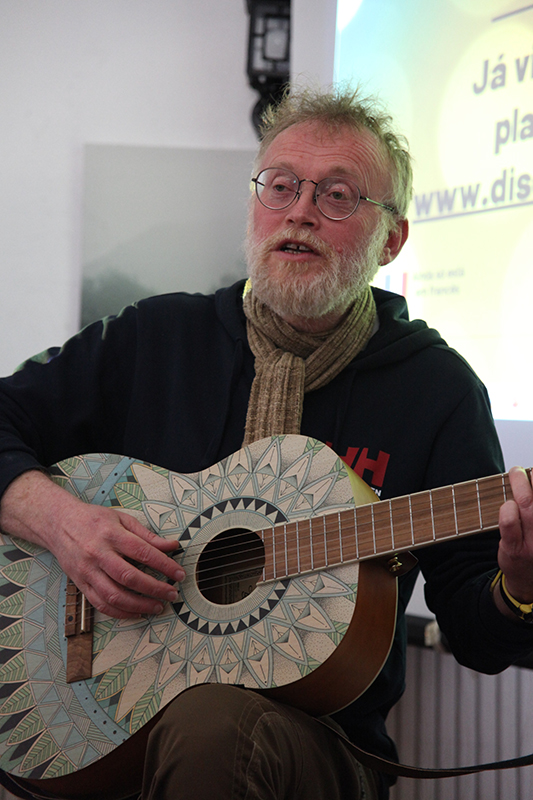
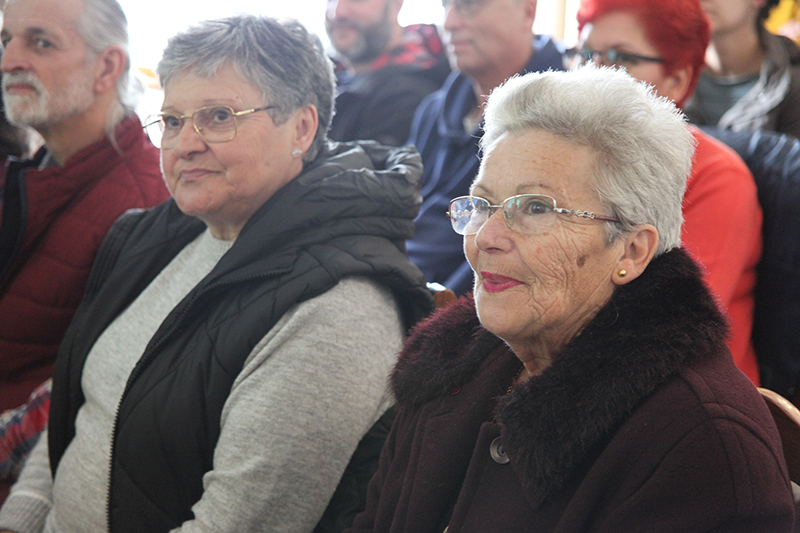
During these working days, we were able to refine each other’s missions and responsibilities, adjust and concretely launch activities.
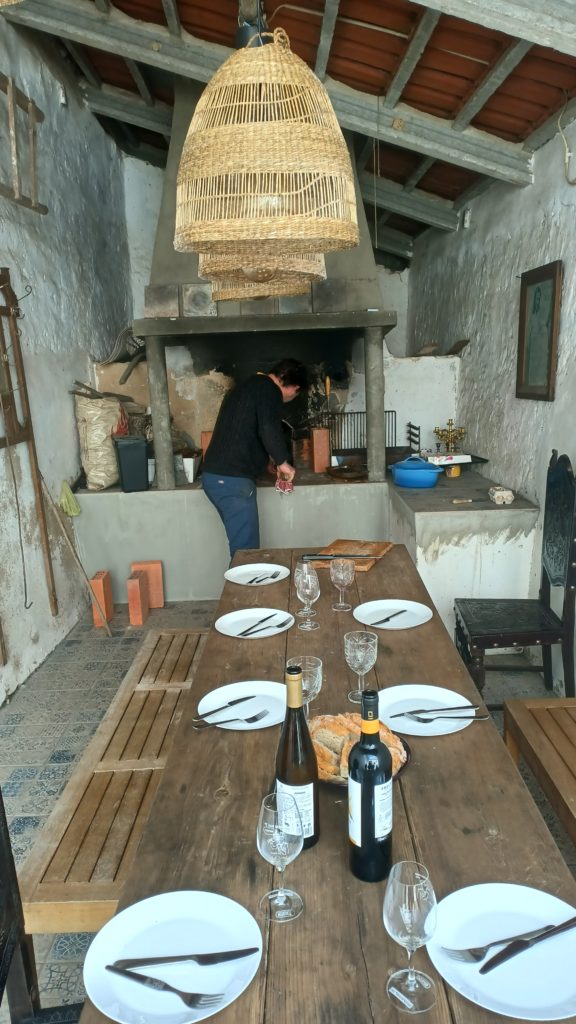
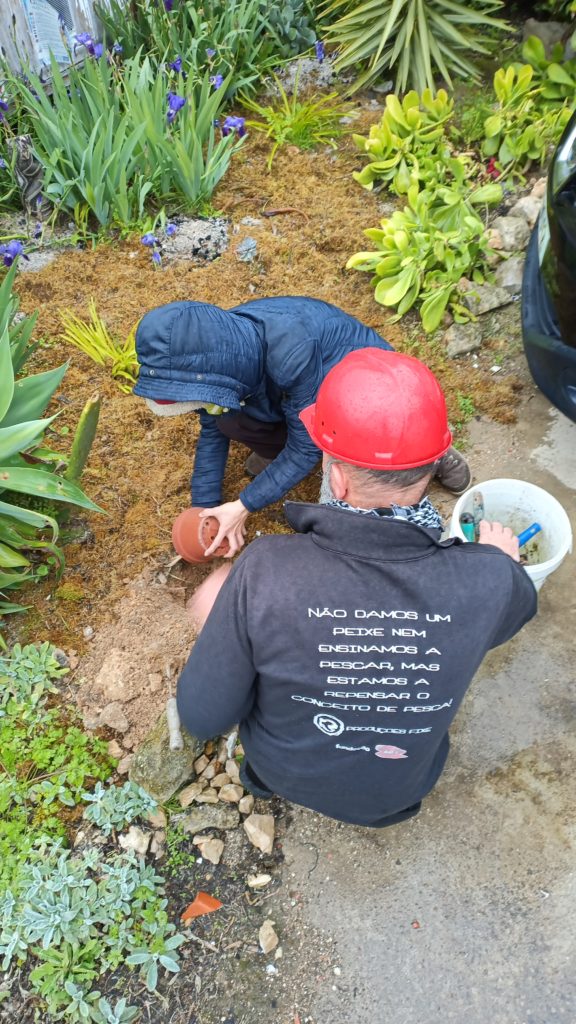
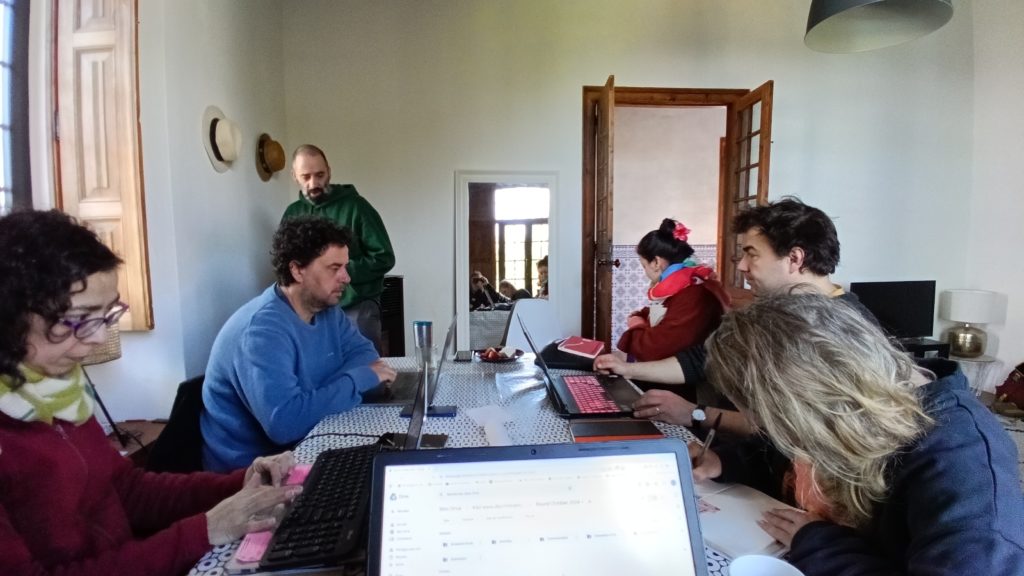
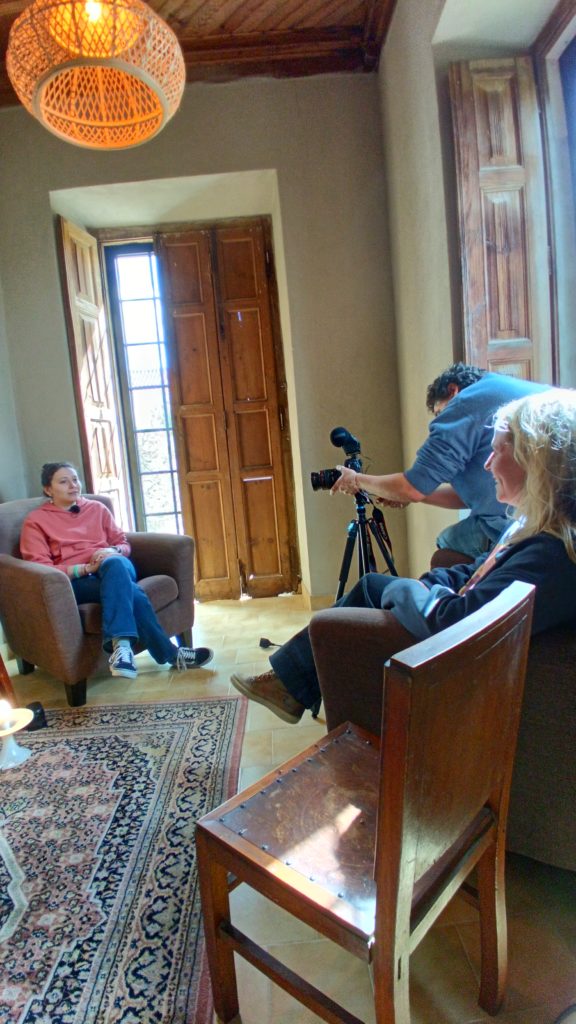
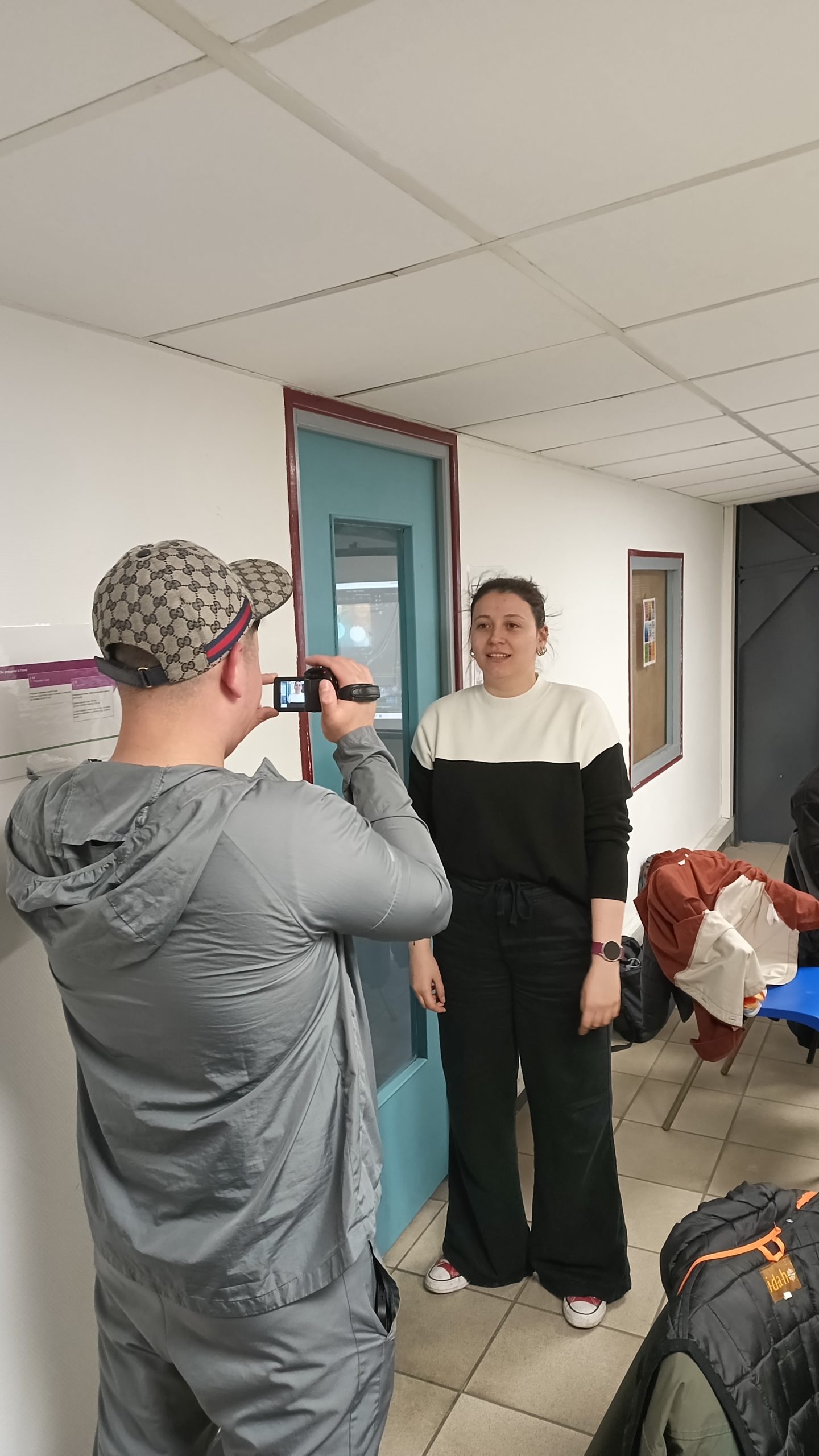
To get into the action, we carried out initial interviews to present the project, where everyone was able to be in front of and behind the camera.
By the end of week, we went to Fátima to see the place where our action will take place in Octobre 2025.
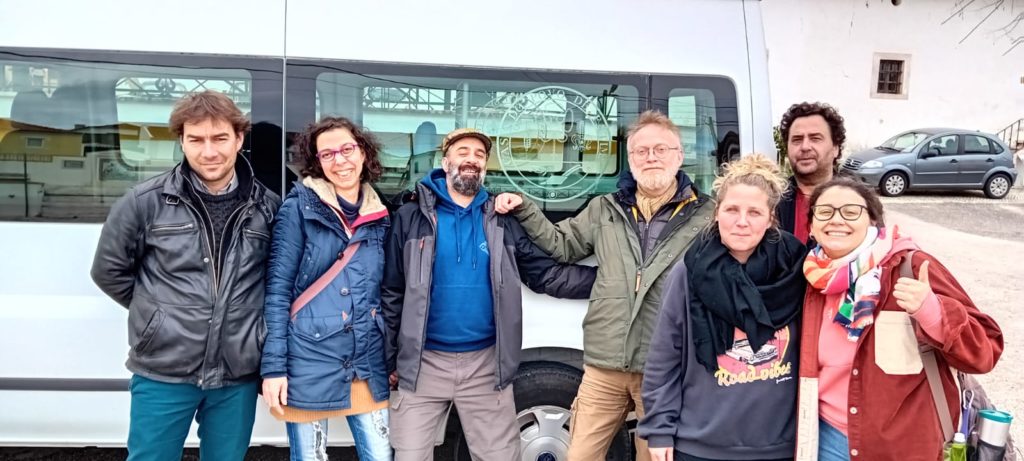
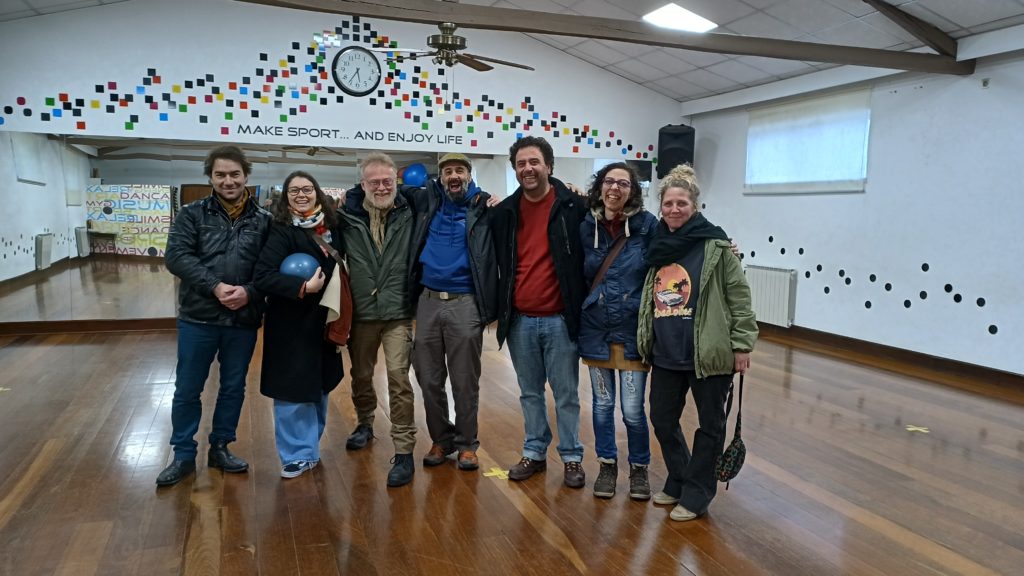
But, first, let’s meet in April in Le Mans.
See you soon !
First workshop “discriminations.eu” – Le Mans – France
From 31 March to 4 April 2025, we held our first workshop in Le Mans (Sarthe, France). The 7 young people on vocational contracts (maintenance of green spaces) are part of the ‘Le Mans Jeunes’ team within Études & Chantiers. The youth workers from Turkey, Portugal and France were able to carry out the activities defined at the Kick off meeting.
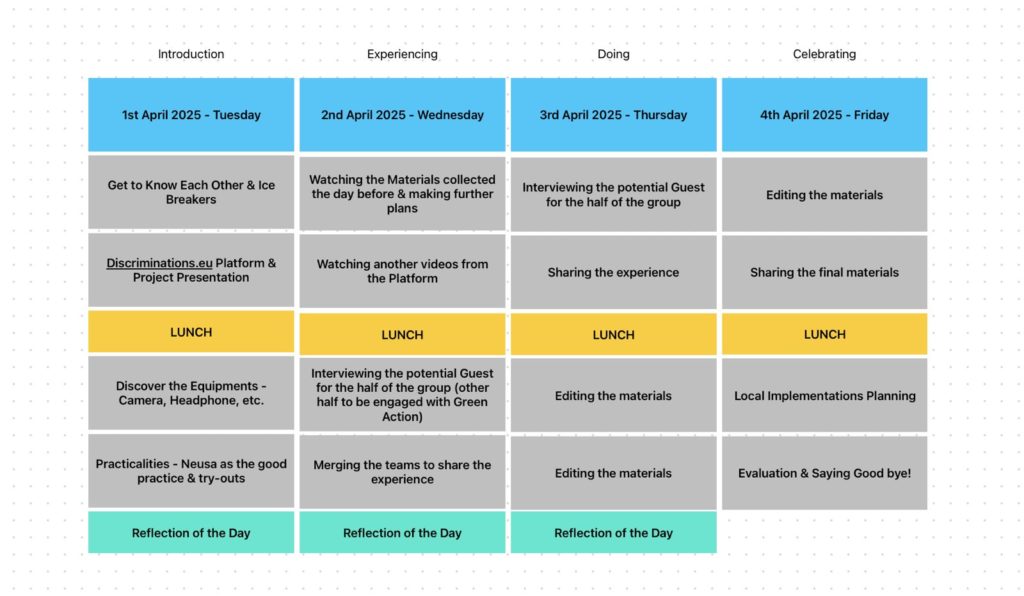
Above, the provisional schedule. Below is the actual schedule.
| 1st april 2025 Thuesday | 2nd april 2025 Wednesday | 3rd april 2025 Thursday | 4th april 2025 Friday |
| Ice breakers “firstname / crosswords / drawings” | Icebreakers / energiser Find out more about the ‘discrimination.eu’ website (testimonies from young people) | Interview « planning familial » | MULTI-ACTIVITÉS Green action – potatoes – seedbombs. Images from the previous day |
| Discovering the ‘discriminations.eu’ website (video A. Morillon) | Subtitling of the ‘discriminations.eu’ presentation video (in europe) | Meal preparation / discovery of the Le Mans 24-hour race circuit (maintained by Études et chantiers) | Croissants / seedsbombs /discover editing software Testimonial interviews |
| LUNCH | LUNCH | LUNCH | LUNCH |
| Energiser / icebreaker Discovering the equipment | Tourné–monté Viewing of the edited film (anti-discrimination prevention spot created by the young people) ► | Interview “mission locale” | Interviews Happy ending (a bit sad) and debriefing with the youngsters. ❤ |
| Installation of the first shooting set interviews | Questionnaire preparation | ♫ ♪ Anniversary Bogdan❤ ♬ ♪ | Good bye & Farewell |
| débriefing | débriefing | débriefing | voyage retour |
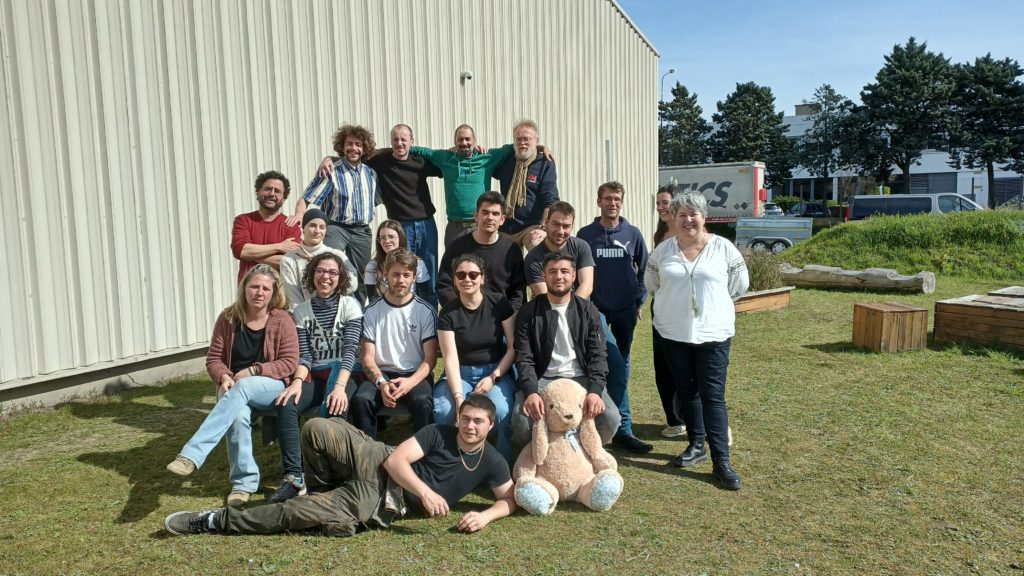
For four days, the group was able to take ownership of the ‘www.discriminations.eu’ project and contribute to it through personal accounts, cross-interviews, activities and social events.
ICE BREAKER: Crosswords & Draw me…
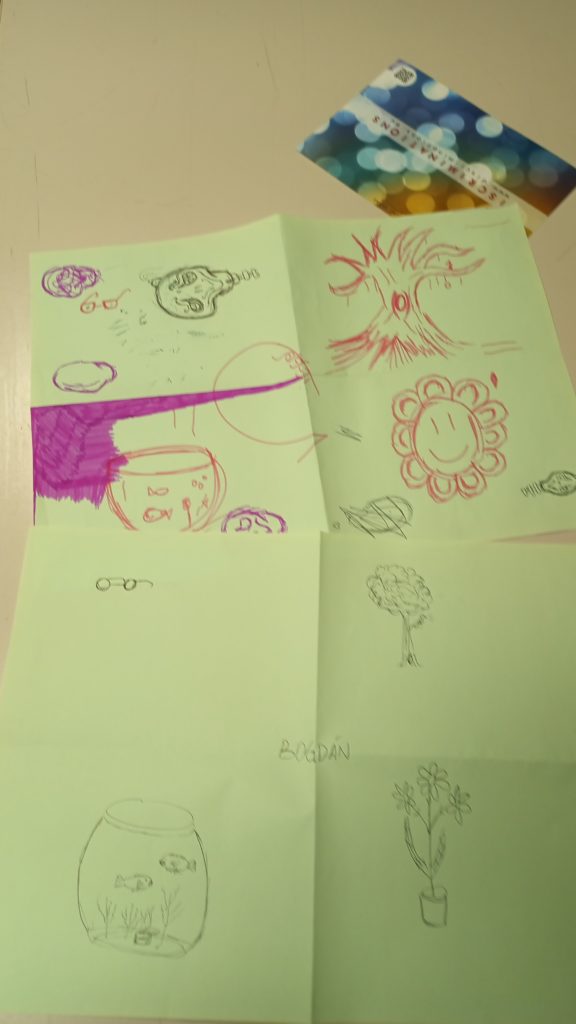

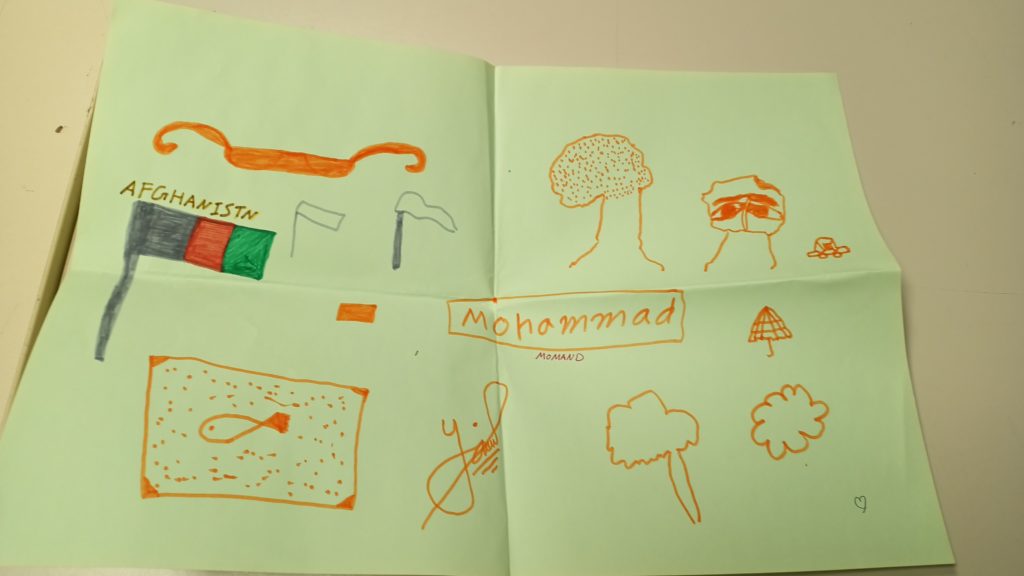


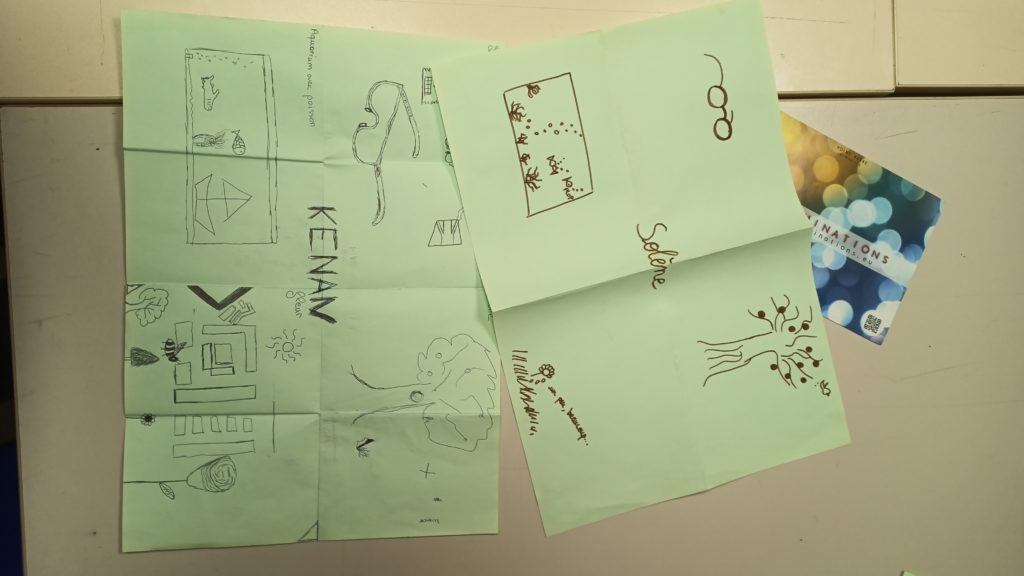
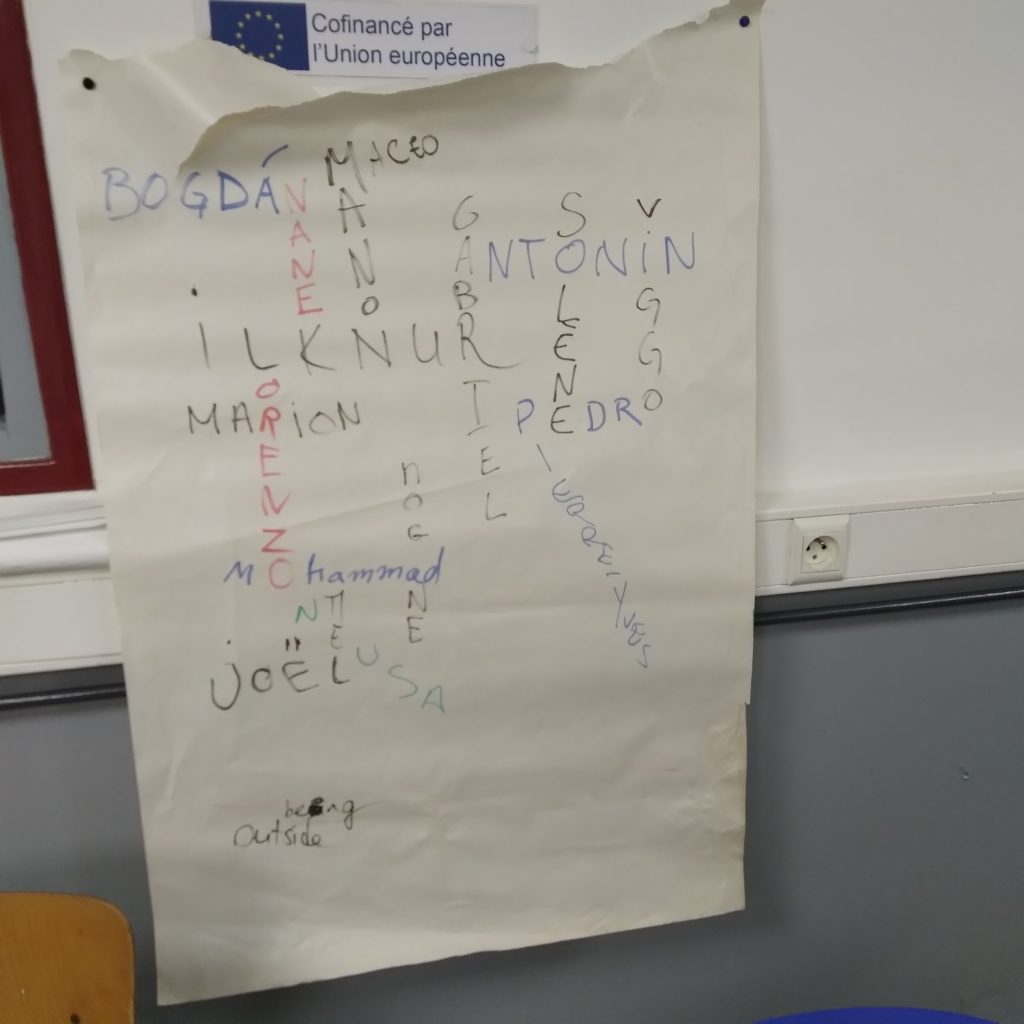
These initial exercises enabled us to get to know each other and tell each other a bit about ourselves. But also to realise that everyone has their own representations of everyday objects. In this roundabout way, the group was gently introduced to the theme of differences and discrimination, before discovering the website discriminations.eu and some of its content. The driving idea for the week : LEARN BY DOING.
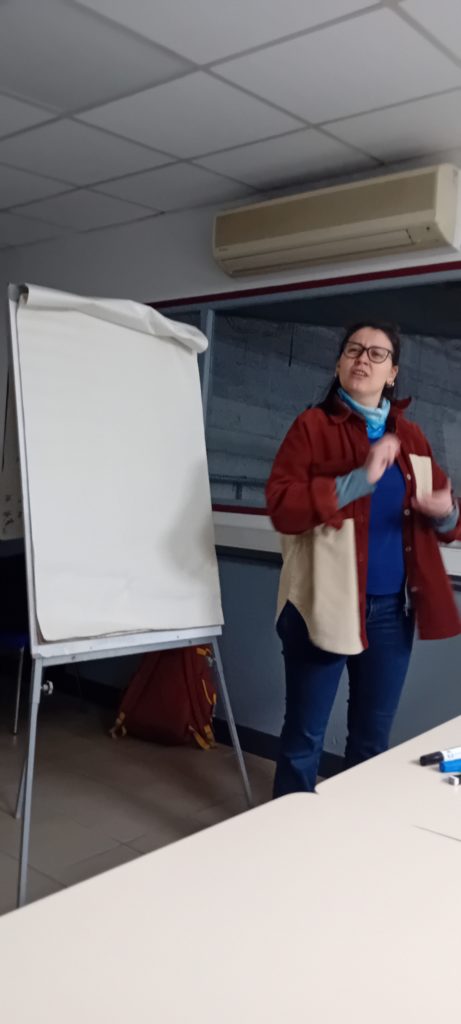
During this presentation, we went back over the origins of the project and viewed some testimonials from young people and researchers. Then we set out the objectives for the week and adapted them to the members of the group. Some were interested in sound recording, photography, lighting, conducting interviews, etc.
Those who do not wish to be filmed will be in charge of the ‘making-of’.
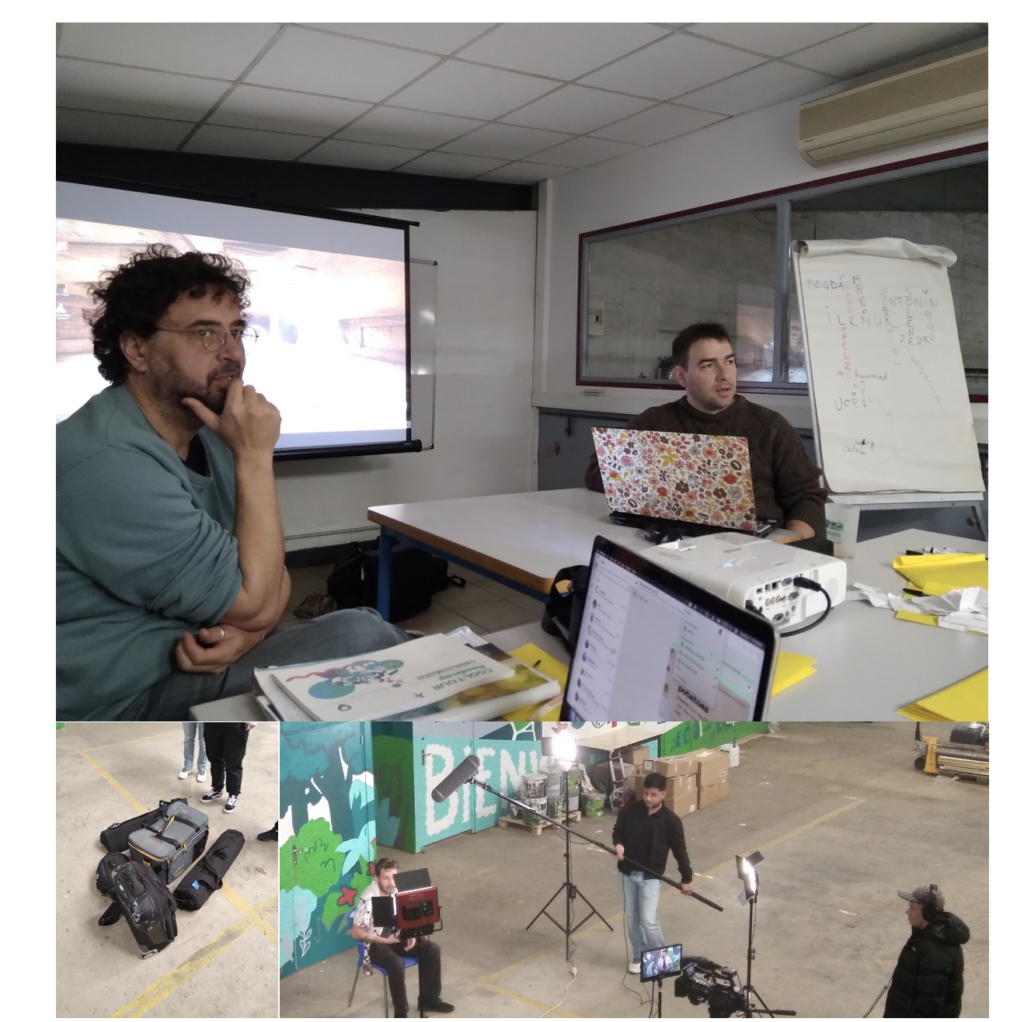


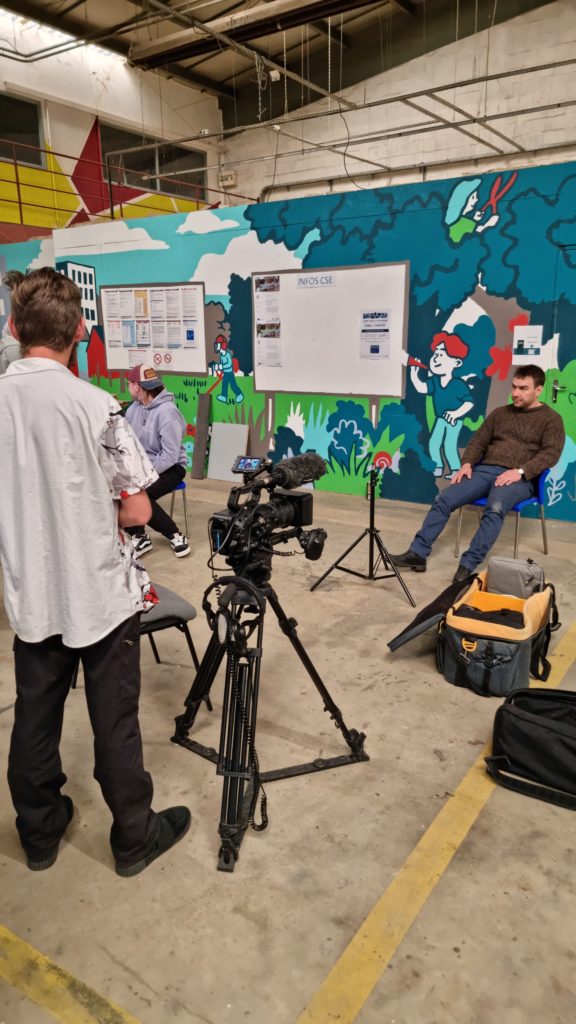
To put this into practice, we improvise two initial interviews. In this way, the group can see the need to prepare a filmed interview (questionnaire, material) and adapt it to the interviewee.
This is the start of the next working sessions: Preparing a questionnaire tailored to the person being filmed – Setting up the equipment (lights, camera placement, crew placement) – Indoor/outdoor filming.
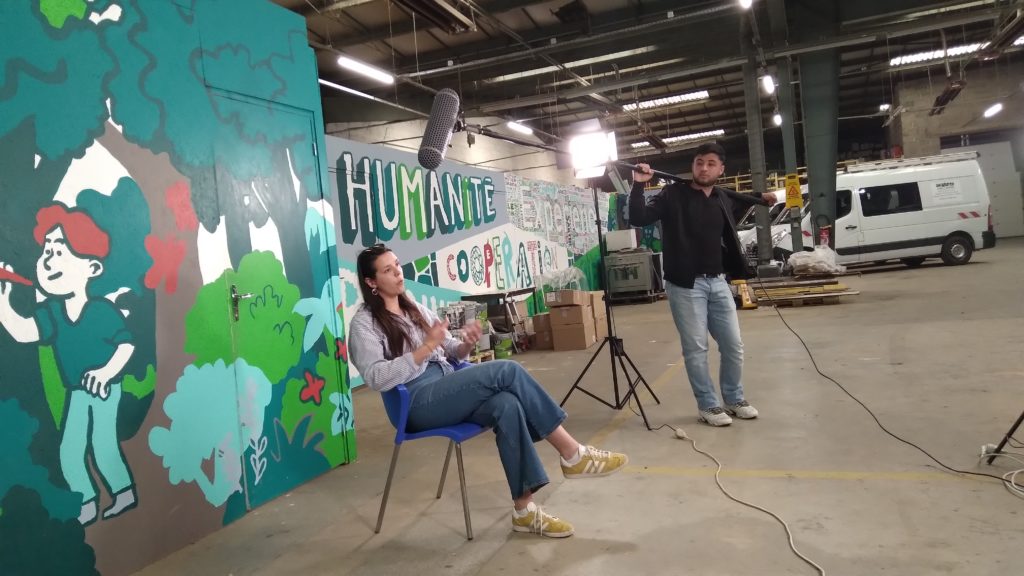
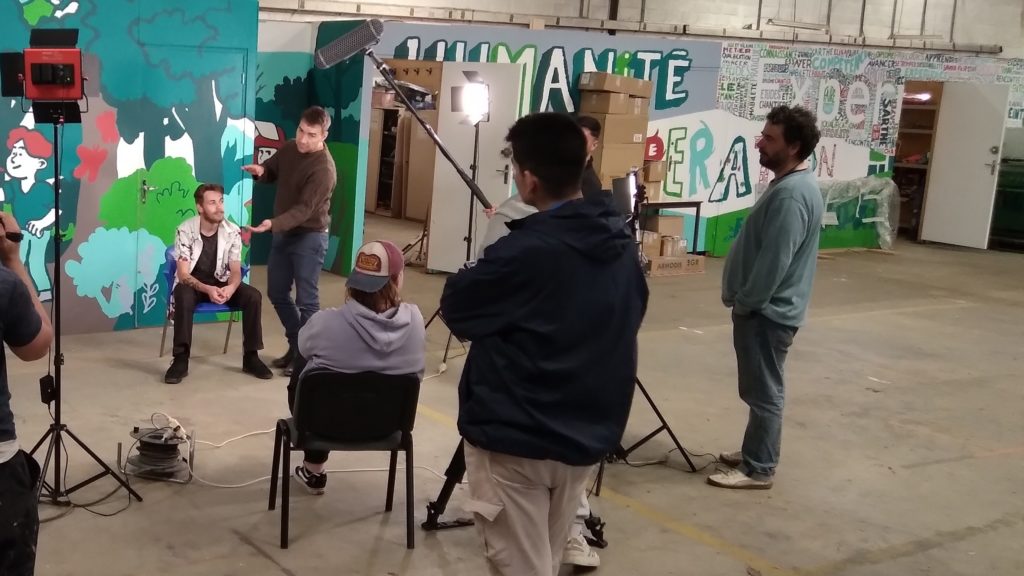
Shooted – edited
To get to grips with the concepts of editing ‘by doing’, we asked the young people to imagine a short film shot in ‘shoot/edit’ mode – the principle of shoot/edit: the film is edited as the imagined sequences are shot. This exercise enables the group to assimilate all the parameters that need to be mastered during filming. The group chose to make an anti-discrimination prevention advert.
The questionnaire
Together we thought about what questions to ask David Goubil, a member of the Planning Familial du Mans and Maxime Tetillon, advisor Mission Locale.
Some examples of questions :
Hello, can you introduce yourself?
Who can benefit from Family Planning services?
Does the Mission Locale set up anti-discrimination schemes?
Can you define discrimination in your own words?
Have you noticed any changes in discriminations?
Why did you agree to take part in this interview?
Discovering editing software

Still on the Études & Chantiers offices, we discuss the first notions of video editing with the whole group: young people and European youth workers. Based on the images produced during the filming and the first improvised interviews, we discussed the various audiovisual editing tools (both paid and free), and gave a brief technical history of video editing. The young people present the video editing applications used on smartphones.
The Interviews
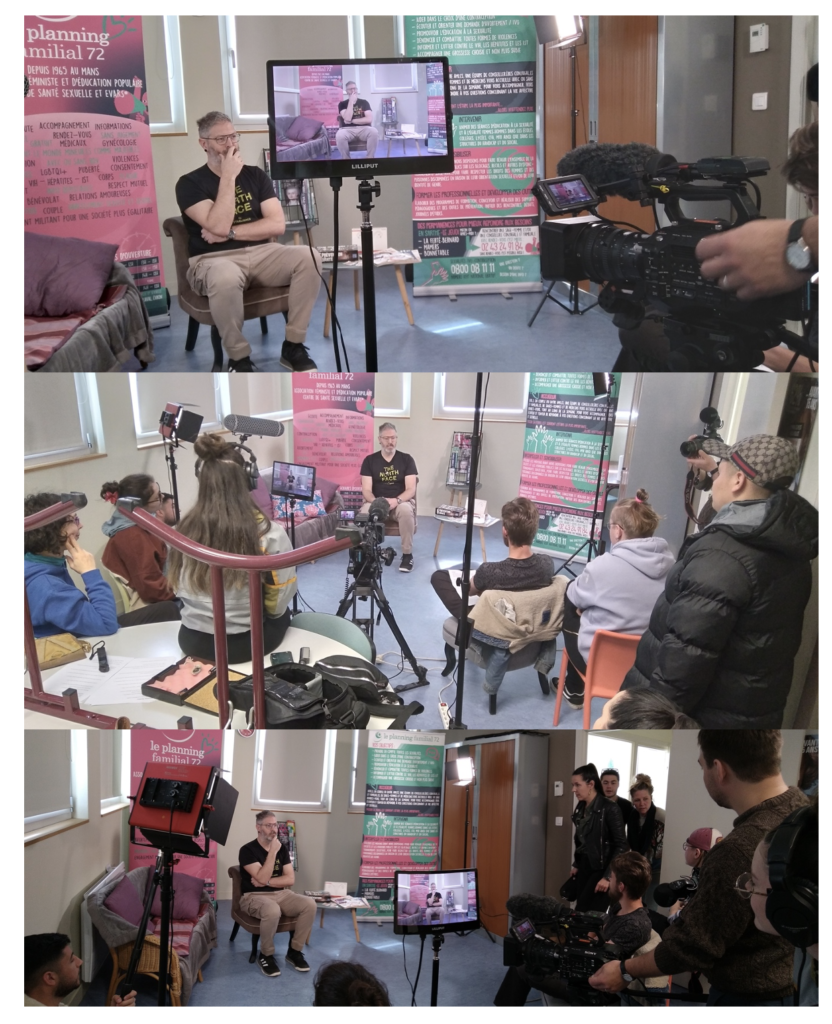
At the planning familial… (Shooting indoors)
…and at the mission locale (Shooting outdoor)
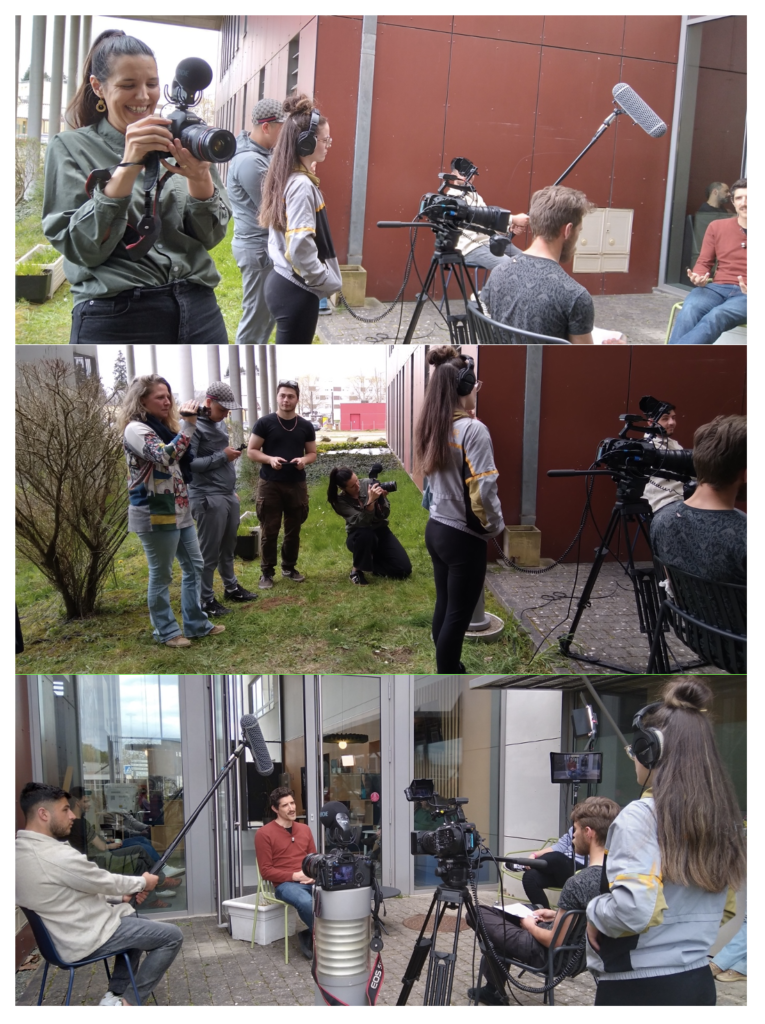
The young people and youth workers conducting the interviews with the partners who very kindly agreed to welcome us and give us their time to answer the young people’s questions.
At the same time
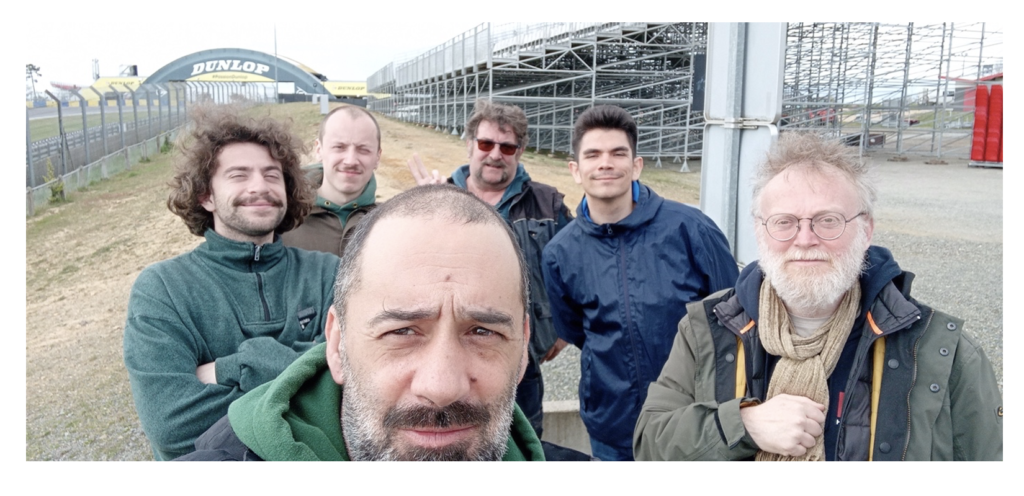
The Turkish, Portuguese and French youth workers were able to visit the Le Mans 24-hour race circuit, which is maintained by teams from the Études & Chantiers association.
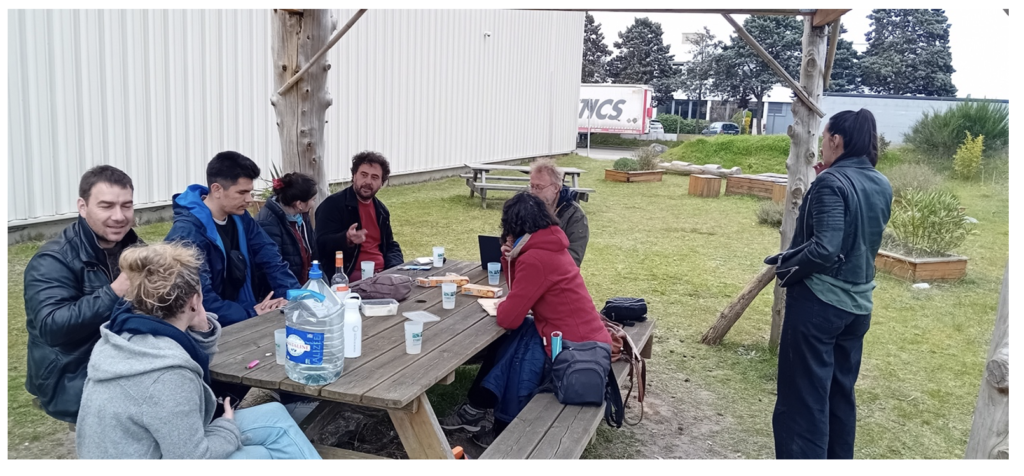
Every evening, at the end of the day, we share and talk about our practices, the state of mind of the group, any difficulties or sensitive situations, and also about the work to come over the next few days.
Green action et multi-activities
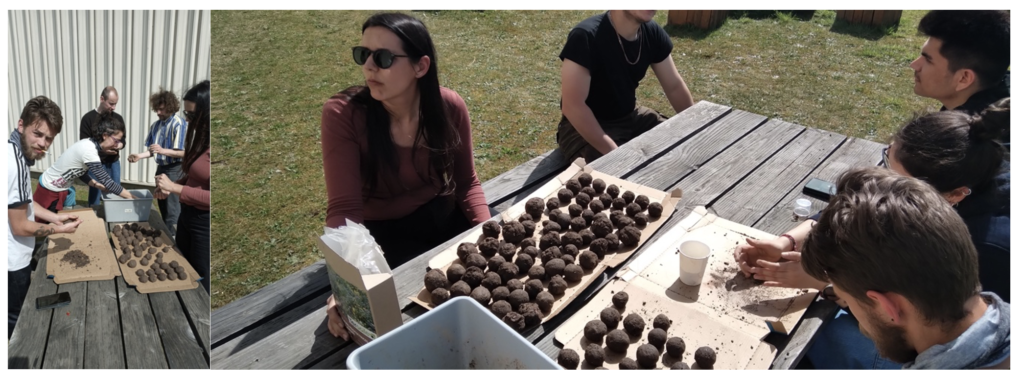
In line with our structures commitments, we invited the group to take part in our ‘green action’. Two actions were proposed: gardening (planting potatoes) and making seed bombs.

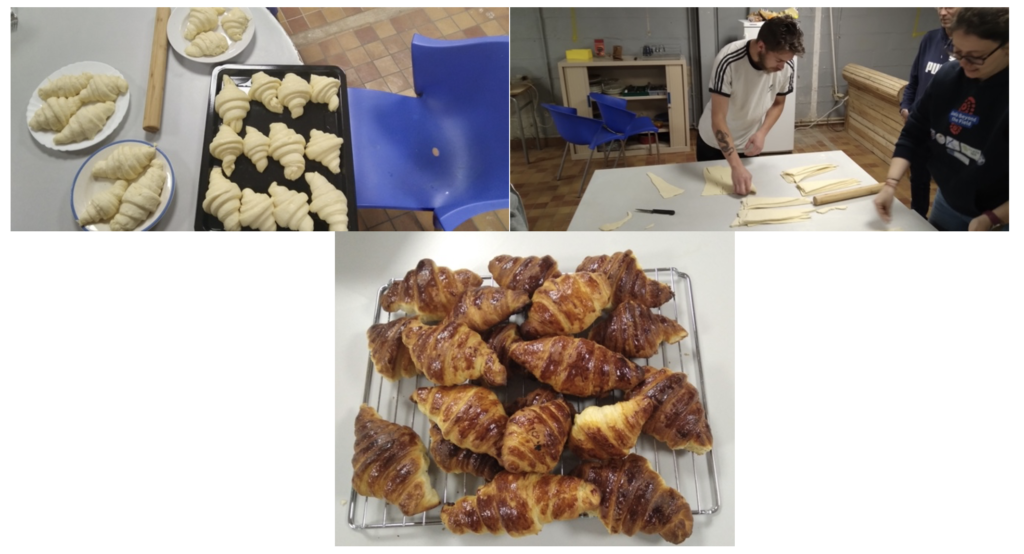
Alongside these workshops, Lorenzo, a former pastry chef, is teaching us how to make croissants.
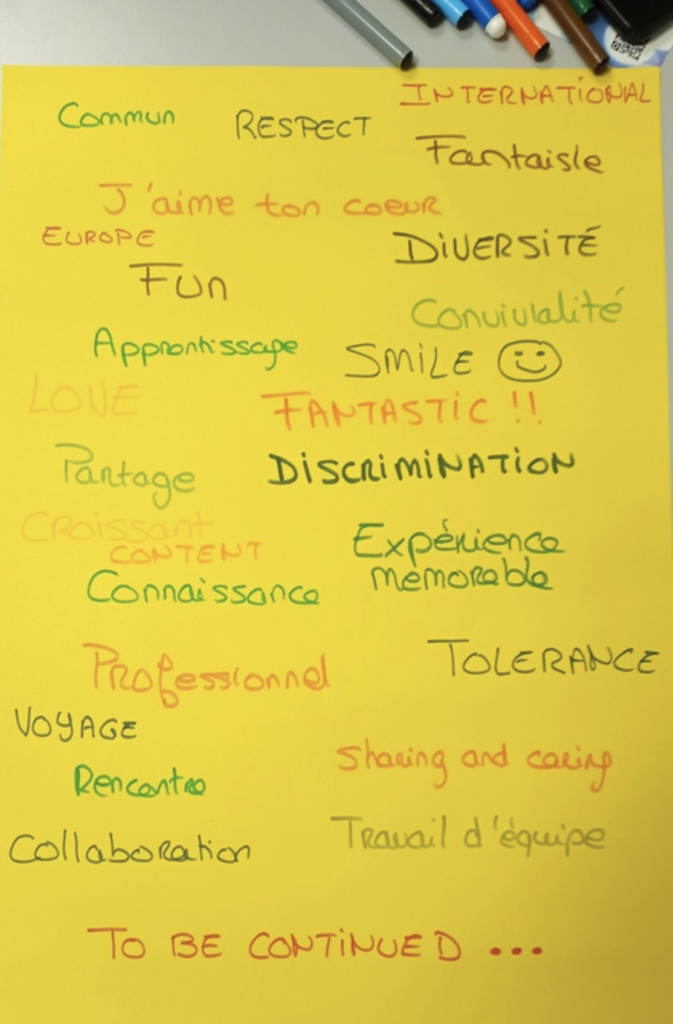
This week in a word…
Next meeting between partners & dissemination of work in progress
At the event Erasmus + en campagne organised on 16 & 17 May by the Intercultura association based in Dinan (Côte d’Armor, France).
Since the video workshop
From time to time, accompanied by members of the Études & Chantiers team, the young people continue their work on this subject. In their own words, the participants first reflected on the week they spent together working on this theme and discovering audiovisual tools.
‘I really enjoyed learning how to use the equipment; it’s useful for my professional project.’ Gabriel
‘We learned how to set everything up; it was really practical.’ – Lorenzo
‘We also learned about the 27 forms of discrimination.’ – Kenan
‘I was stressed about French, I was afraid I wouldn’t know how to answer.’ ‘Afterwards, I felt calm.’ – Mohammad
‘It was difficult to interview just one person, but interesting to listen to’ – Manon
‘I learned that anyone can be discriminated against or discriminate against others’ – Lorenzo
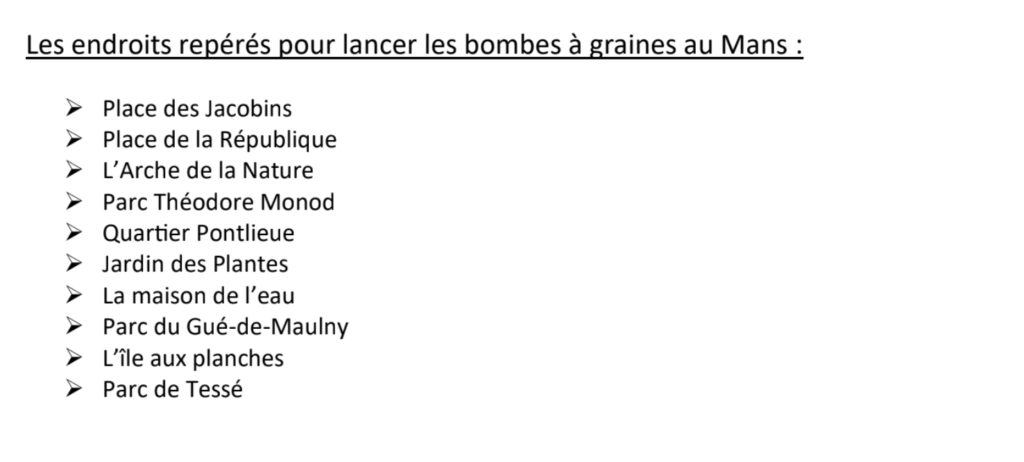
After making ‘seed bombs’ in early April, the young people identified places in the city where they could ‘explode’ flowers: below is their itinerary.
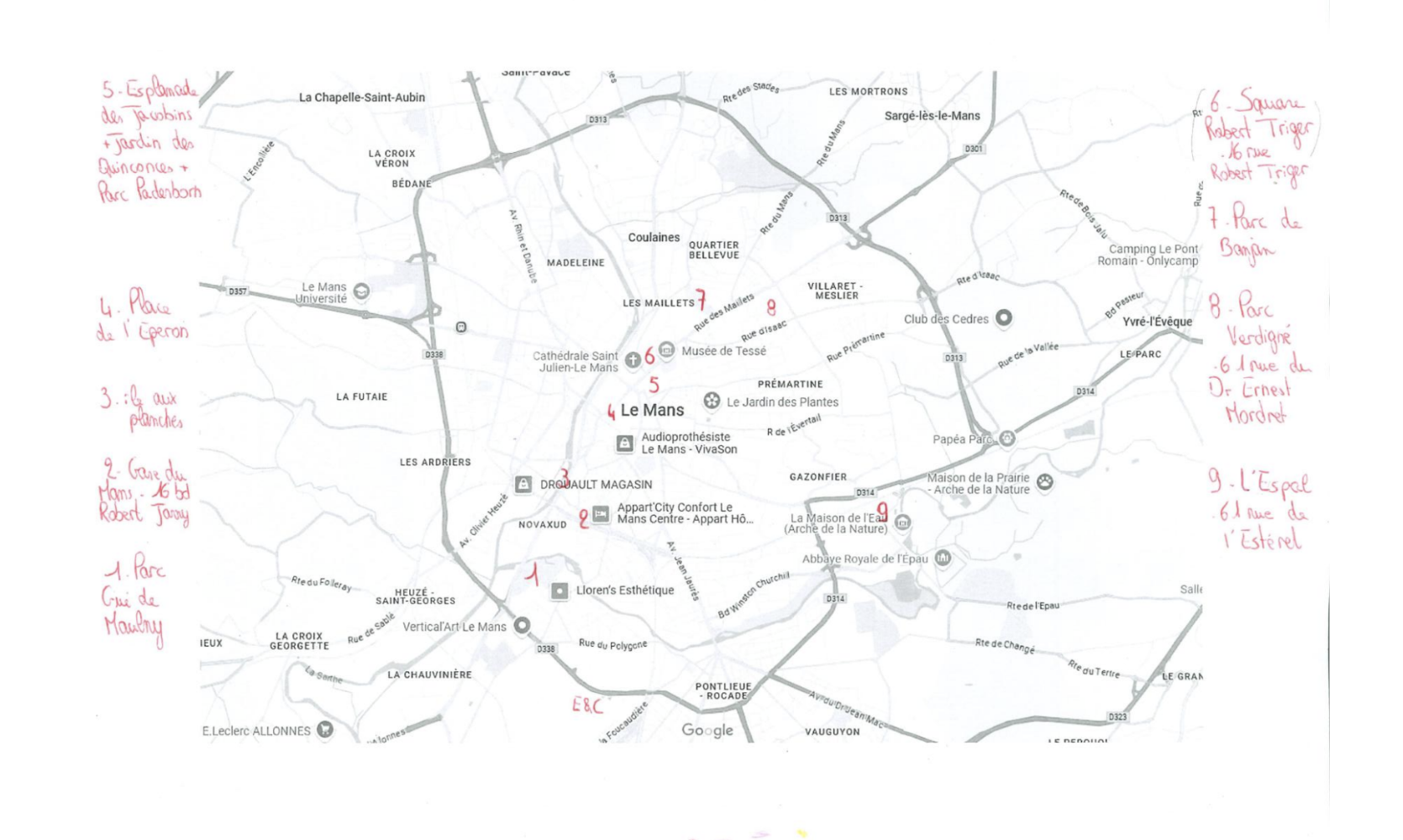
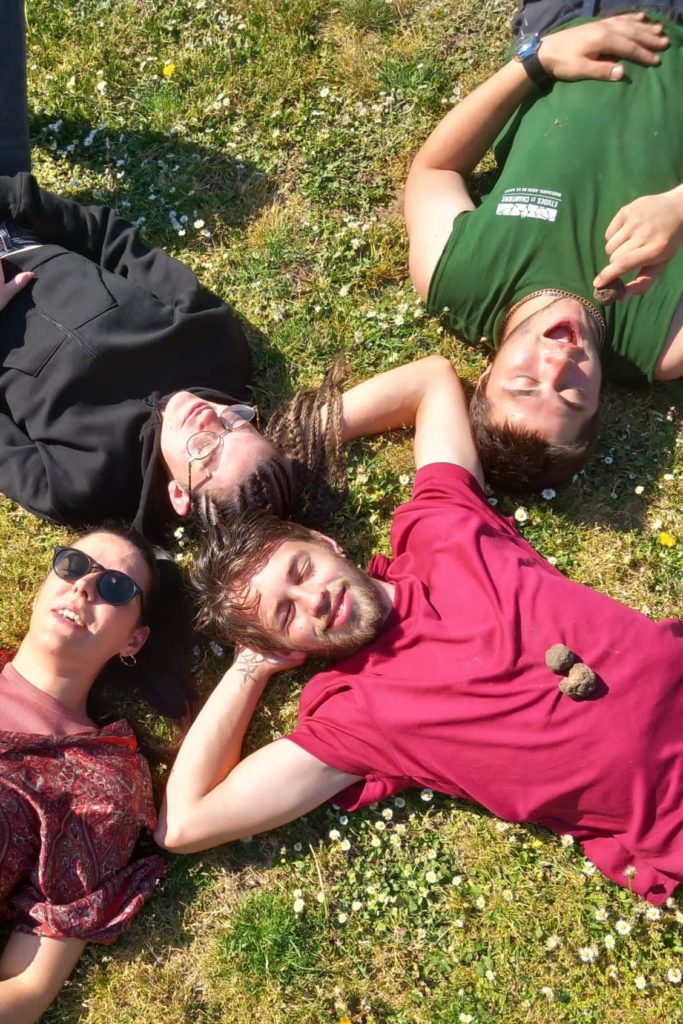
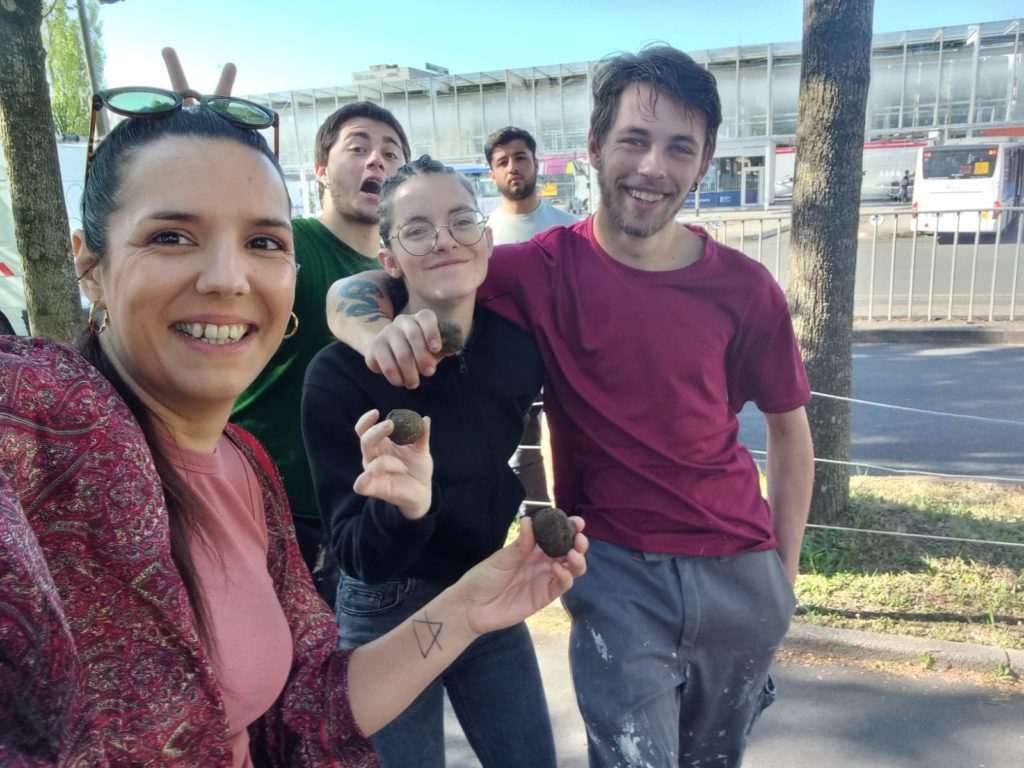
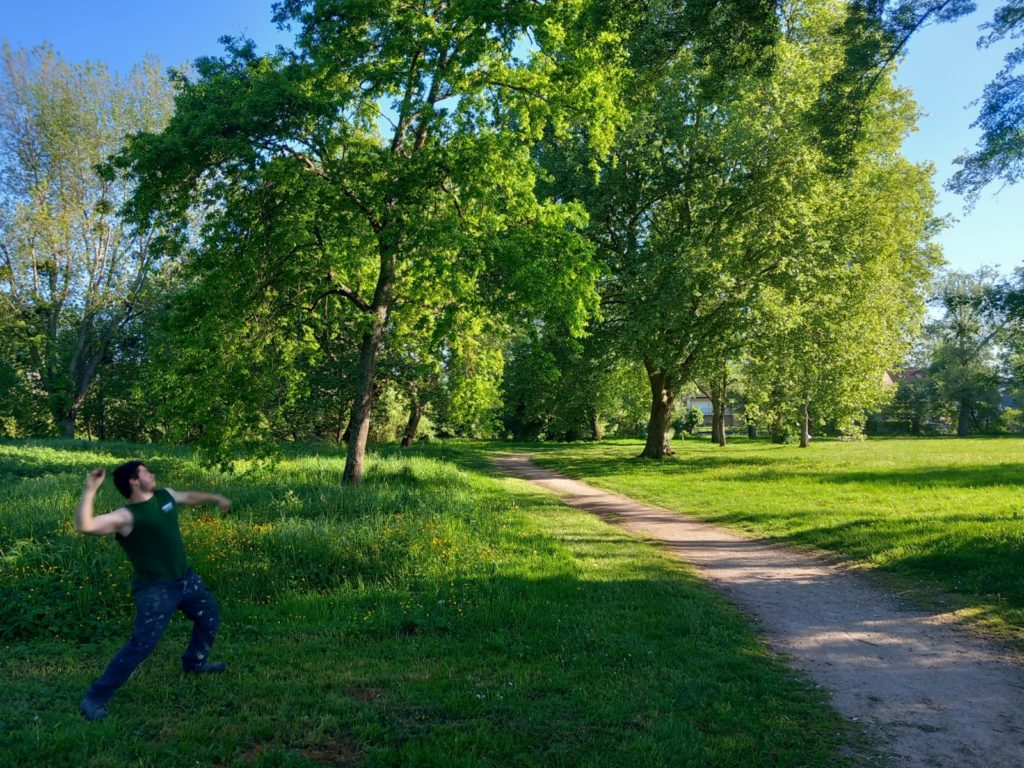
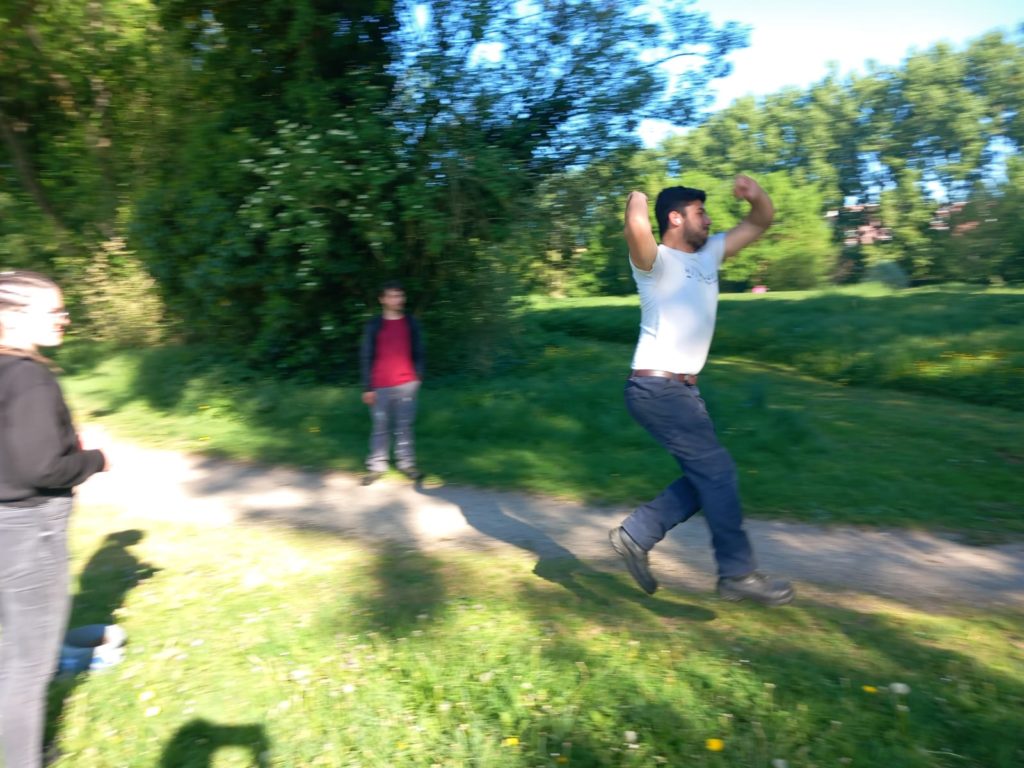
Throw ‘seed bombs’ in the previously identified locations.
Currently considering creating a comic strip on the subject.
Second workshop “discriminations.eu” – Istanbul – Turquia

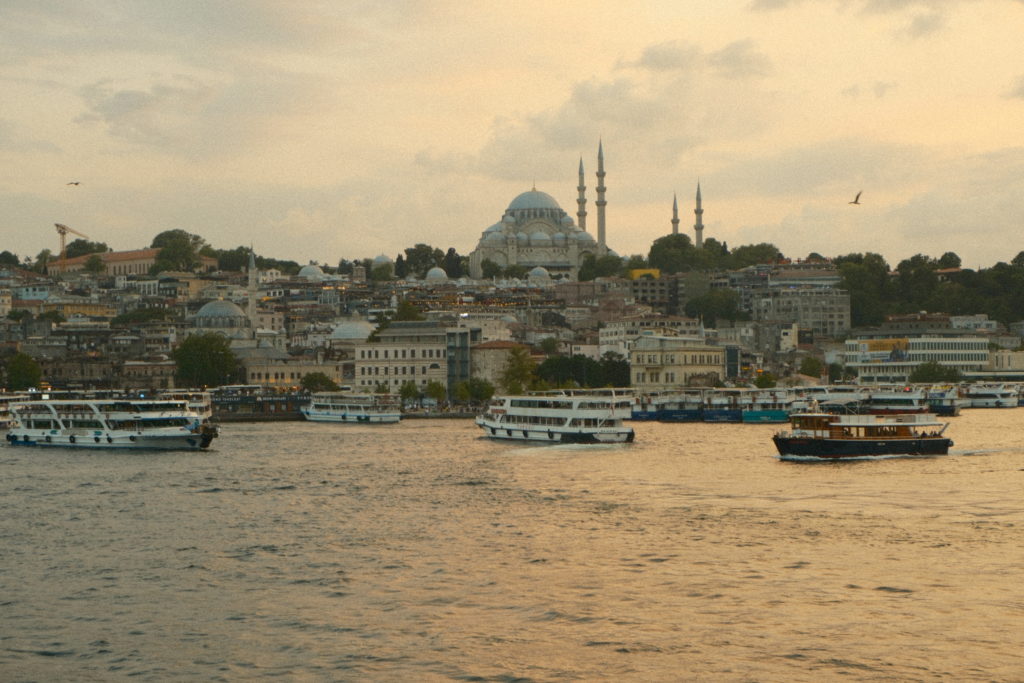
From 7 to 11 July 2025, we held our second workshop/exchange/discussion session in Istanbul (Turkey). The eight young volunteers who are members of the IKOS association were actively involved, alongside youth workers from Turkey, Portugal, and France. For this second round of work, we once again developed the activities and approaches defined during the kick-off meeting and carried out during the first workshop in Le Mans (France). The group of young people in Istanbul was made up of eight student volunteers.
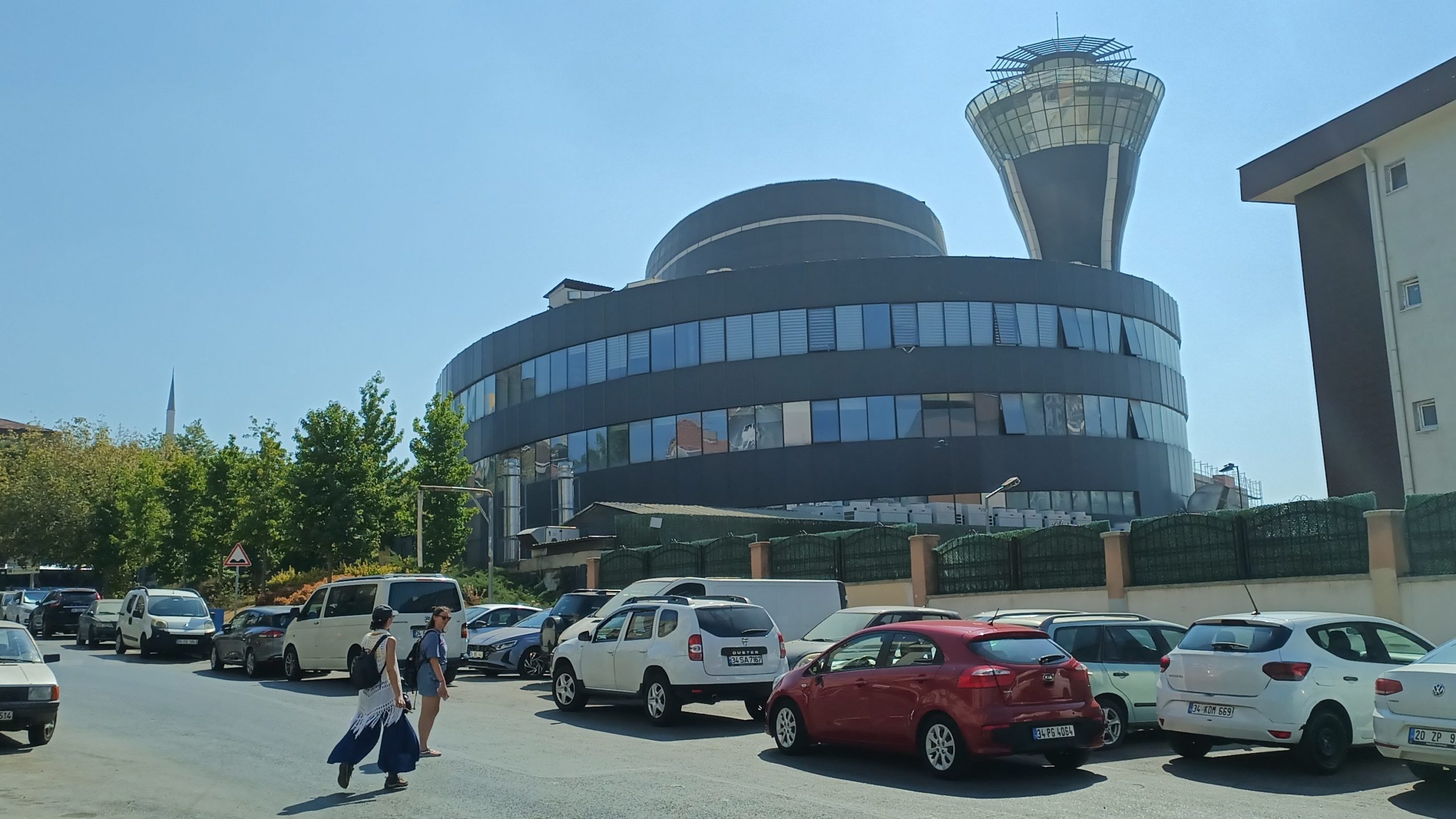
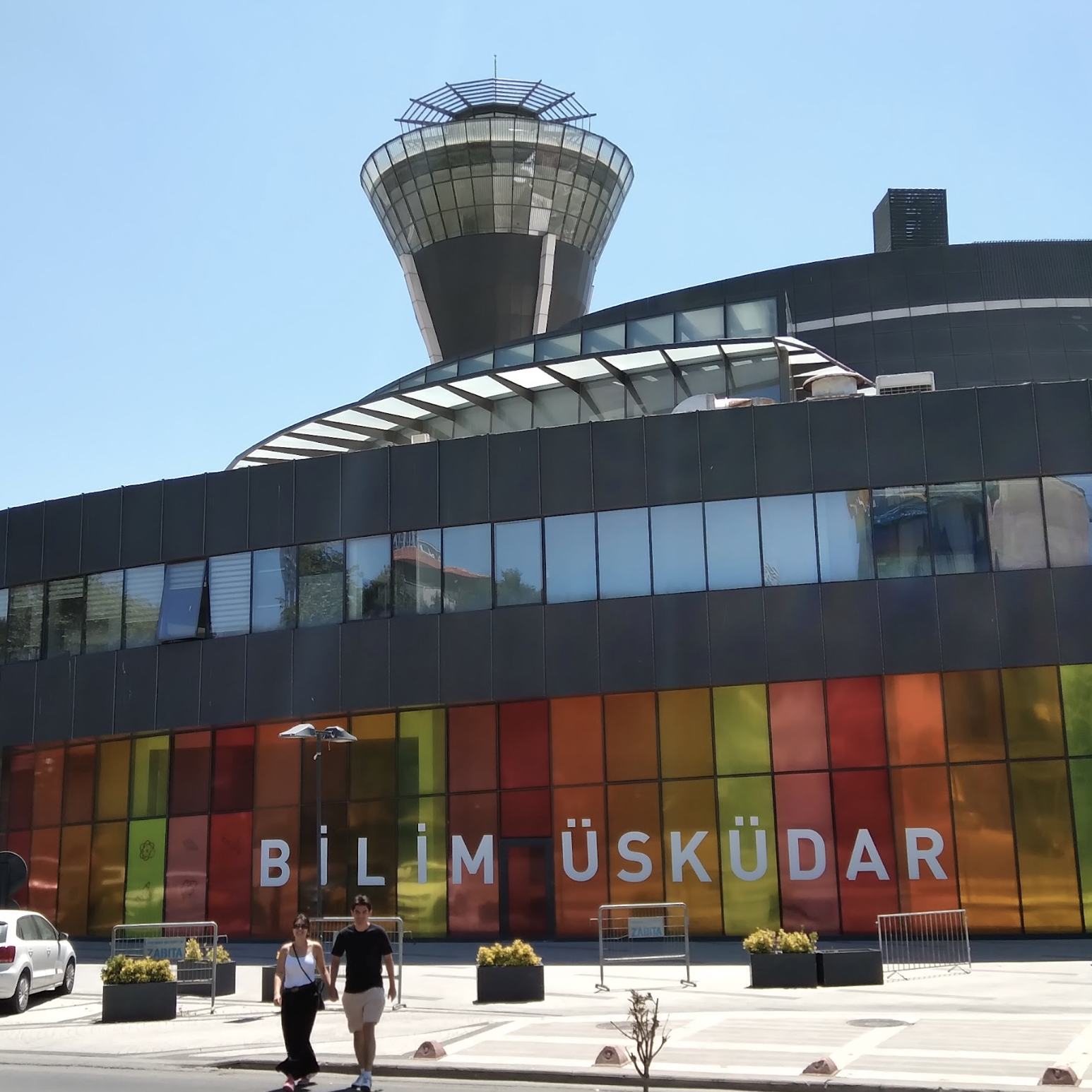
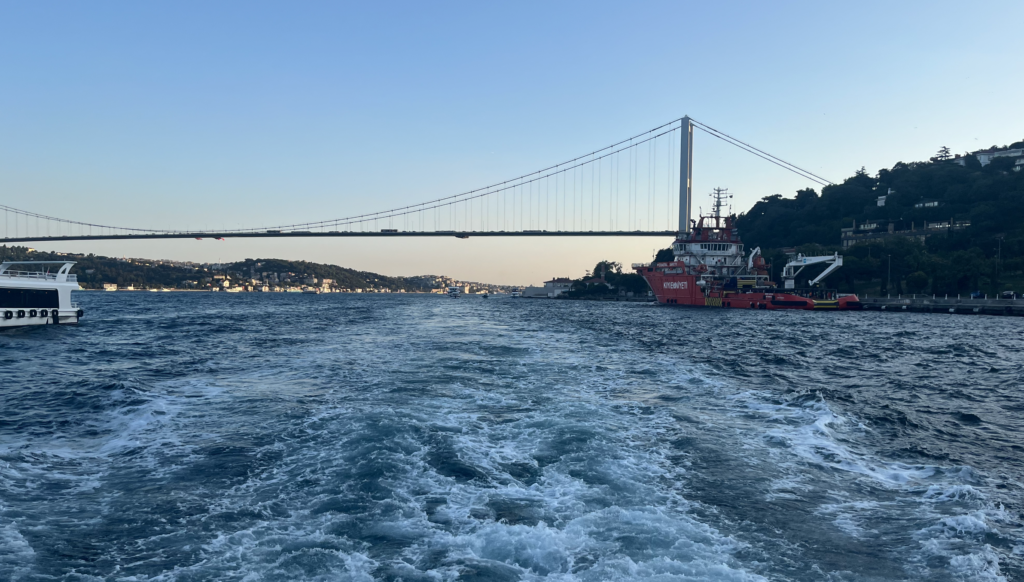
We held this second video workshop at the BILIM ÜSKÜDAR Science Museum. It is located on the Asian side of the city (south of the Bosphorus).
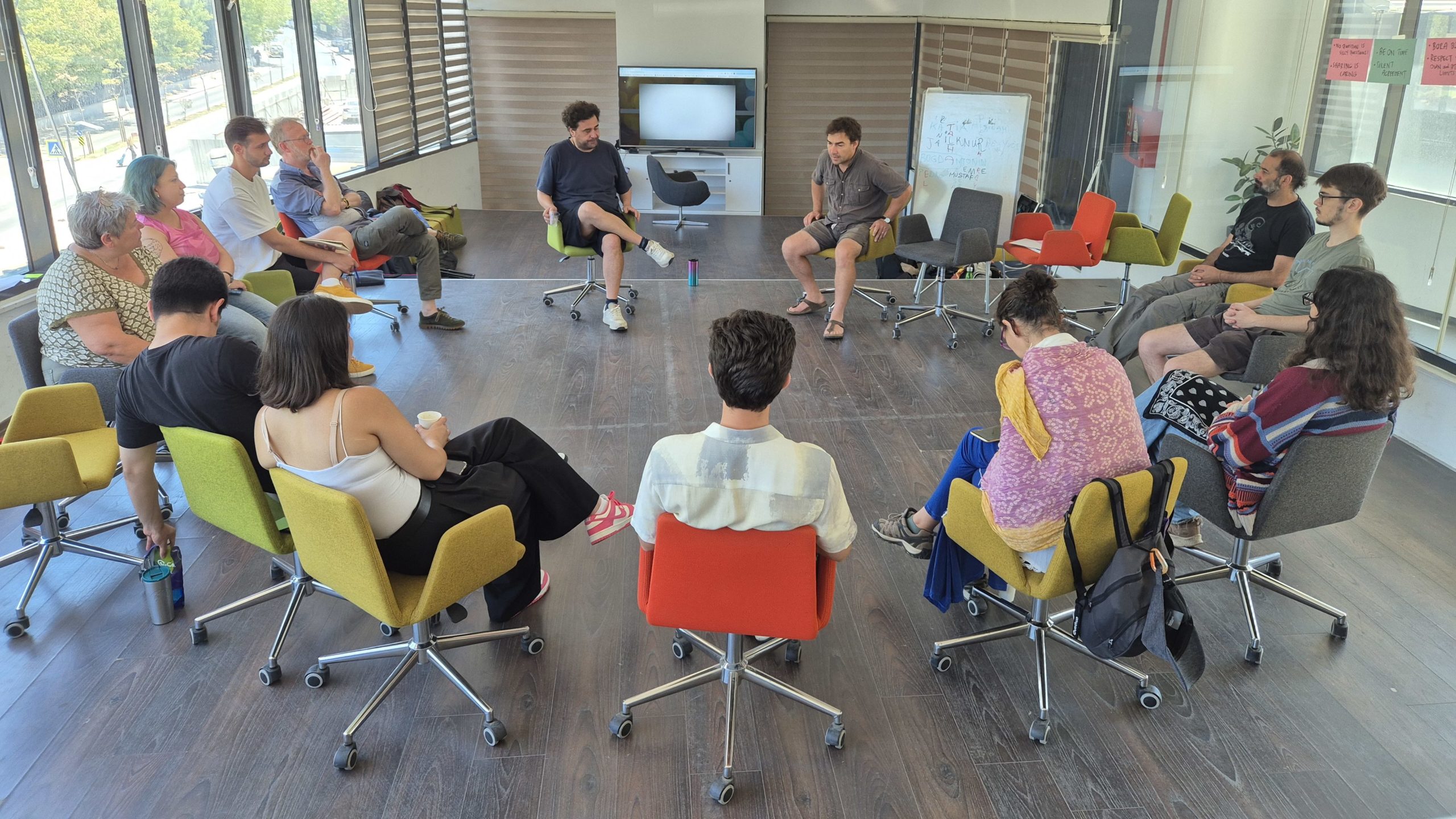
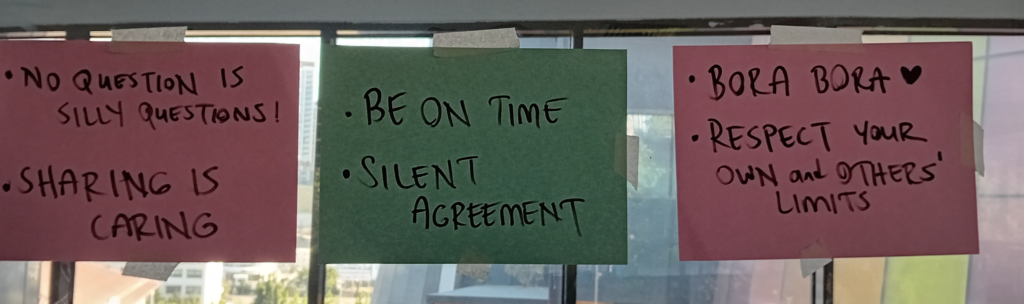
After establishing a few rules for the group together, we presented our approach and viewed some excerpts from existing work on the discriminations.eu website.
For this second workshop, we chose to take the expectations, wishes, hopes and interests of young people as our starting point. The objectives remained the same as for the workshop held in Le Mans, namely to conduct two filmed interviews with people who, in their professional activities, support individuals who have observed or experienced situations of discrimination.
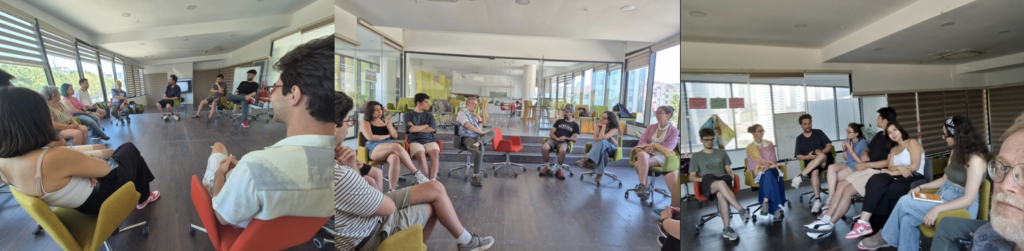
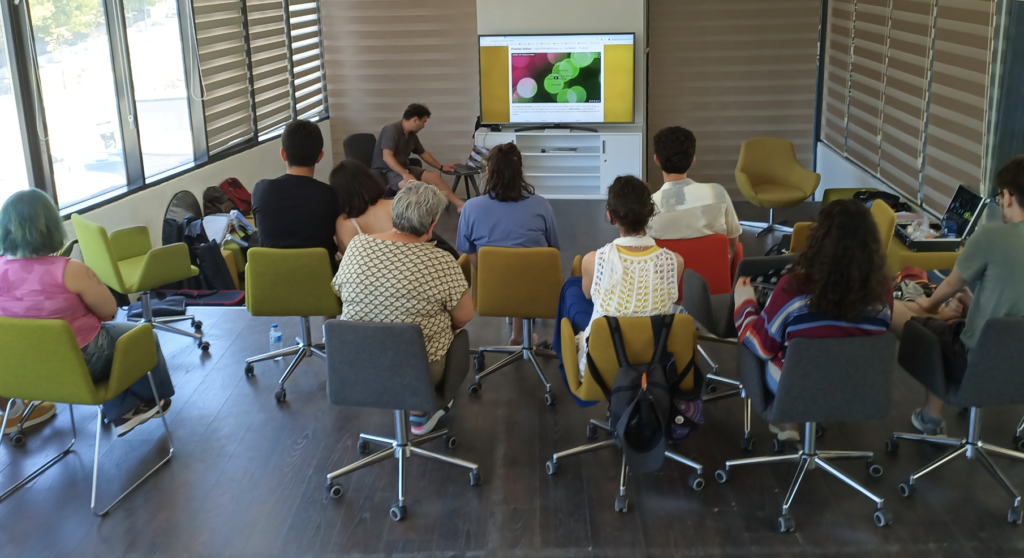
The fact that the group of young people is already aware of what discrimination is led us to propose two concurrent activities:
The first is for those who wish to explore the issues and discussions raised by discrimination, particularly in a ‘global city’ such as Istanbul.
The second is for young people who are more interested in the technical aspects of audiovisual production and its tools.
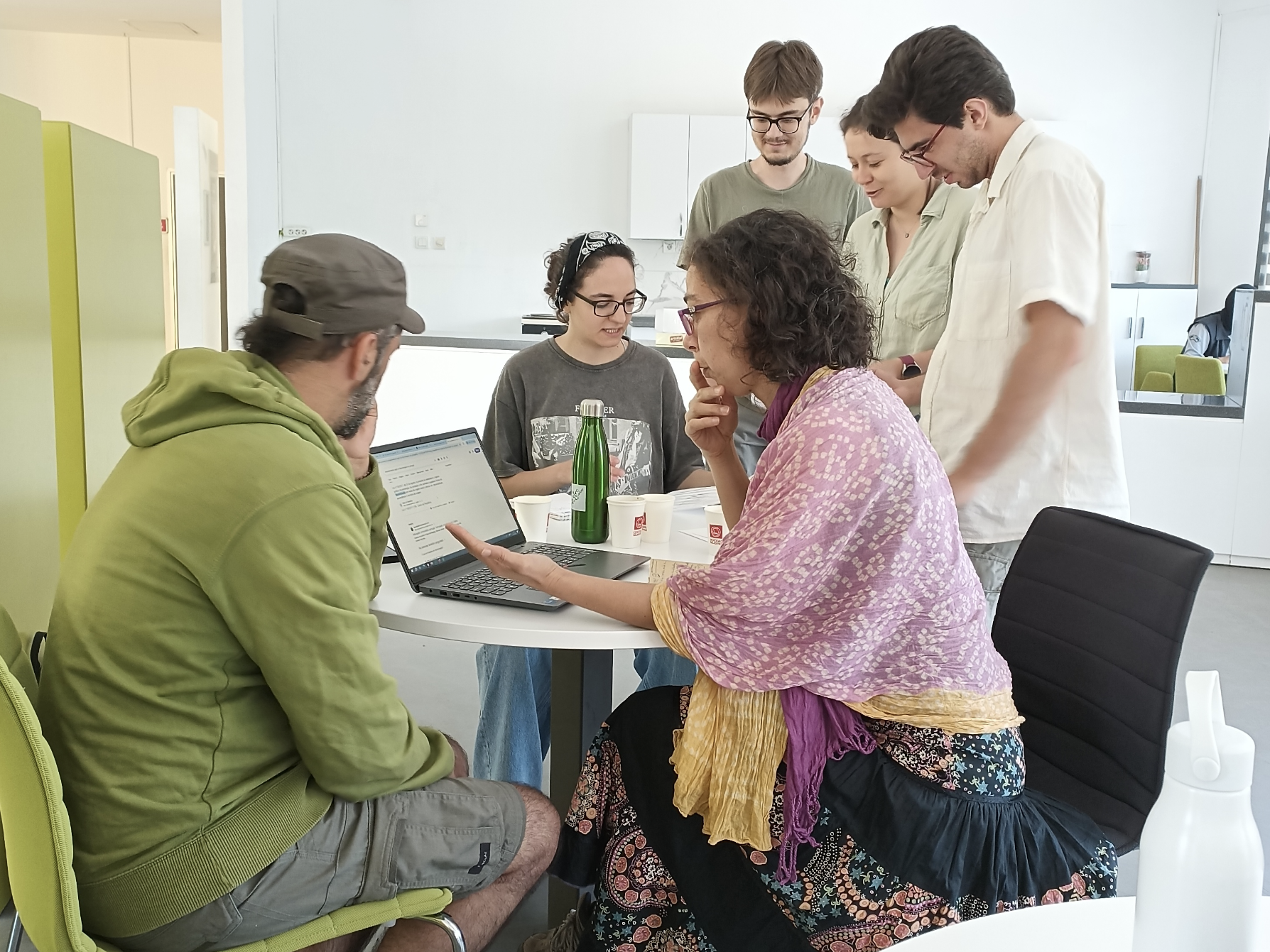
Members could move from one activity to another as they wished.
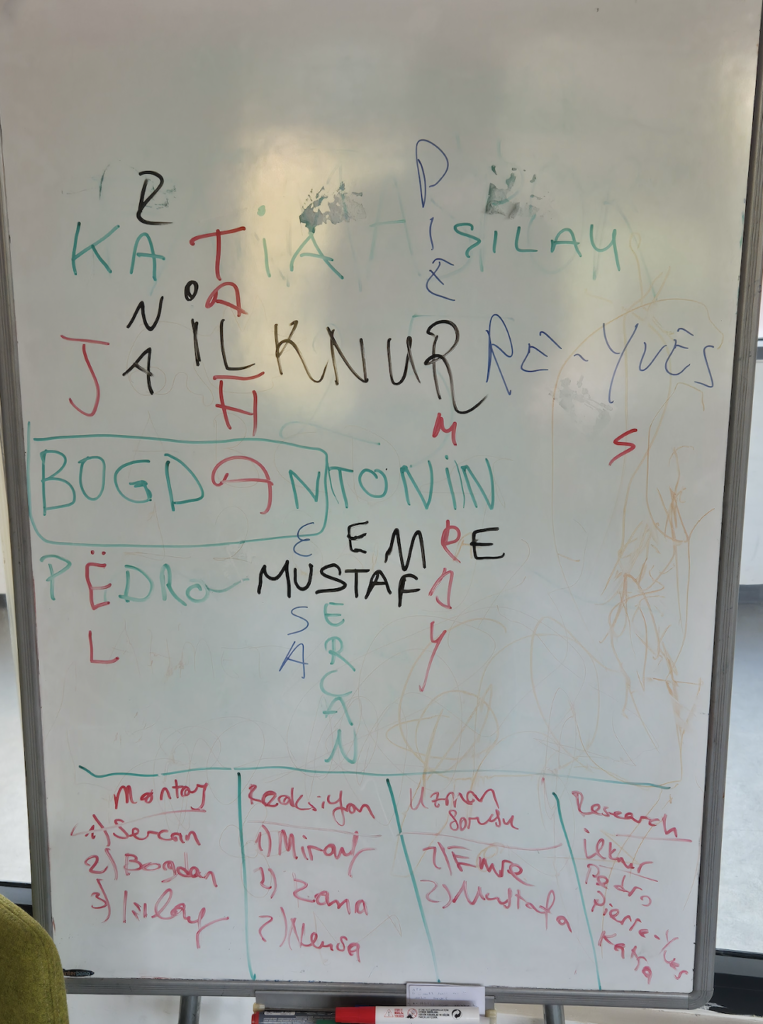
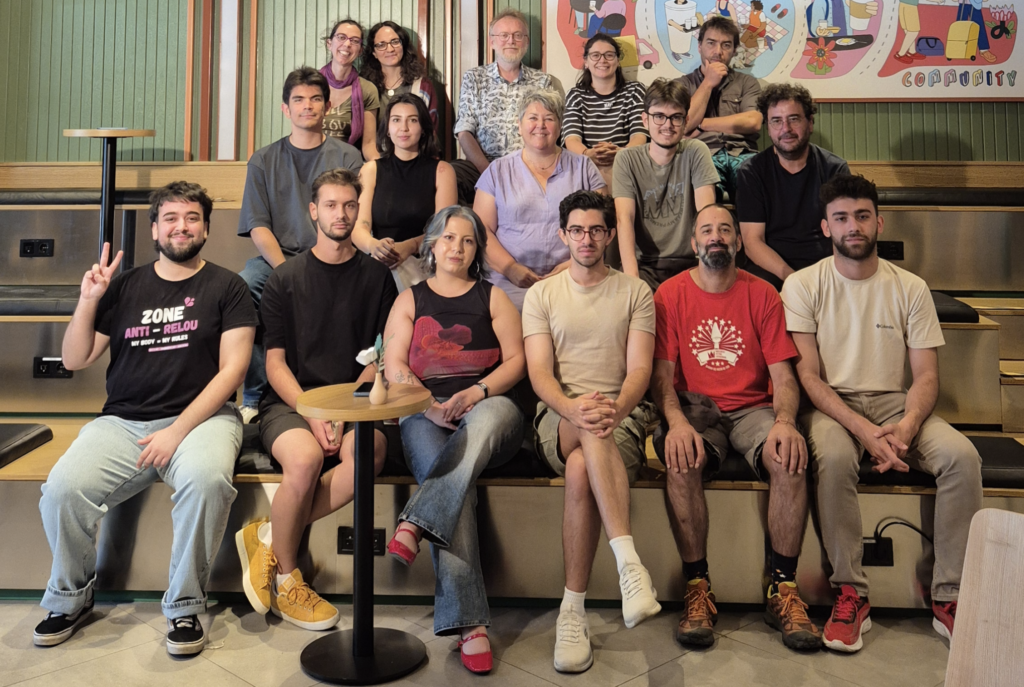
The team : Talha Erdoğan, Rana Yılmaz, Emre Erdoğan, Bogdan Itsam Dorantes Nikolaev, Miray Güner, Sercan Kan, Işılay Hanehan, Mustafa Sevat Yücel, Ilknur Dinç, Neusa Madeira, Pedro Oliveira, Katia Esneault-Batteau, Pierre-Yves Butel, Joël Martins, Antonin Alloggio.
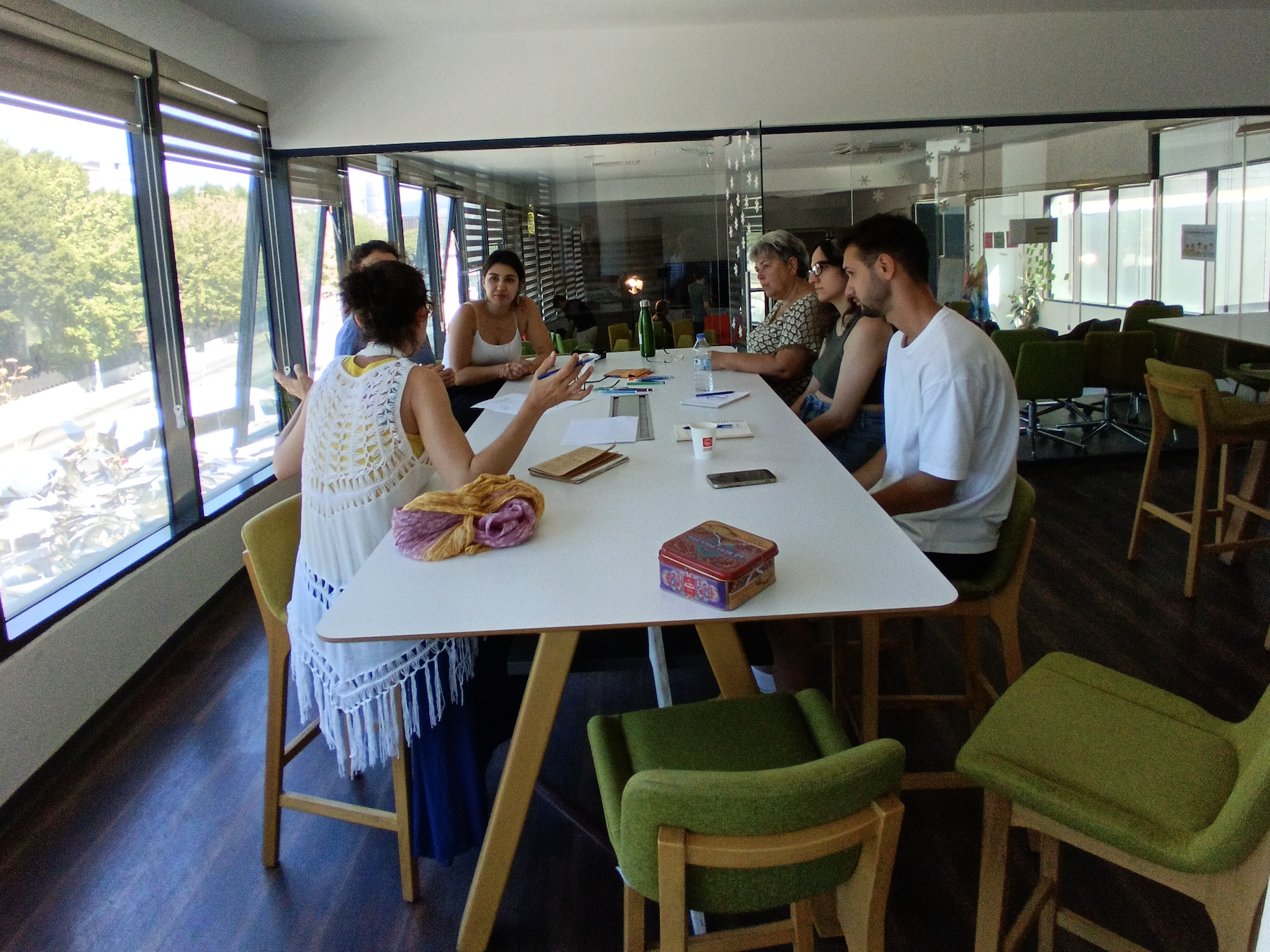
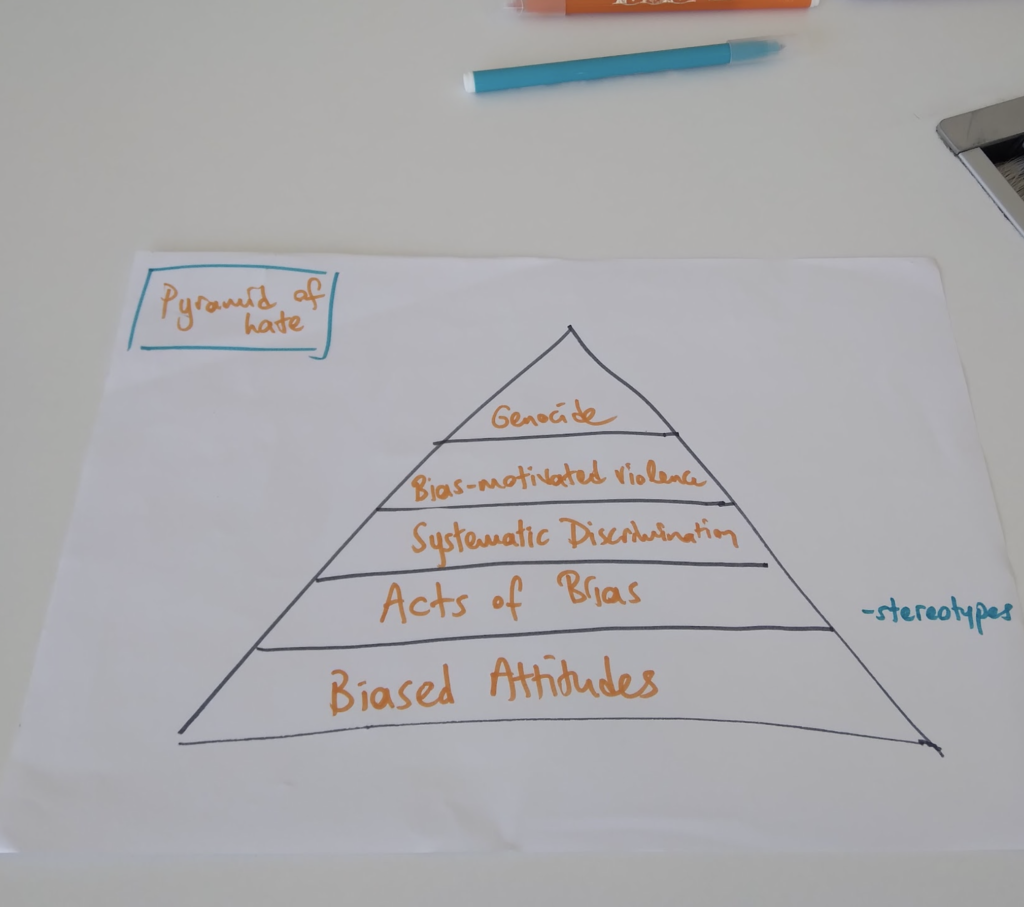
DISCUSSIONS ABOUT OUR THEME: “HOW DOES DISCRIMINATION EXIST IN A “GLOBAL CITY”? HOW CAN WE APPROACH THIS SUBJECT WITH PEOPLE WHO ARE WILLING TO TALK ABOUT IT ON CAMERA?

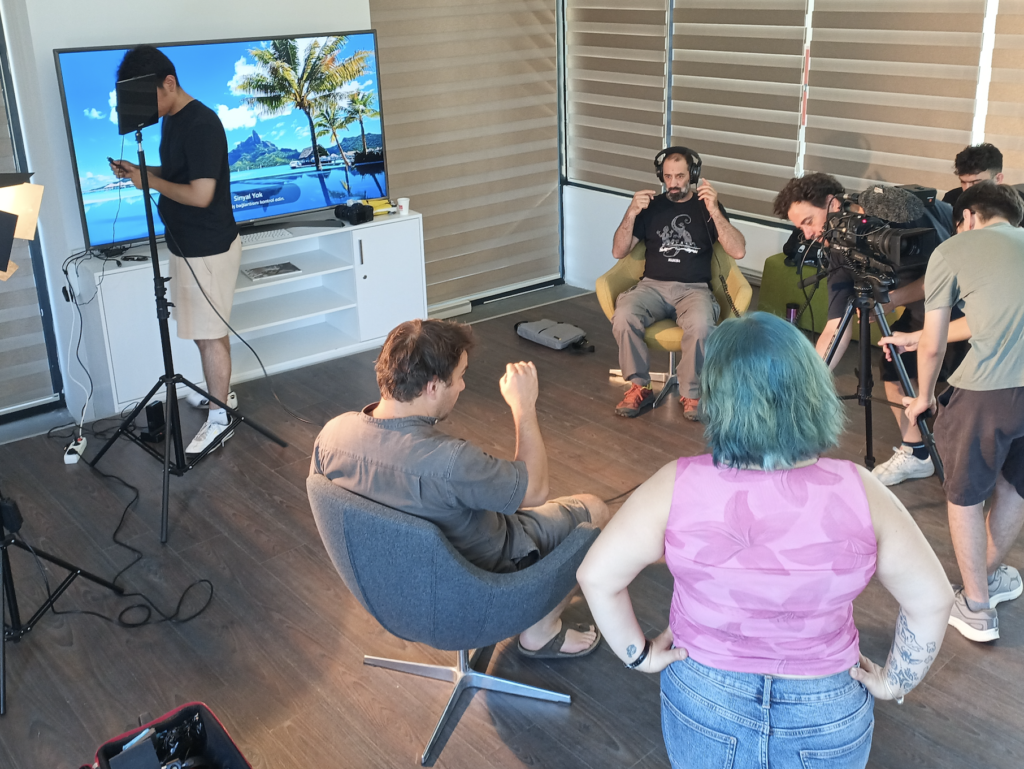
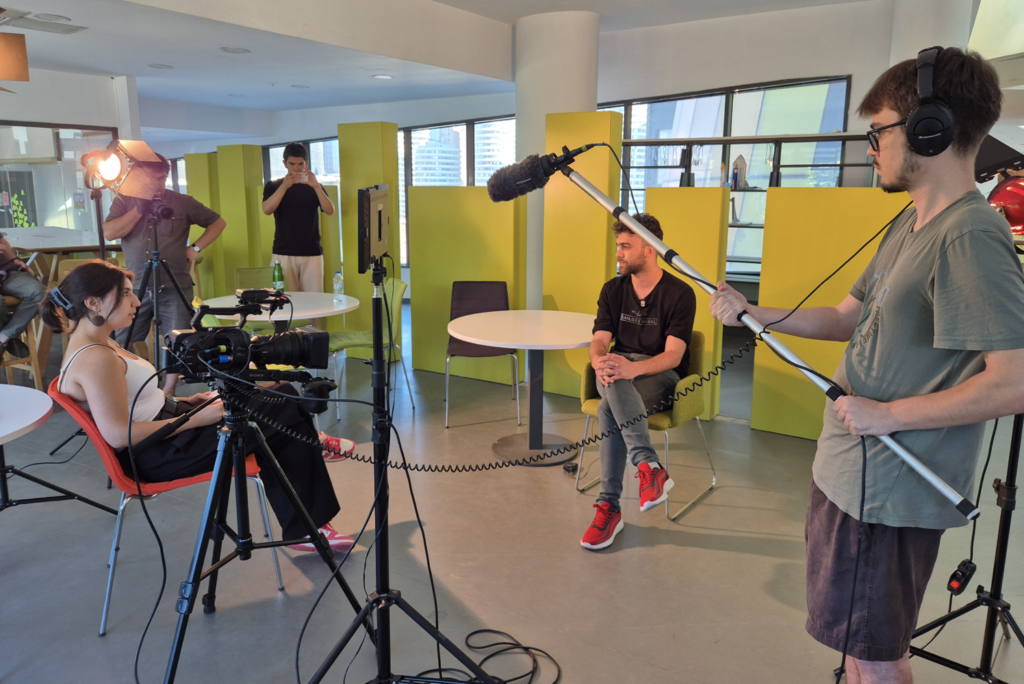
Getting to grips with video equipment: camera, boom mic, lapel mic, monitor, lighting setup.
‘LEARN BY DOING, FROM YOUR MISTAKES, BY EXCHANGING IDEAS, WITH WORDS, WITH GESTURES, TRYING, UNDERSTANDING, DOING’
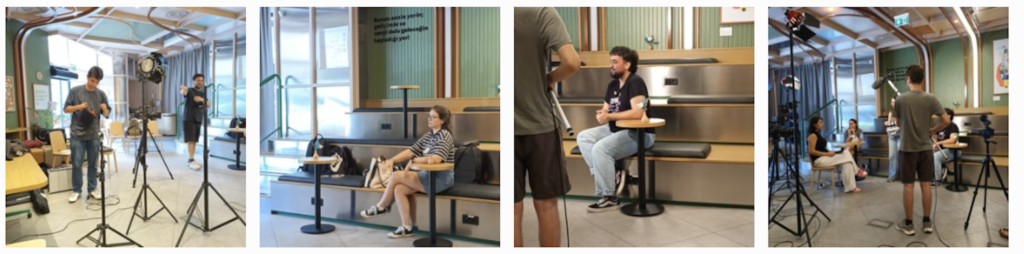
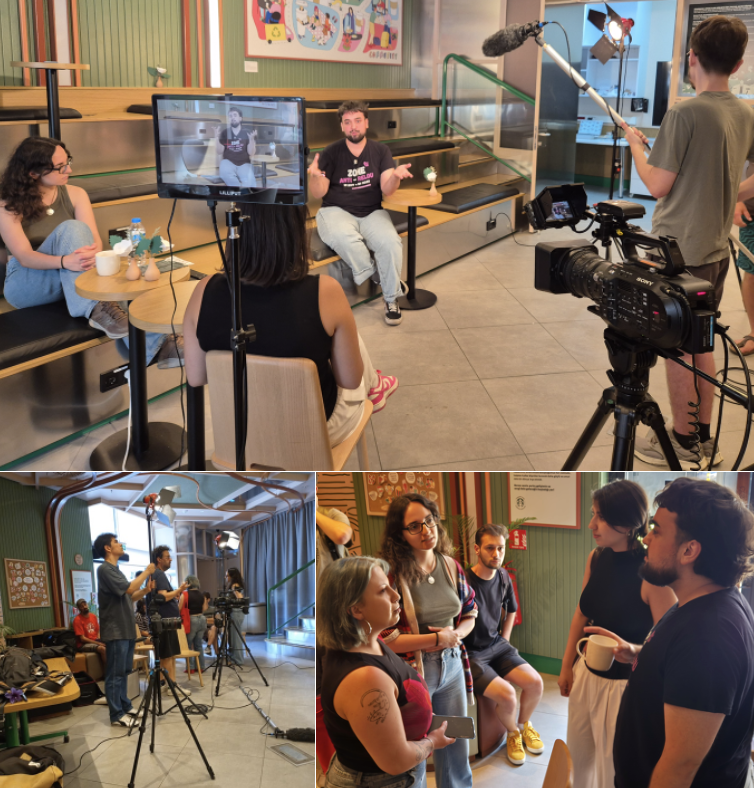
Setting up the equipment to film interviews with young people. This is a useful exercise to help young people feel more comfortable in front of the camera. In fact, everyone agreed to be filmed and photographed without any reservations.
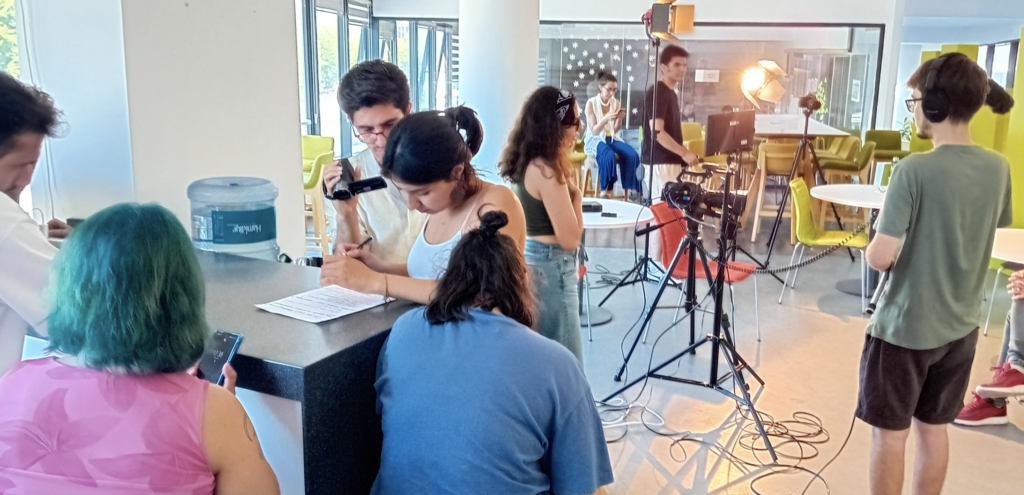
Peer interviews
Document and practise
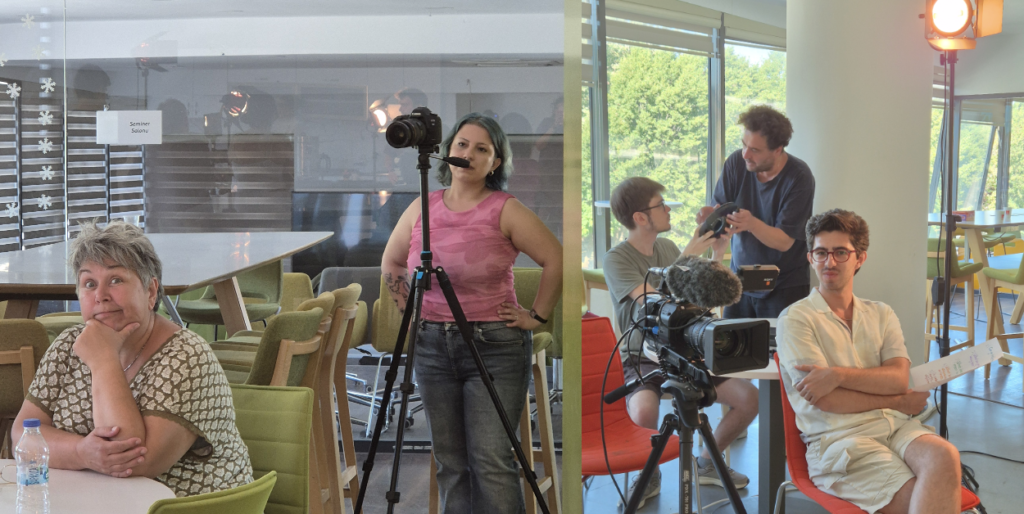

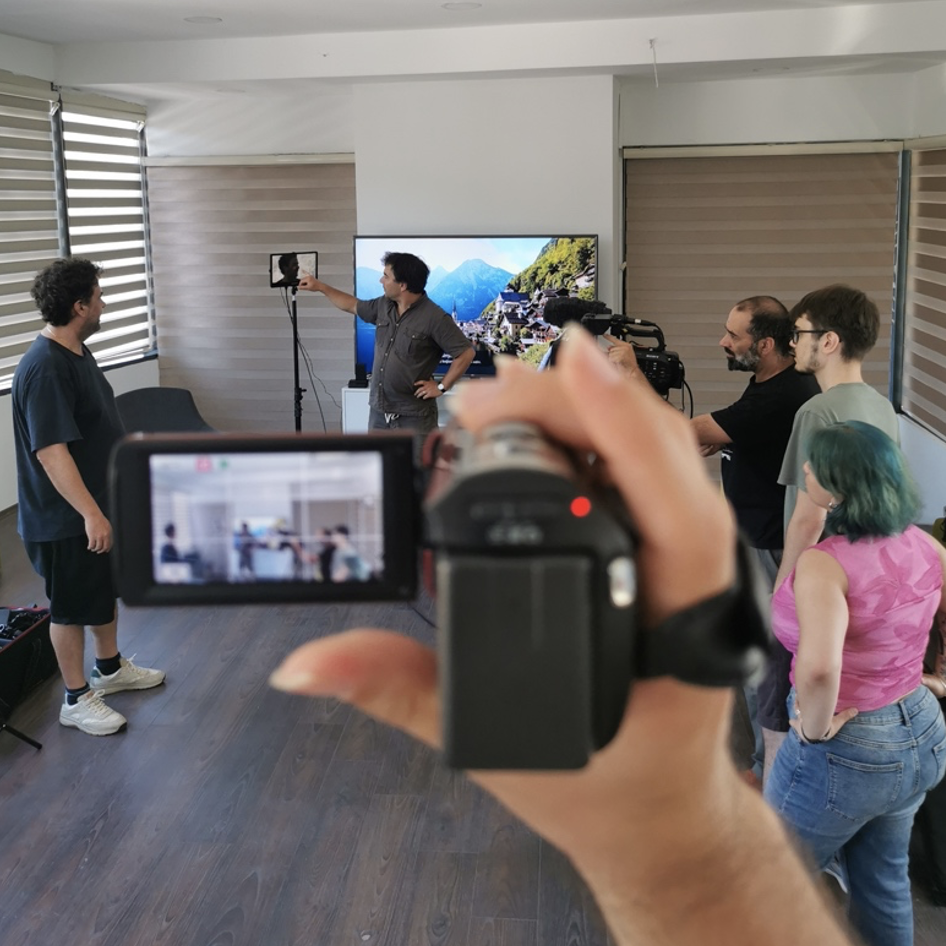

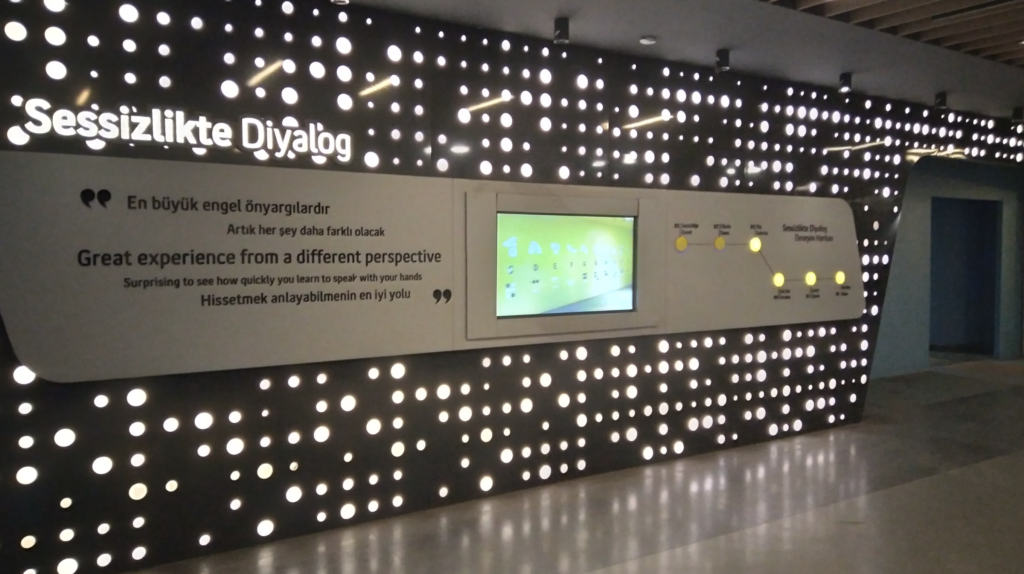
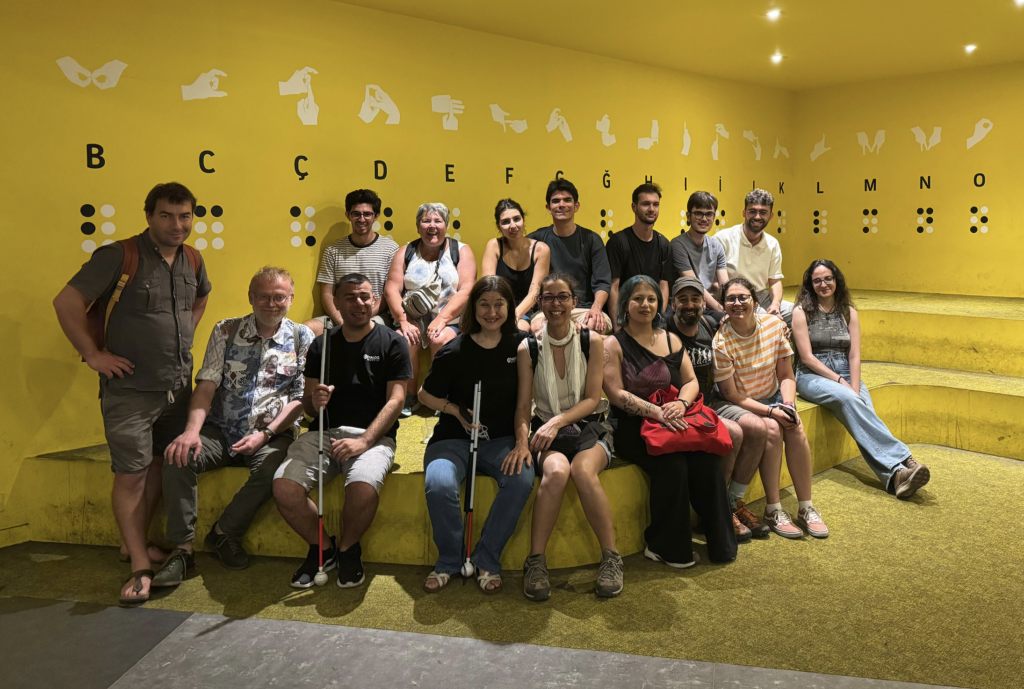
Visit to the DIYALOG MÜZESI / DIALOGUE MUSEUM ‘Dialogue in darkness and dialogue in silence’
The Dialogue Museum (located in the European part of the city/north of the Bosphorus) offers visitors two experiences: Dialogue in the Dark and Dialogue in Silence. Participants are accompanied by blind guides in total darkness, allowing them to experience the daily life of people with disabilities in Istanbul for one hour. This experience, spent in the company of guides Mehmet Kılıçparlar and Kadriye Arıkan, left a deep impression on the members of the group.

Première interview
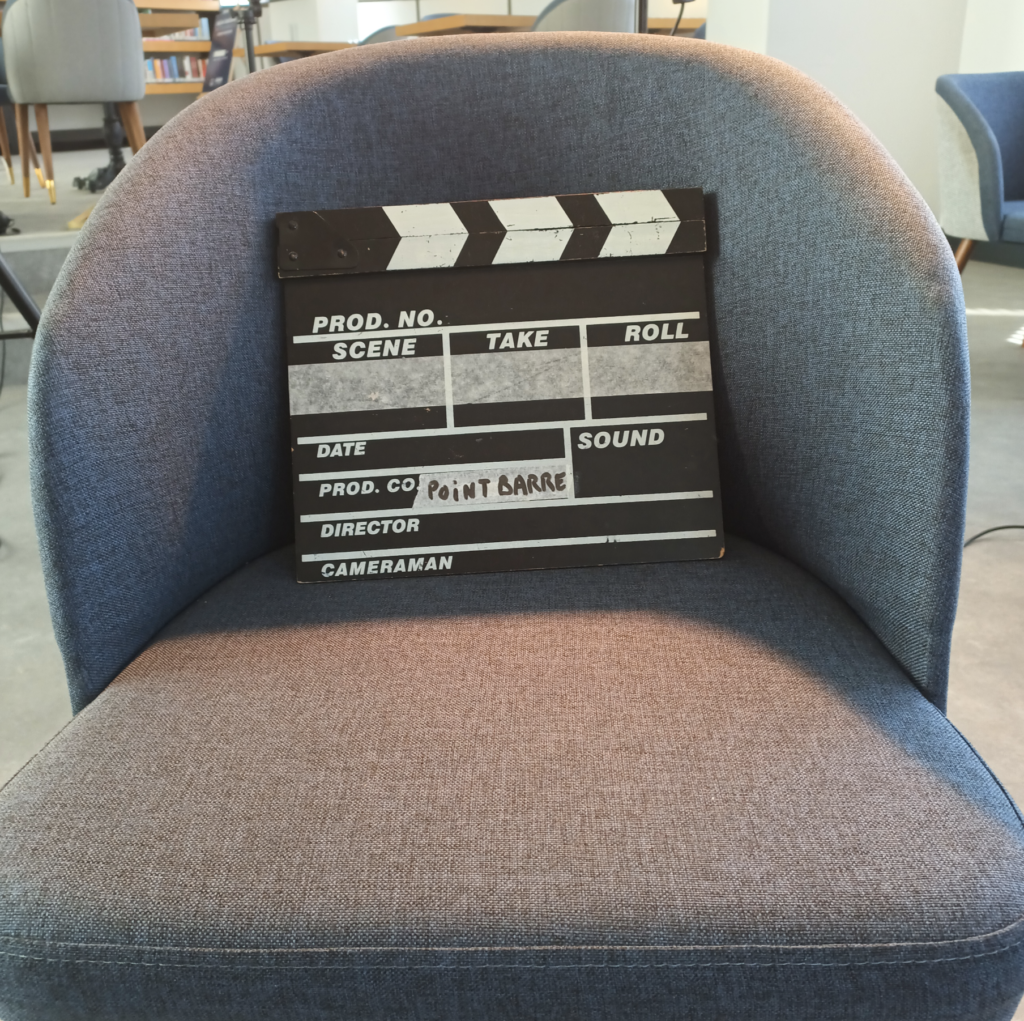
Ezgi Duyfem Kırılmaz, founder and coach of a women’s volleyball club (non-competitive), agreed to answer questions prepared by the youth group and youth workers. She was welcomed to the library of the BILIM ÜSKÜDAR Science Museum by the group, accompanied by Serra Yıldızlı.

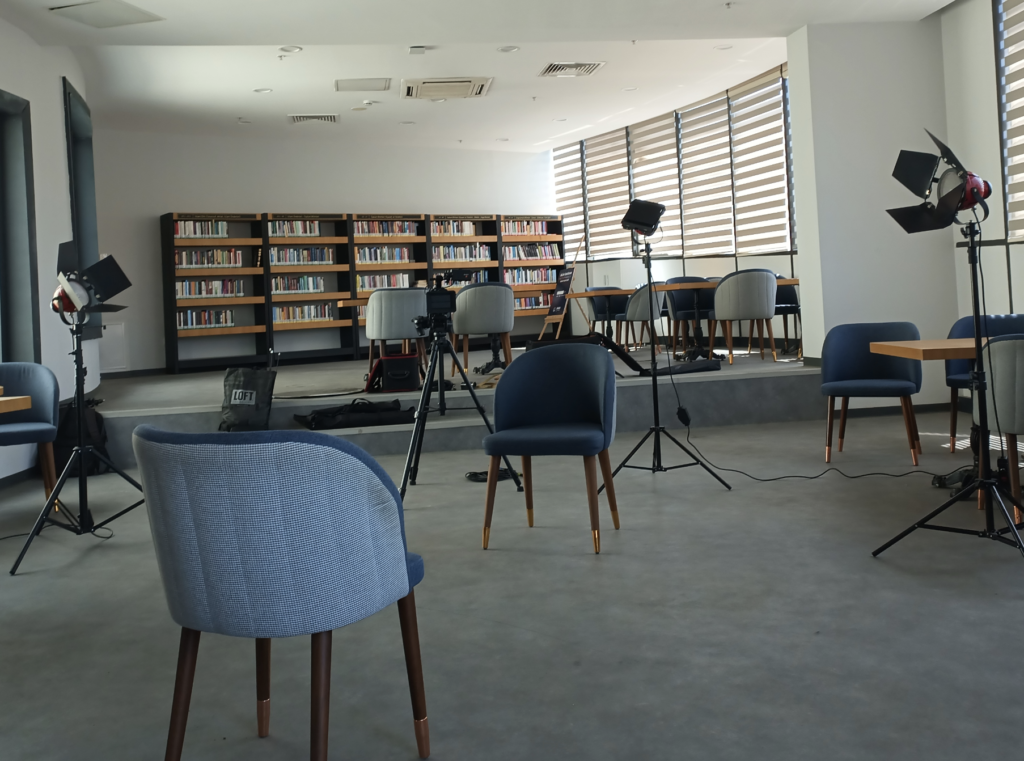
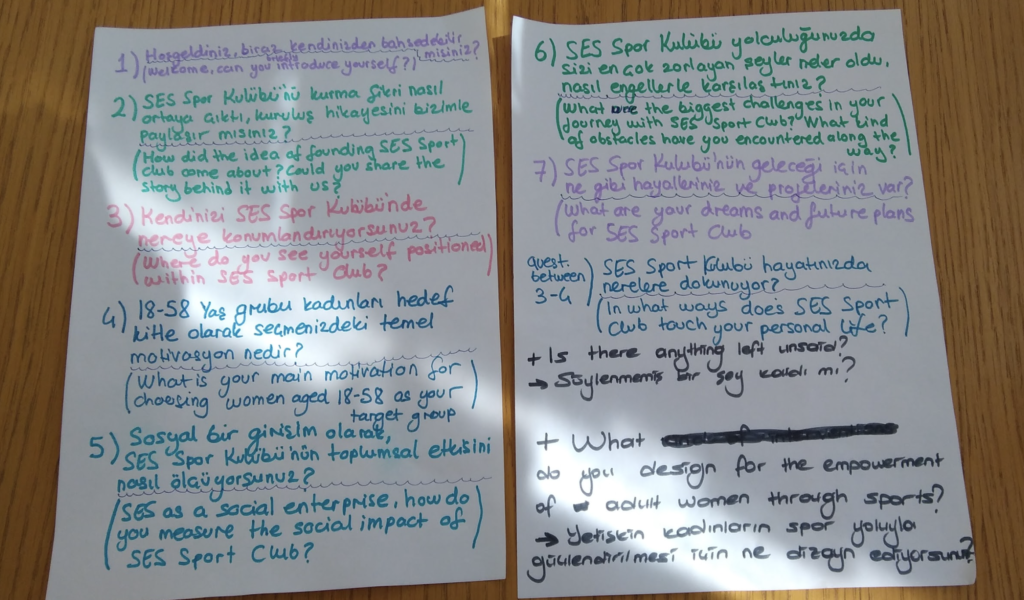
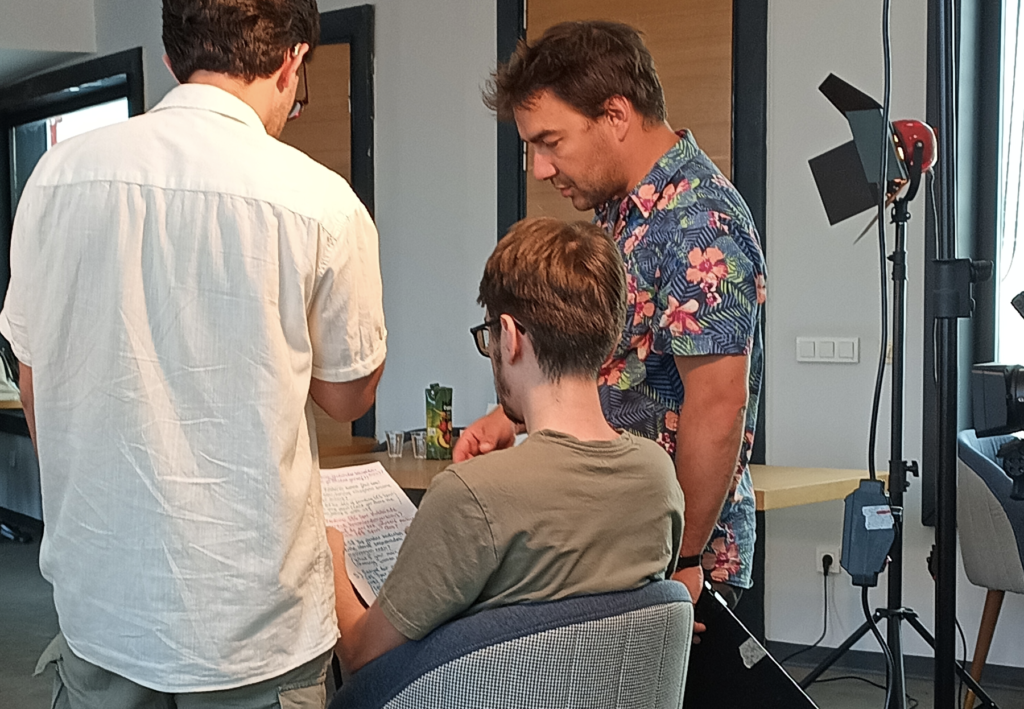
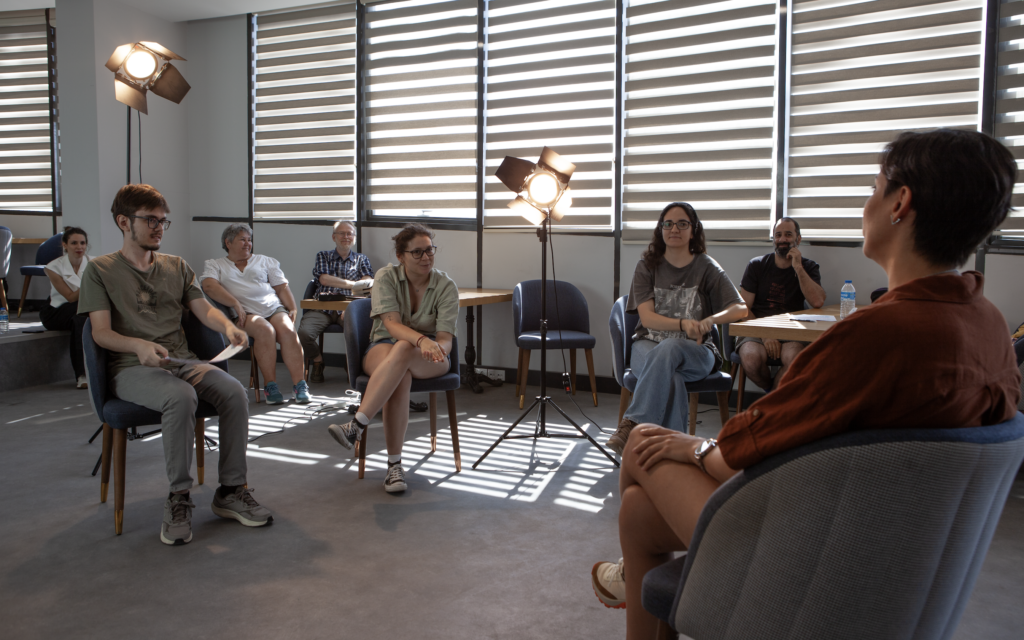

The filmed interview, conducted in Turkish and English, involved all members of the group: director, lighting, boom operator, second camera, making-of, set photographer, interviewer, interpreter, etc.
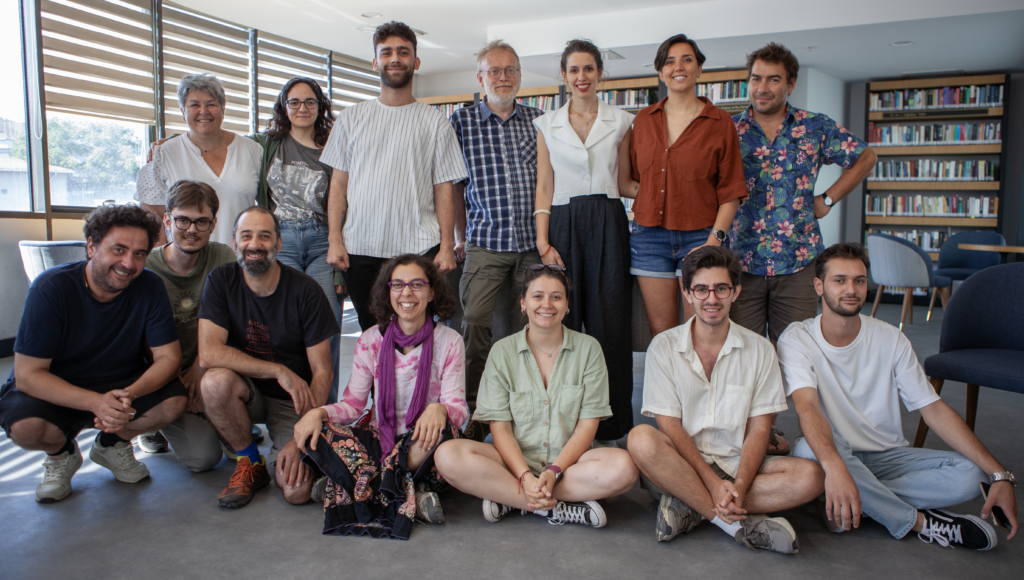

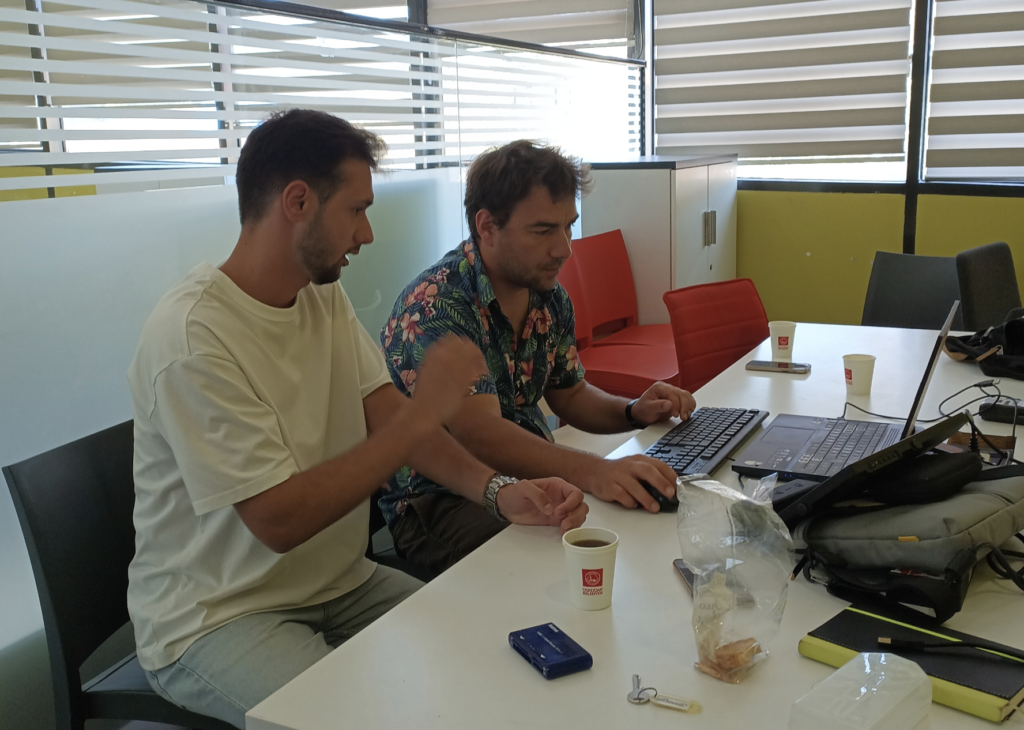
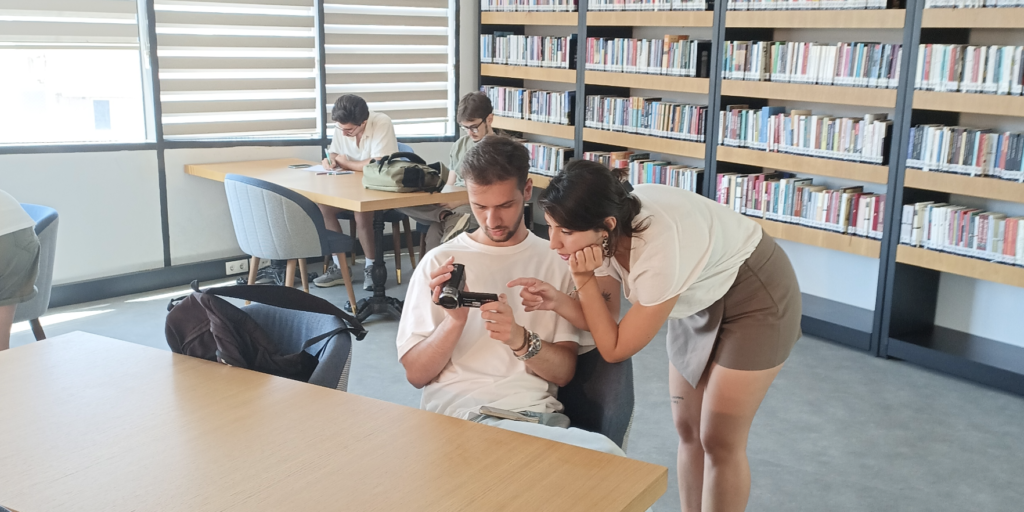
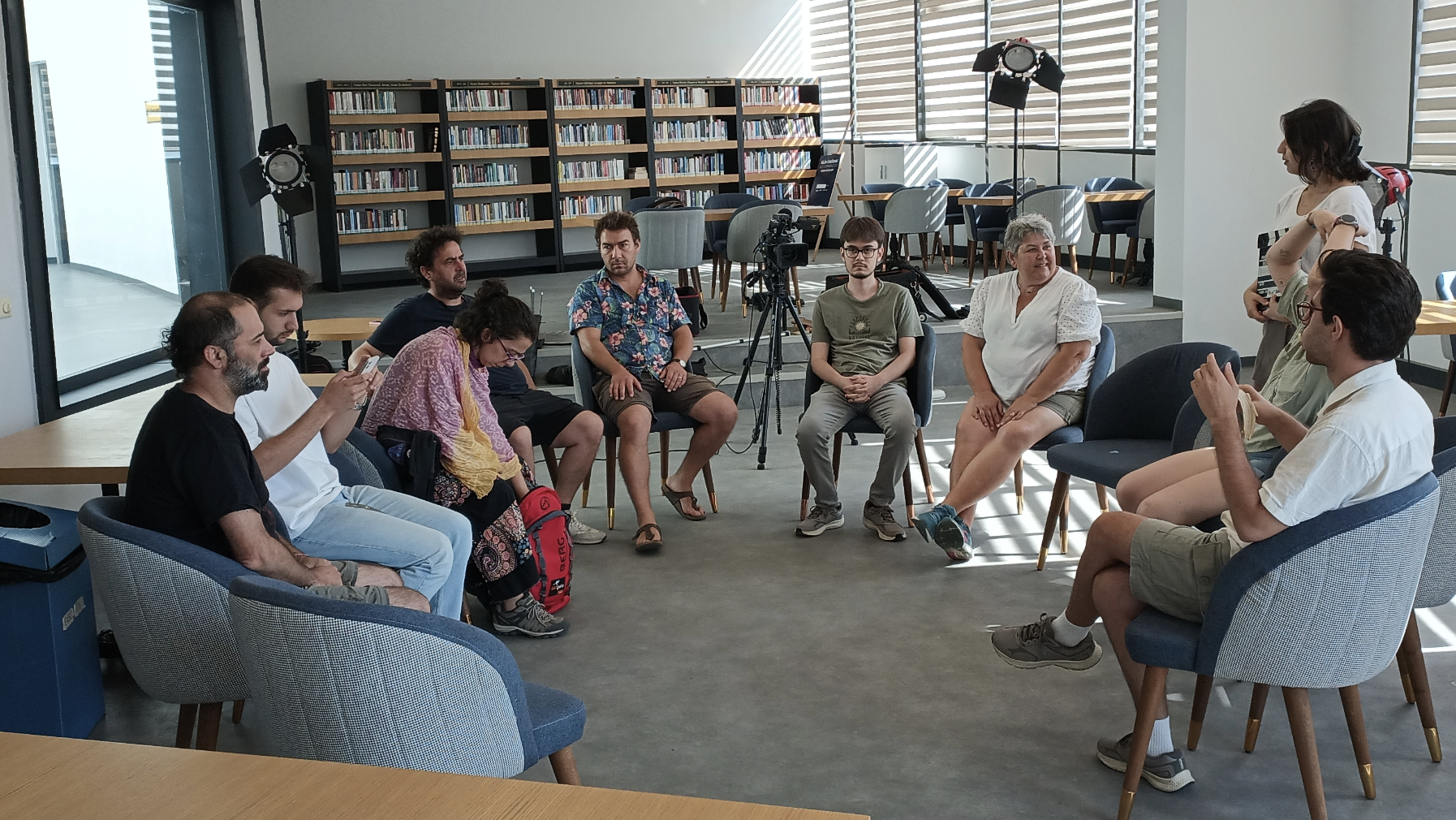
At the end of each day, all participants are invited to share their impressions, observations and possible developments for the rest of the project.
Second interview
Yasin Bulat is a youth worker in Istanbul. Originally from Turkey, he is dedicated to promoting inclusion, dialogue and human rights through his work with young people and community engagement. His career began at the local level and has expanded to include various roles at the national and European levels. In his current role as head of a youth centre, he creates inclusive spaces where more than 400 young people participate in learning and dialogue activities every month. At the same time, he manages information services for young people and advocates internationally for the recognition of skills acquired through non-formal education. In all his work, he aims to create safe and transformative learning spaces that empower individuals and combat discrimination.

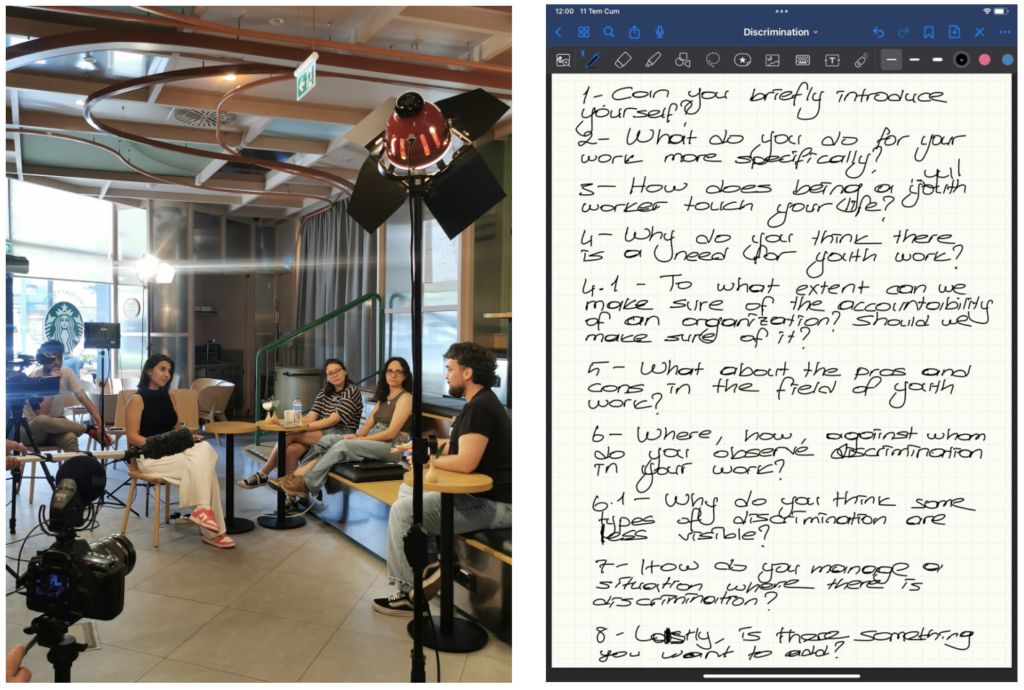
Questionnaire template developed by young people and youth workers
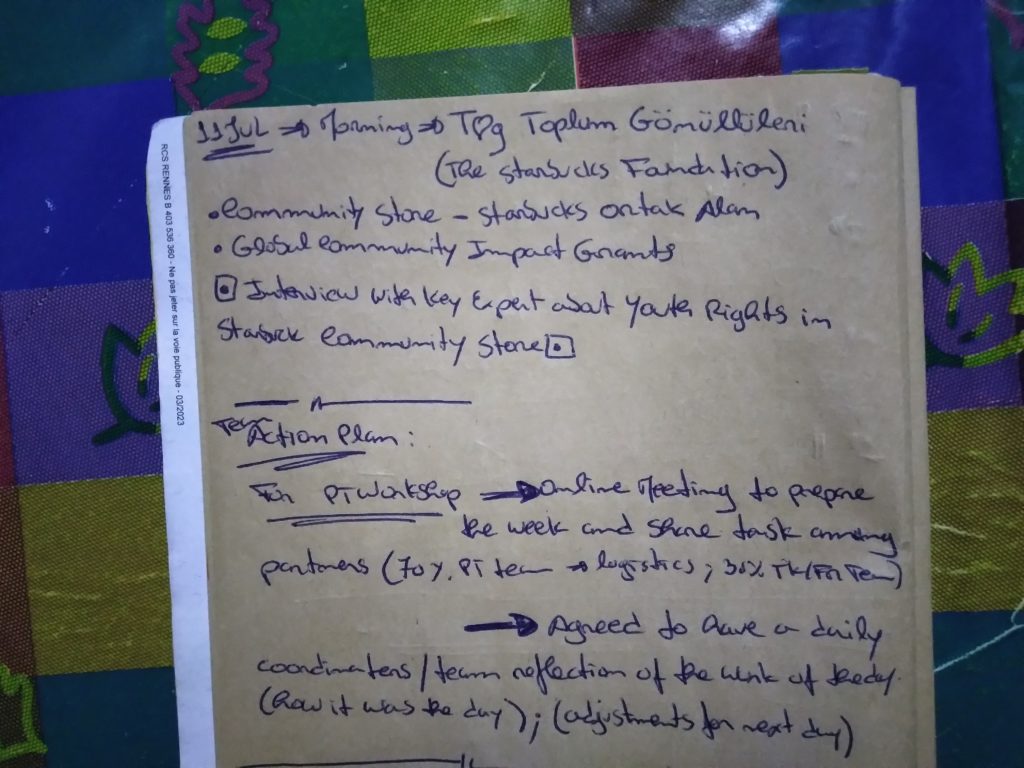
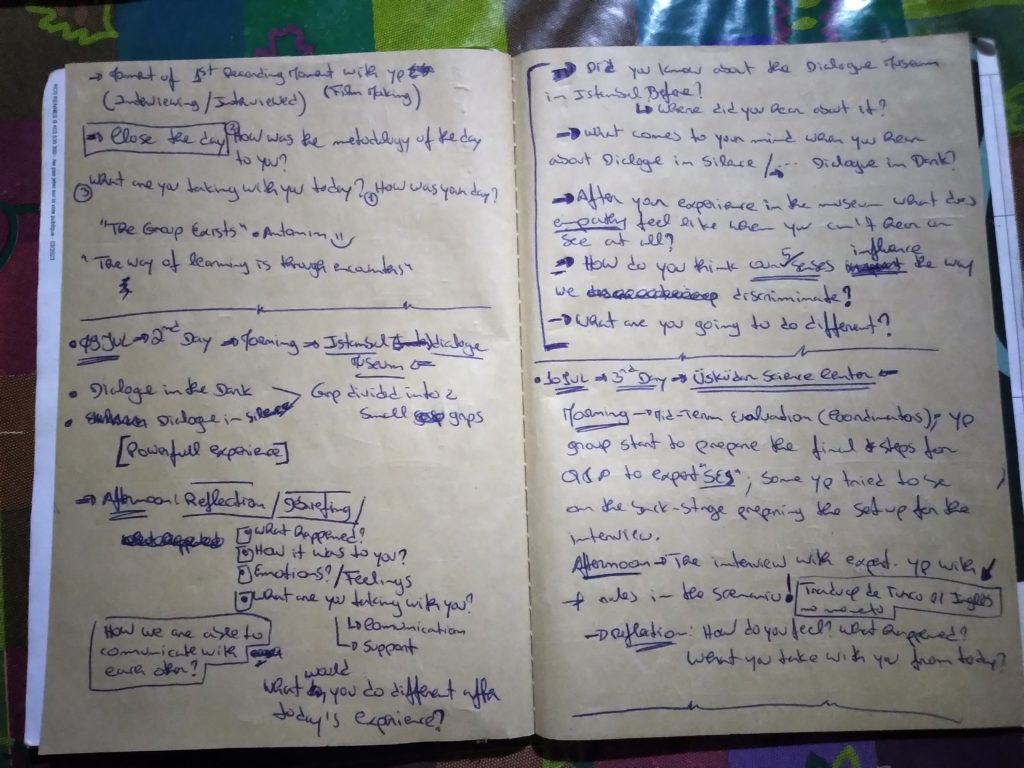
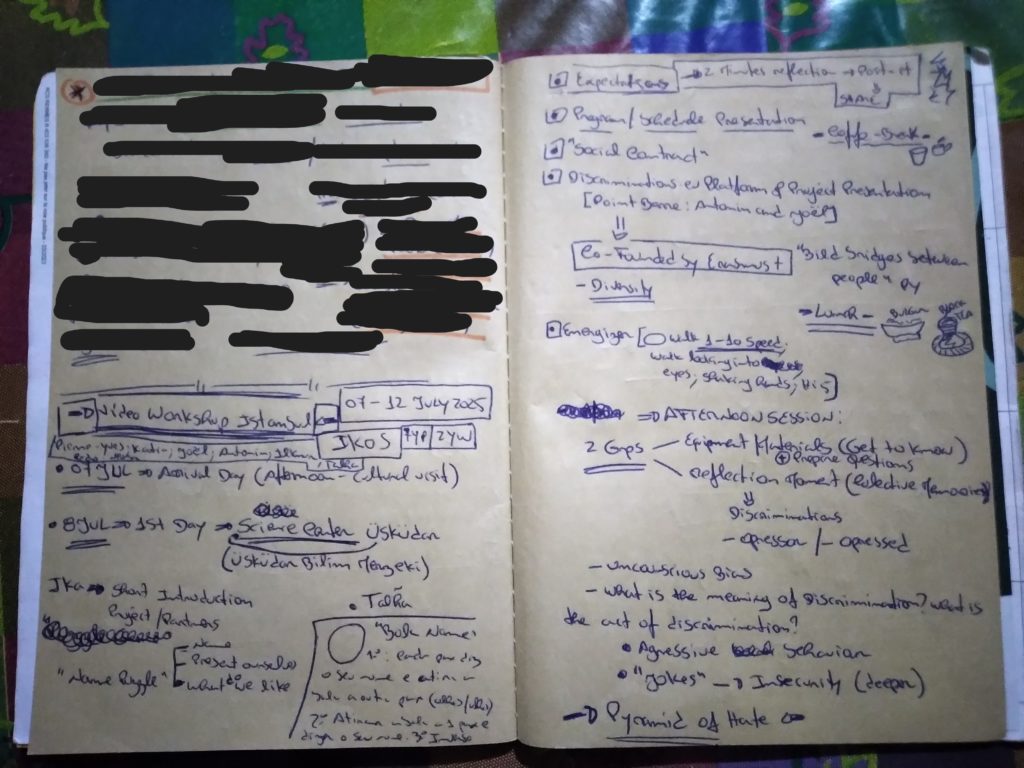
Some notes taken by a youth worker
Between two workshops…
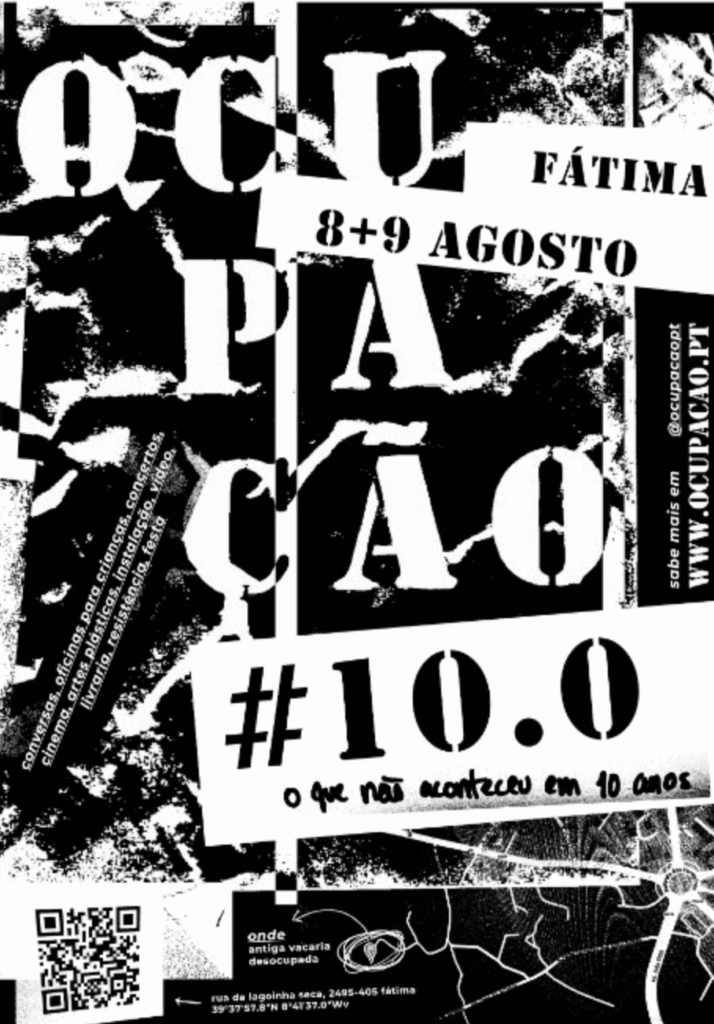
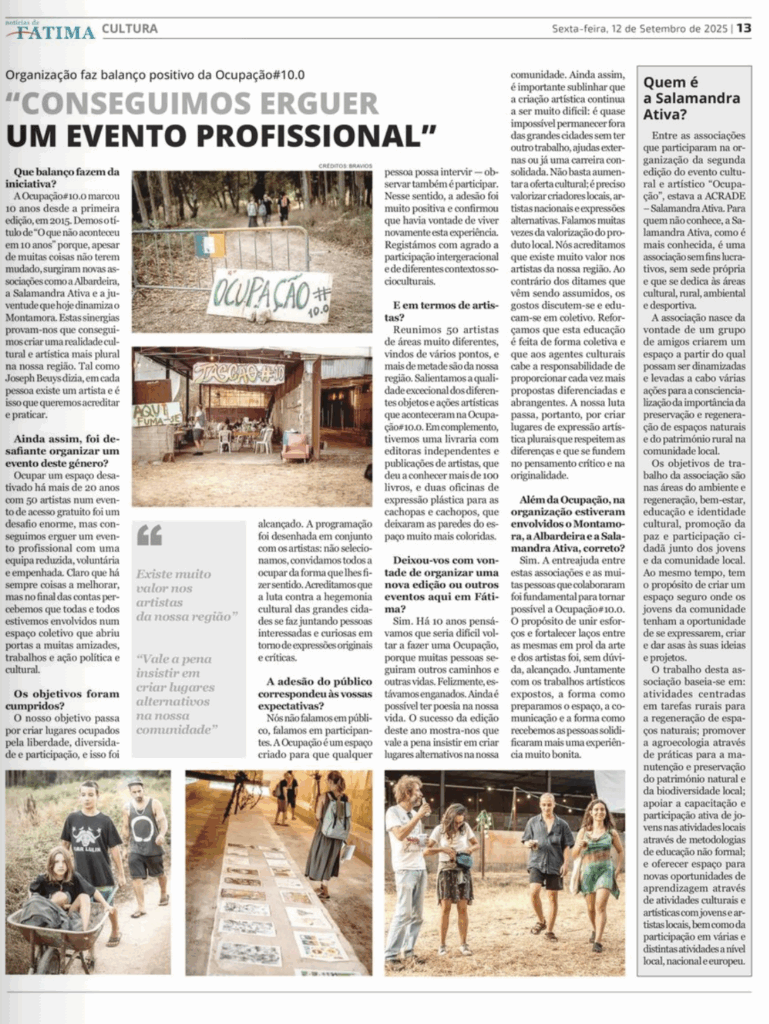

Our partner Salamandra Activa is promoting the project.
Excerpts from videos filmed in Portugal, France and Turkey were presented at the ‘Ocupação #10.0’ event, which took place near Fátima, Portugal, on 8 and 9 August 2025.
Third workshop « discriminations.eu » – Fátima/Ourém – Portugal
Our third and final workshop, exchange and discussion on the issue of discrimination took place in Fátima and Ourém from 27 to 31 October. The partners came together with a desire to adapt the project to the specific characteristics of this semi-rural area. Most of those who wanted to participate in the meeting were youth workers. For one day, young people from the region joined us, contributing their ideas and enabling Turkish and Portuguese youth workers to lead the workshop during this session.
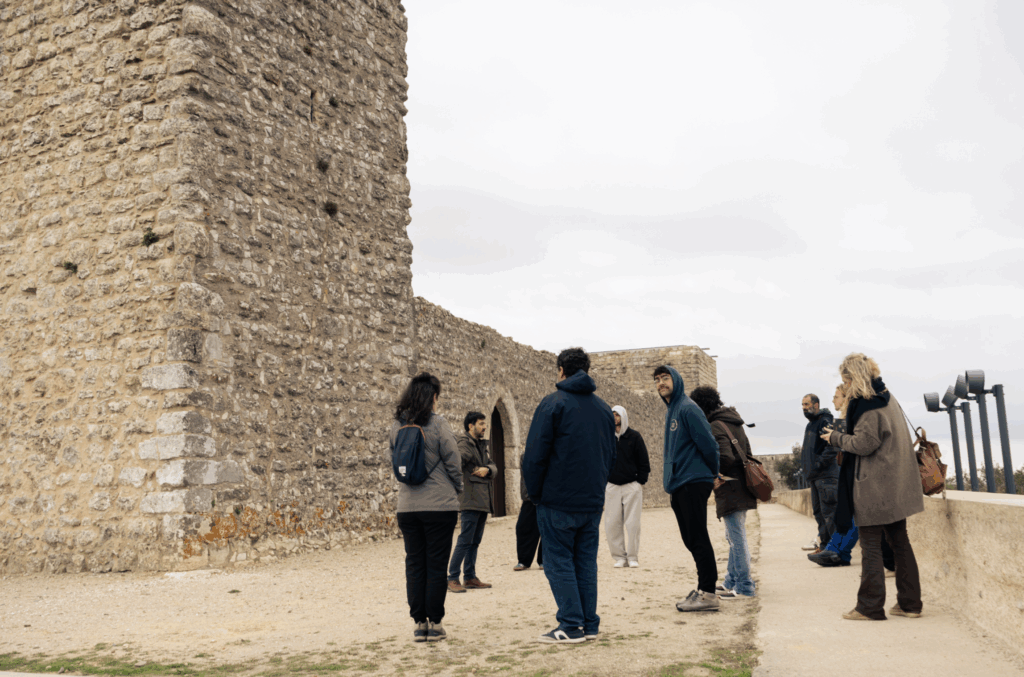
The first working session took place in the medieval Paço dos Condes (Palace of the Counts), located on the heights of Ourém. As in our previous meetings, upon arrival we proposed the planned programme for the week, defined our expectations and concerns for the days ahead, and got to know each other better. We also discussed the ideas and projects we hoped to achieve within the available time.
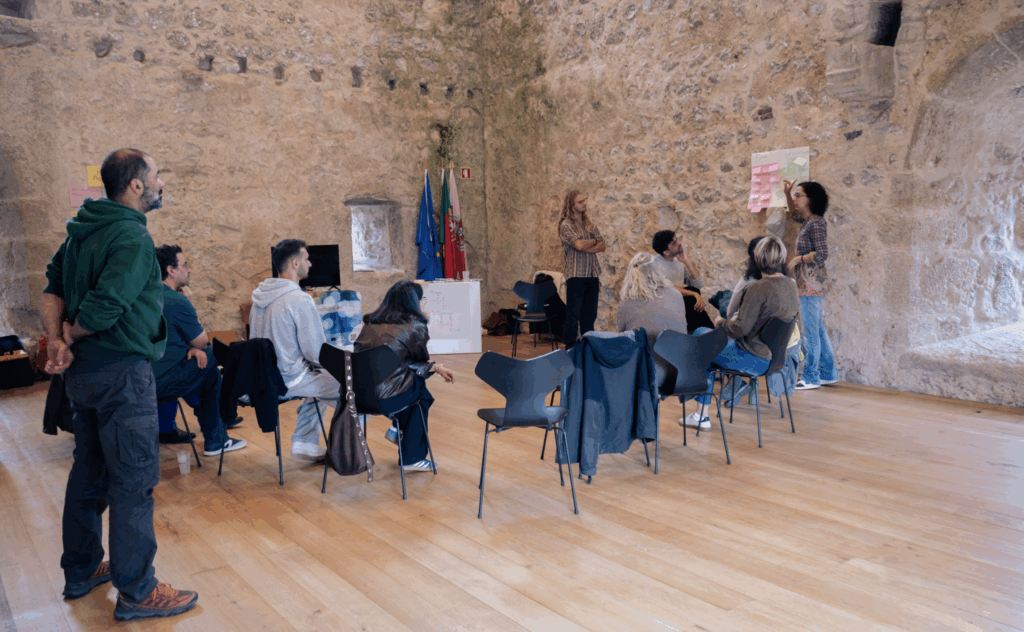

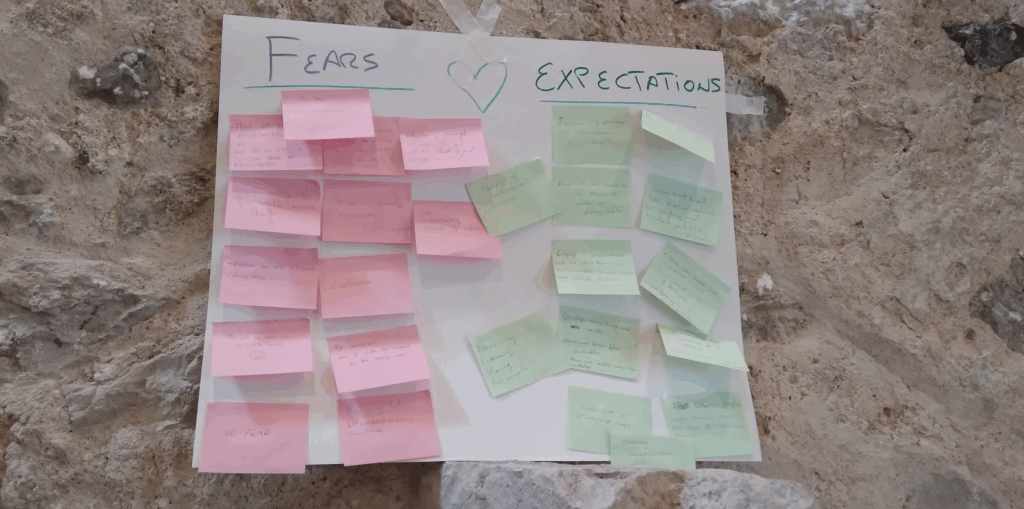
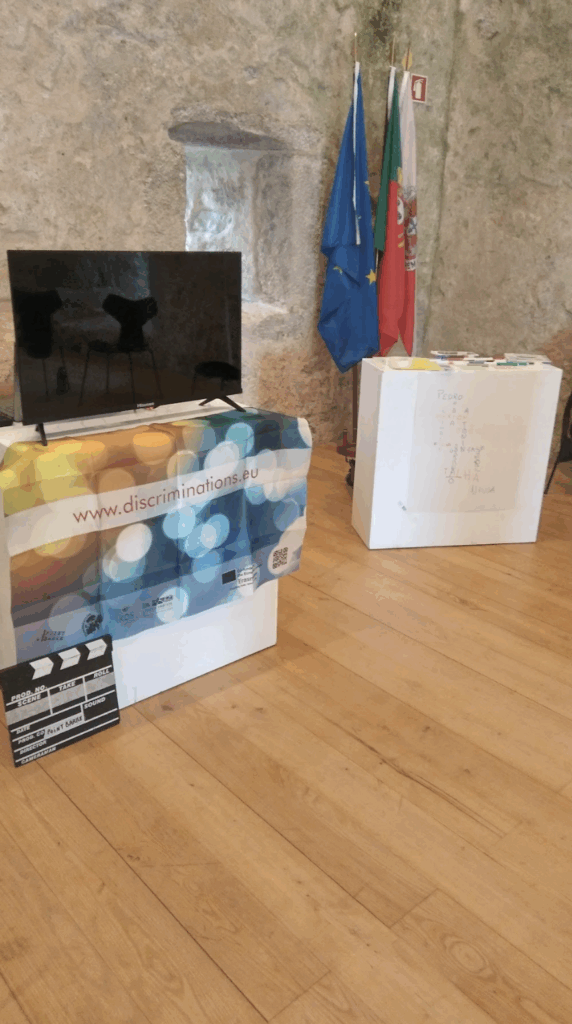
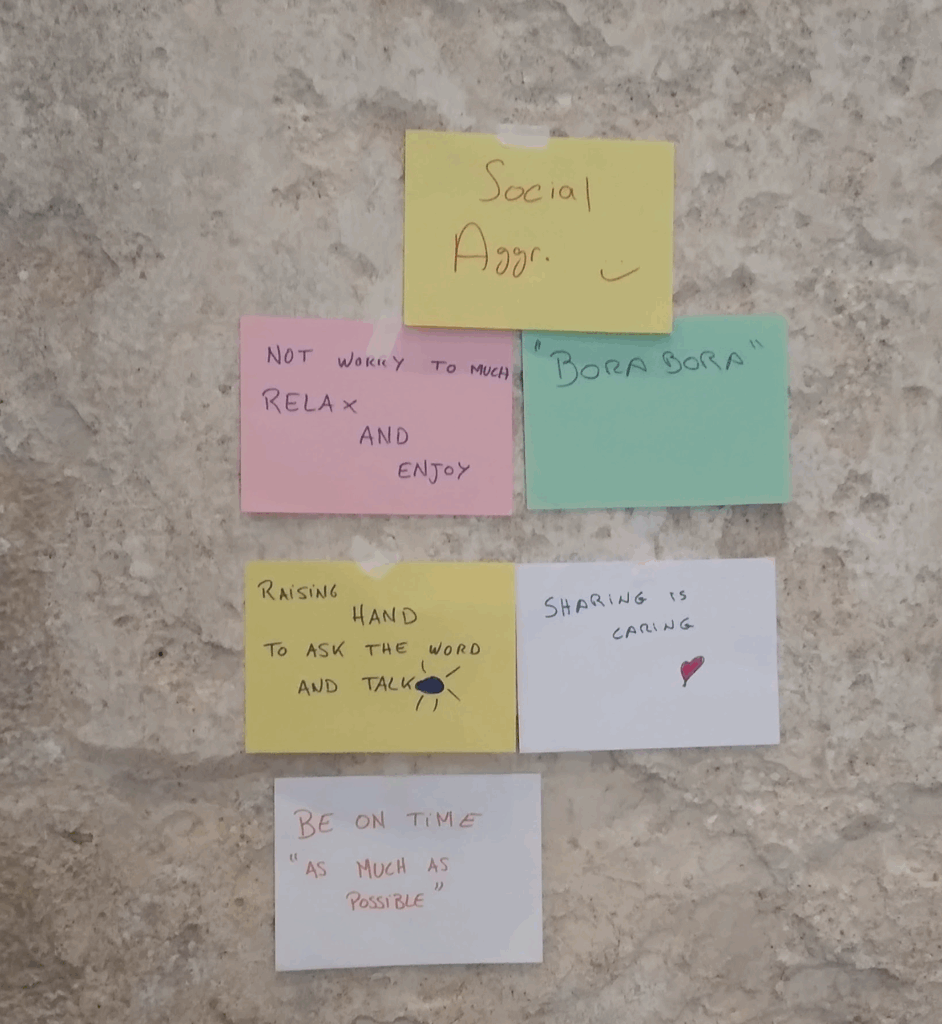
After spending time getting to know each other and forming the group, we presented a summary of our existing achievements and began discussing what discrimination looks like in our respective countries, as well as how the fight against it is organised. We considered the political climates and trends in the different types of territories in which we live, such as megalopolises, metropolises and municipalities, and how these might evolve. One observation that emerged from these initial discussions is that increasingly xenophobic rhetoric is becoming prevalent in Portugal, a country that had no far-right parties in its political landscape for nearly 50 years.
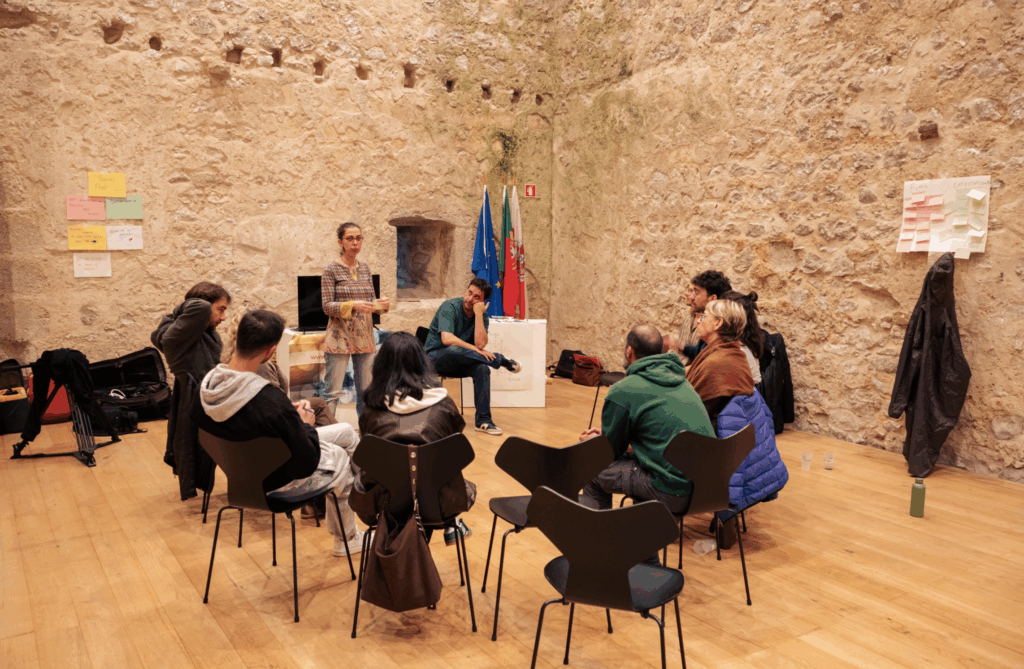
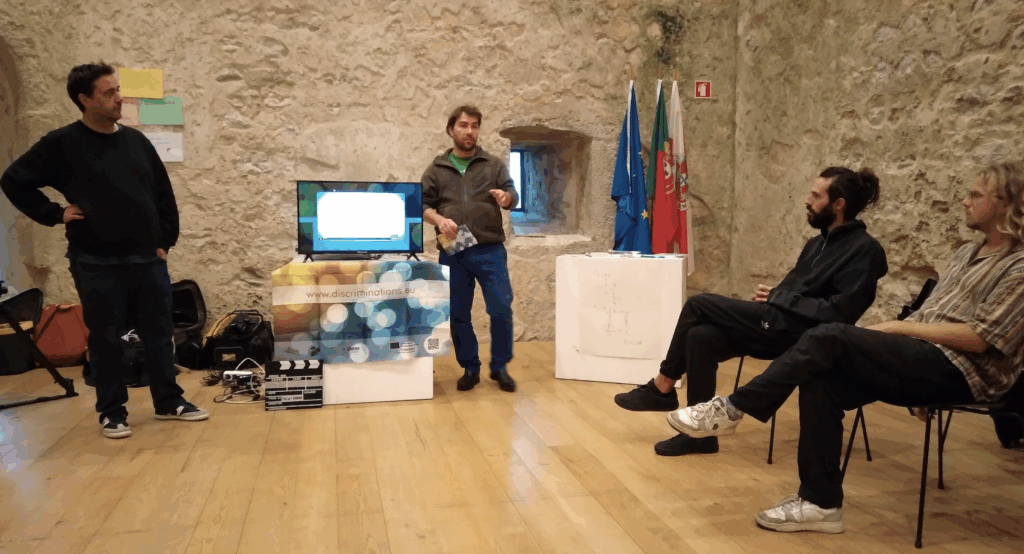
Antonin and Joël from the POINT BARRE association present the project initiated in Rennes (France) that led them to come and run this workshop with the people present.
After the initial work session, the group went off to explore the castle.
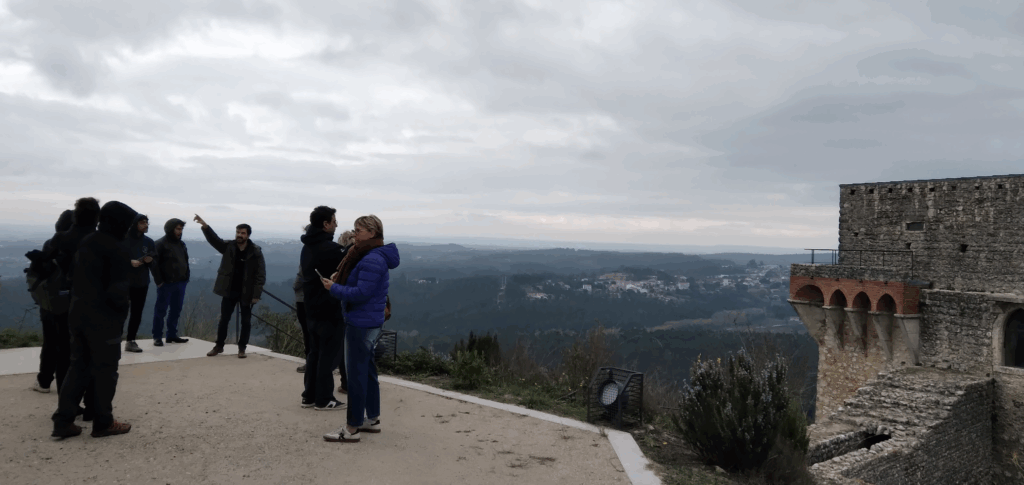
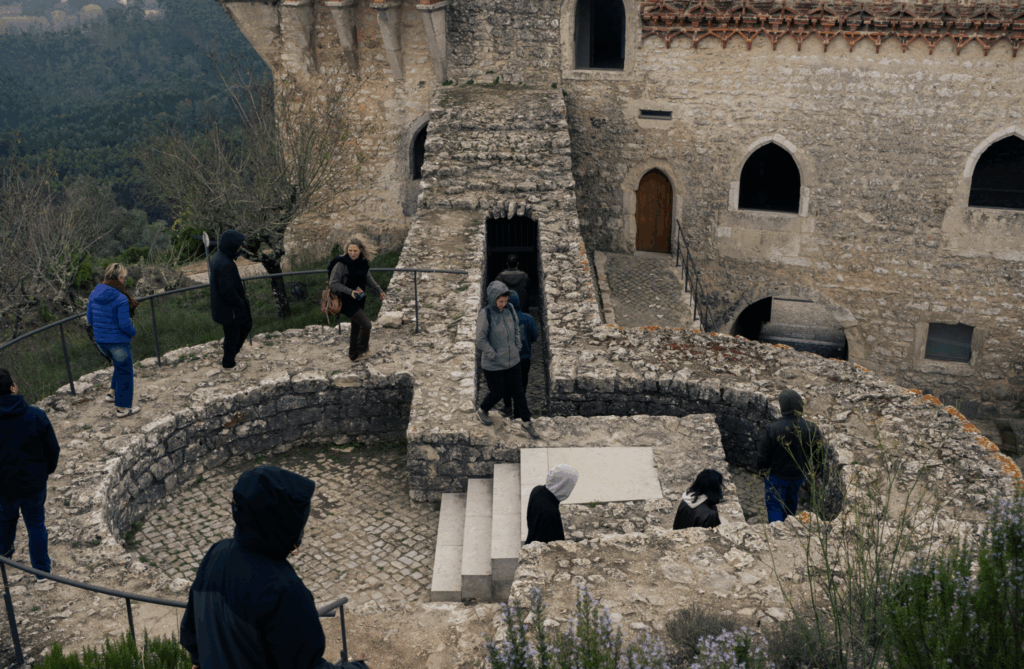
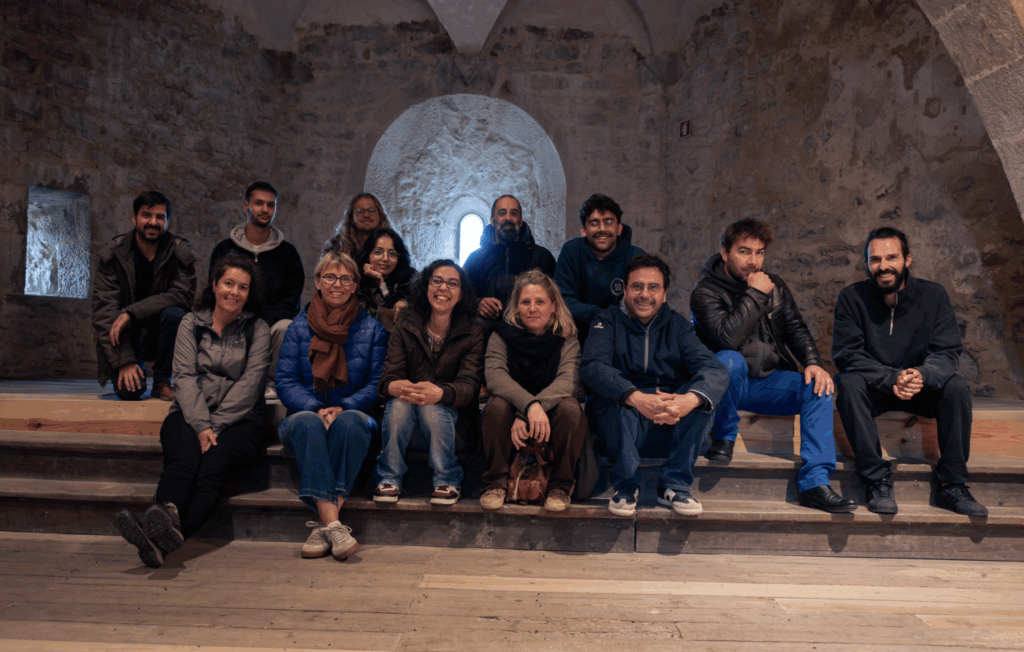
We continued our discussions and informal exchanges at this historic location. This experience gave us a new perspective on the topics that inspire us, as recounted by Hélder Farinha, our guide. We would like to express our sincere thanks to the team at Paço dos Condes de Ourém.
Agroal Natural Park: putting what was learnt in previous sessions into practice.
The first two workshops, held in Le Mans and Istanbul, allowed the youth workers from IKOS (TQ), SALAMANDRA ACTIVA (PT) and ÉTUDES ET CHANTIERS (FR) to learn about audiovisual techniques and explore various approaches to addressing discrimination among young people. This third meeting empowered the teams to independently facilitate the final workshop. Still accompanied by the POINT BARRE team, the youth workers actively involved a group of young people in the audiovisual creation process.
We were welcomed by a group of young Portuguese people at the Agroal Nature Park near Fátima and Ourém, where we spent the day rediscovering audiovisual equipment, developing questionnaires, and discussing the theme of discrimination.
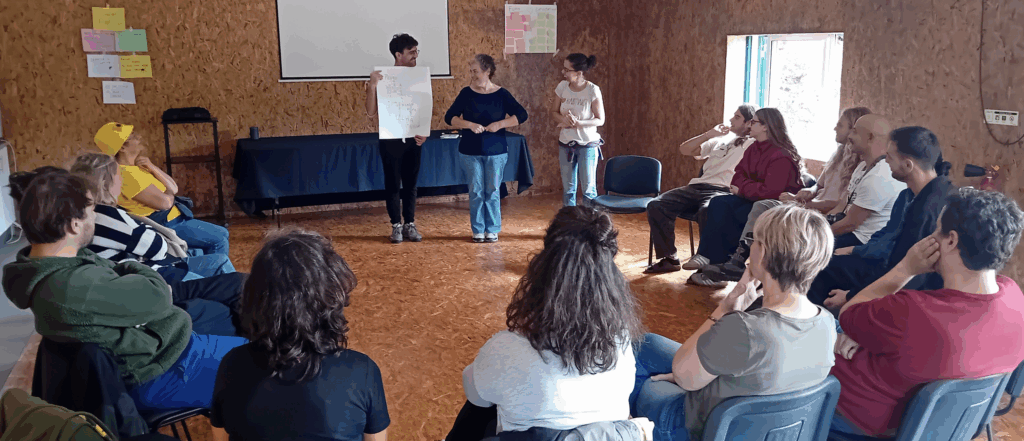
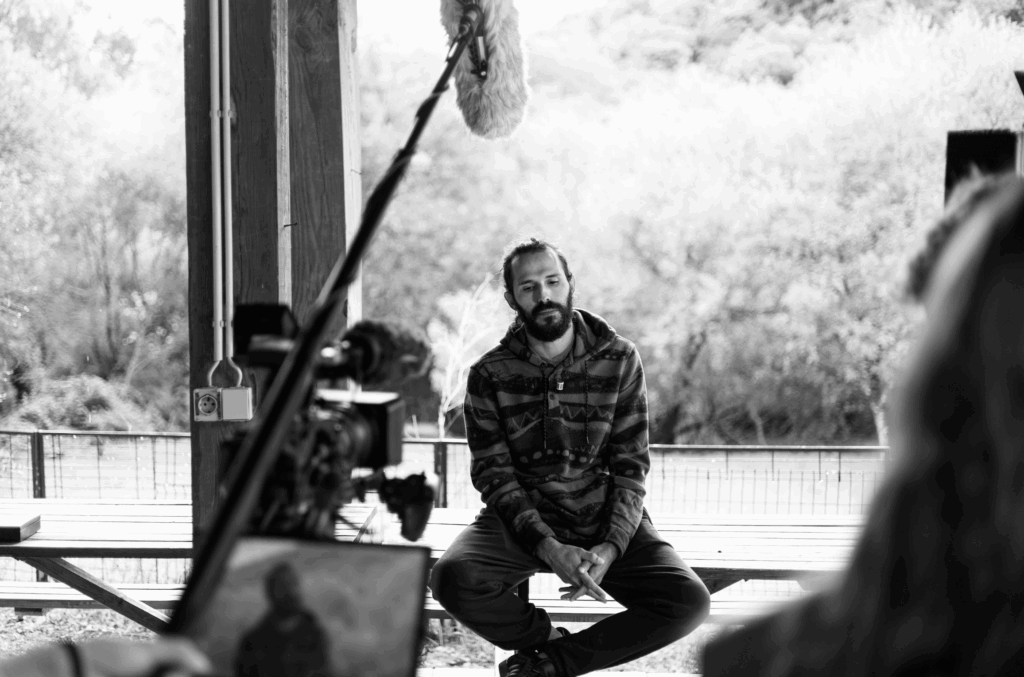
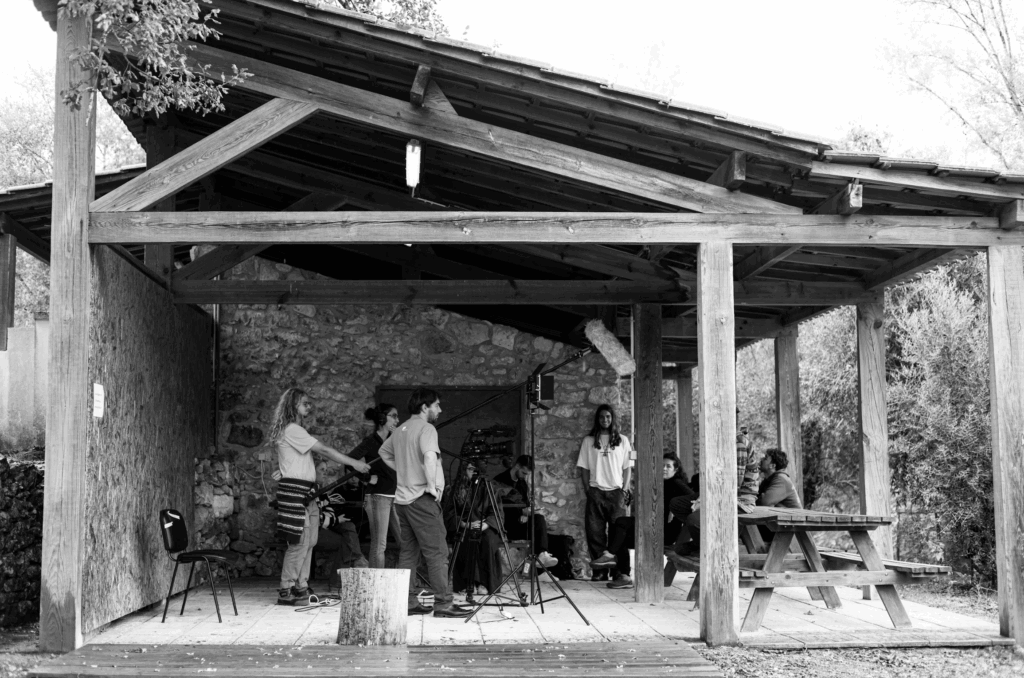
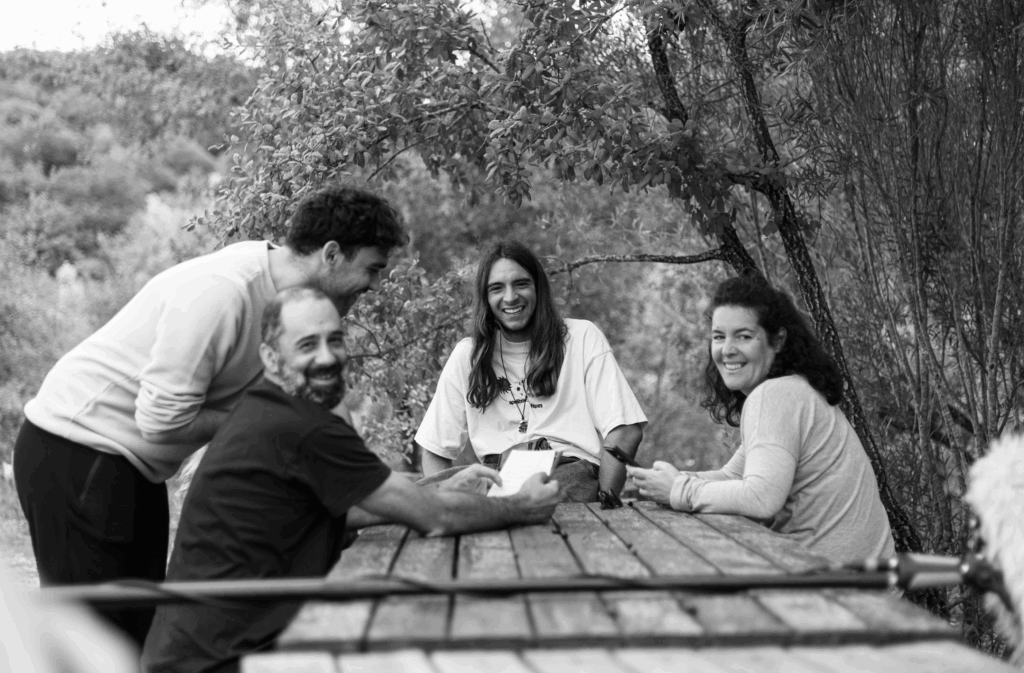
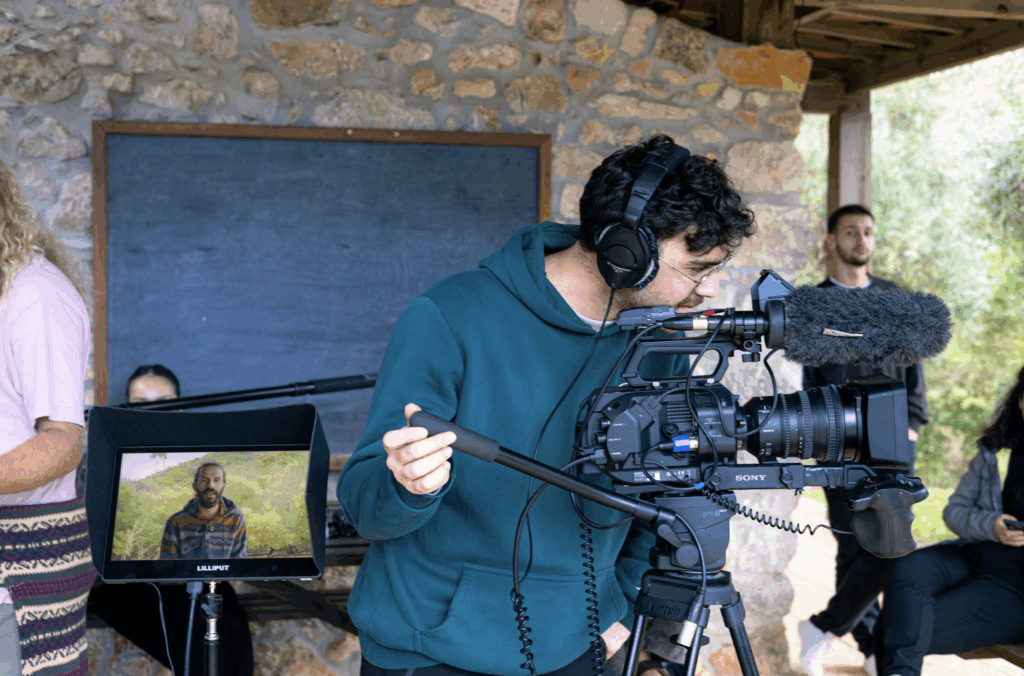
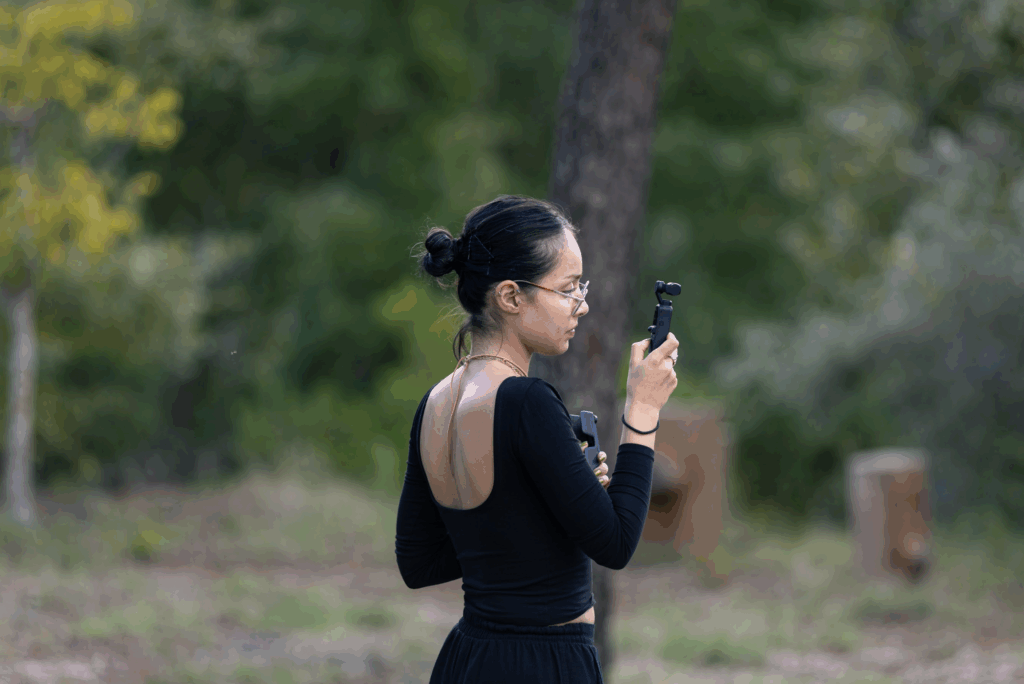
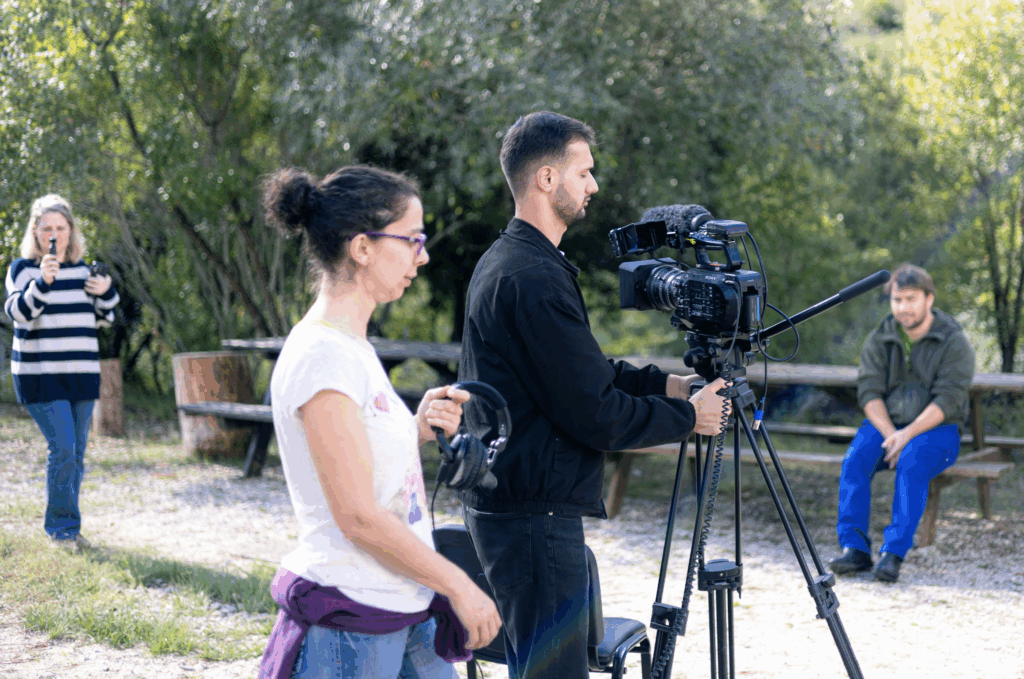
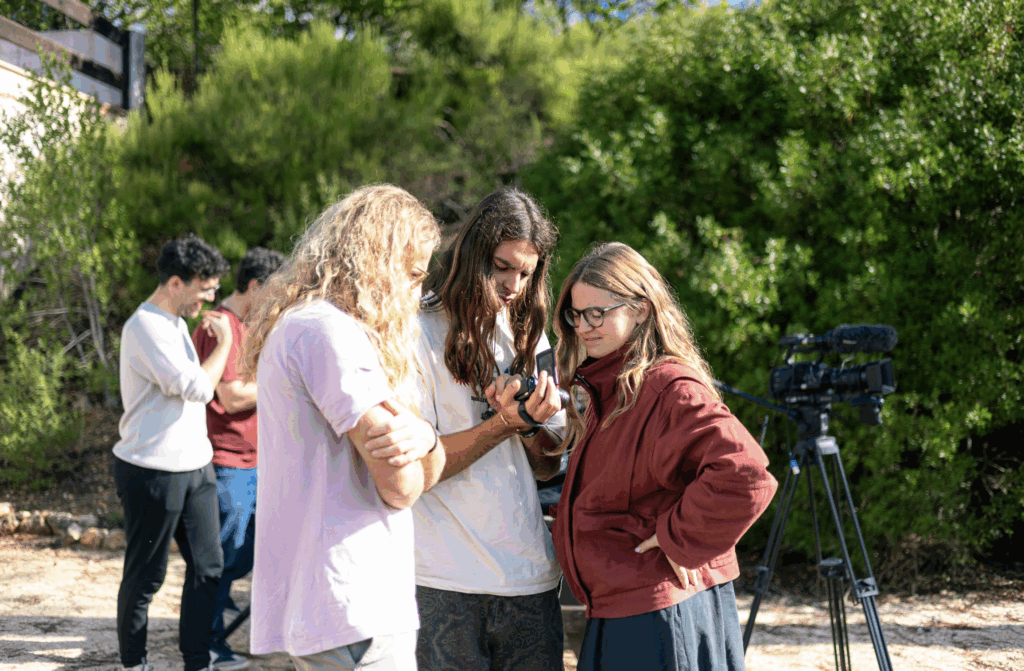
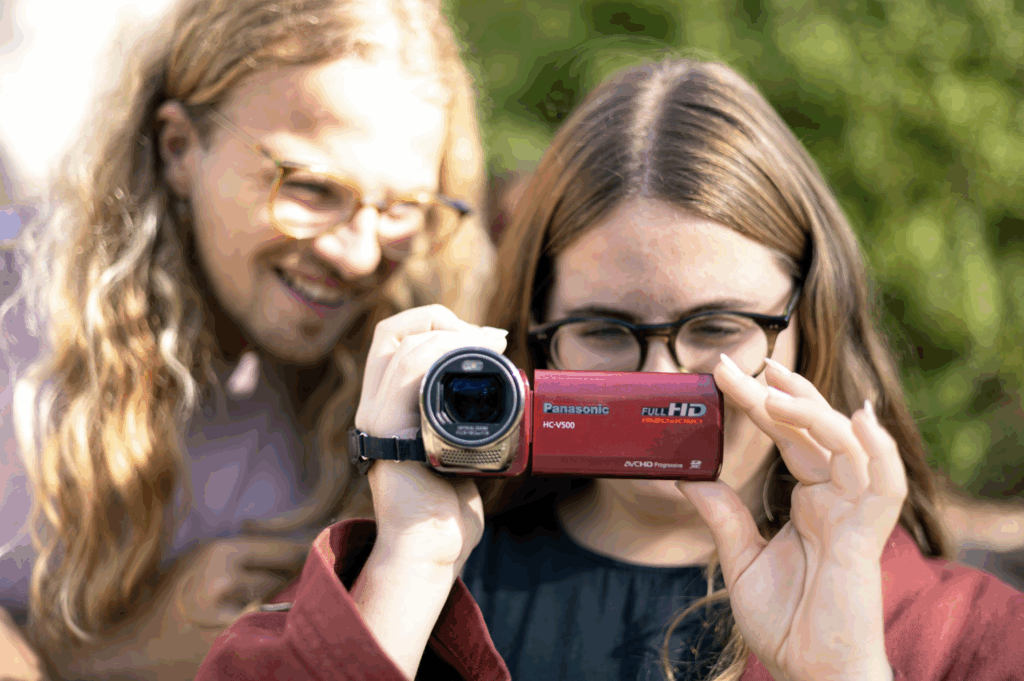
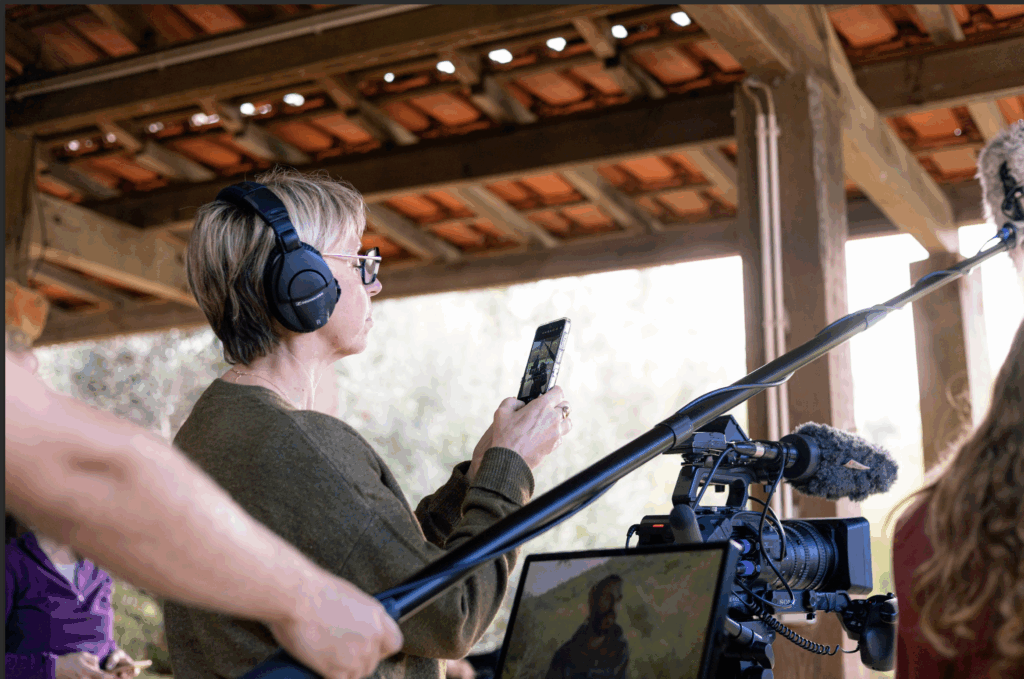
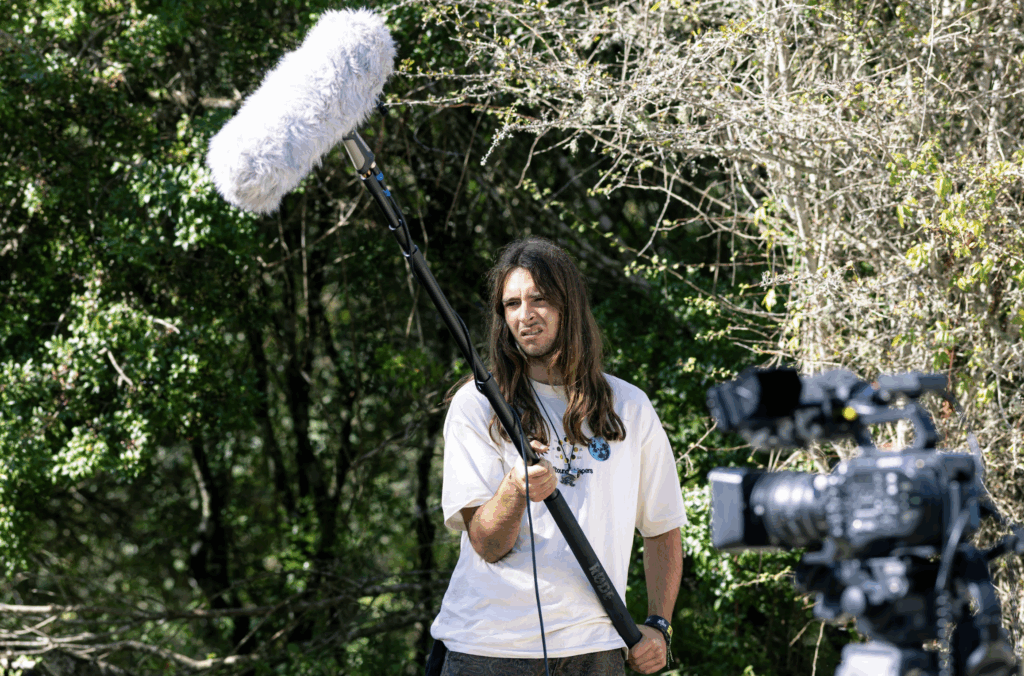
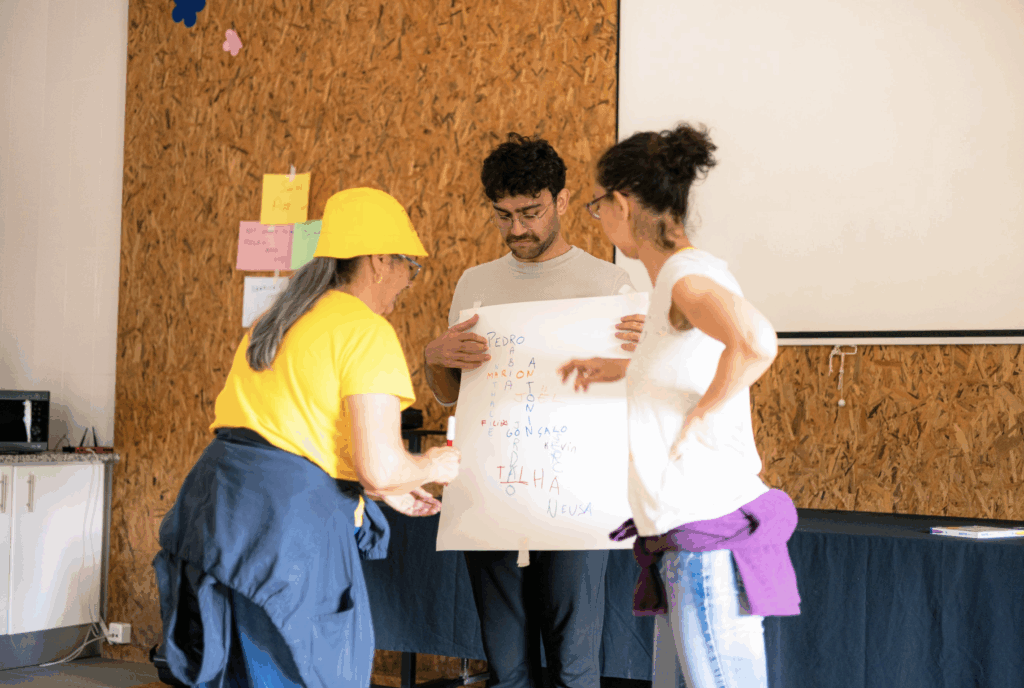
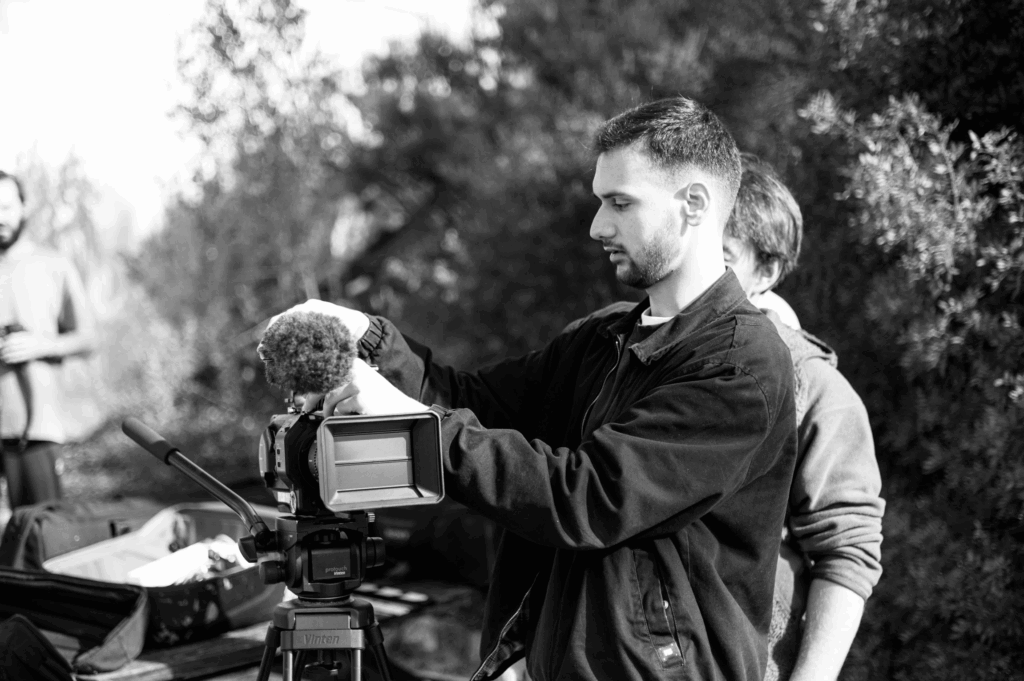
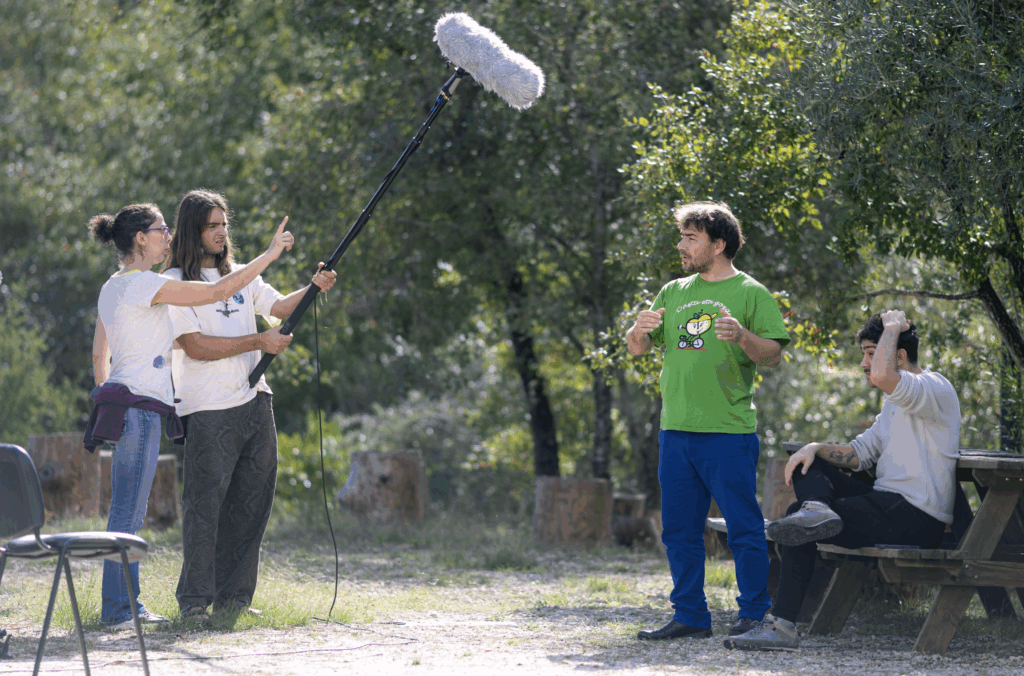
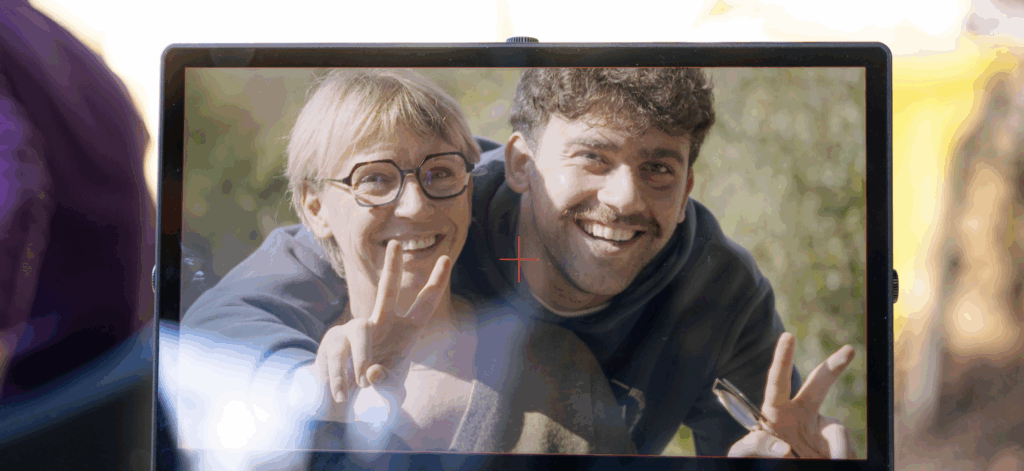
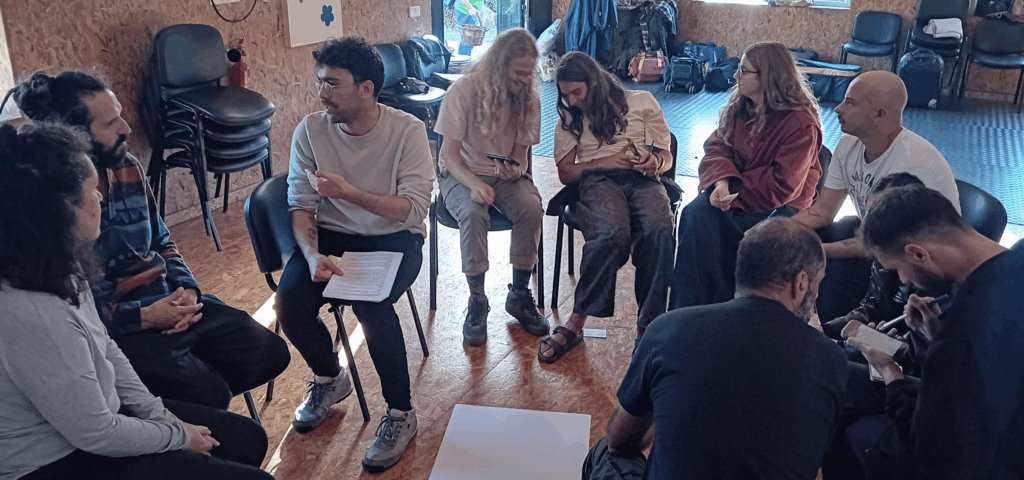
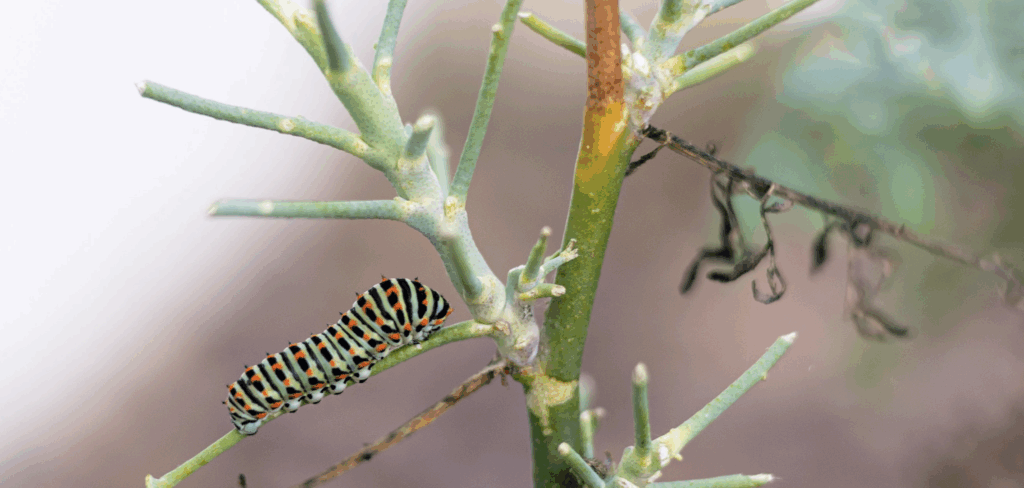
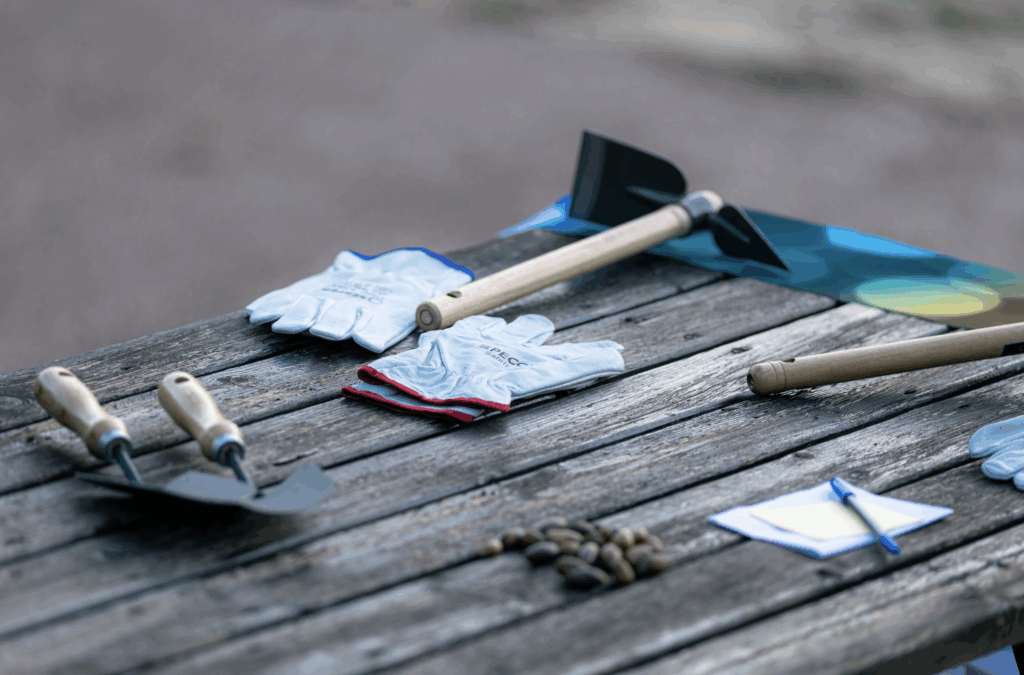
After spending the day creating images, practising photography and filming, as well as recording sound and preparing questionnaires for external contributors, we carried out the green action. Each participant planted a seed from a tree of their choice in a pot. In a few months, the park teams will transplant the trees to the site.

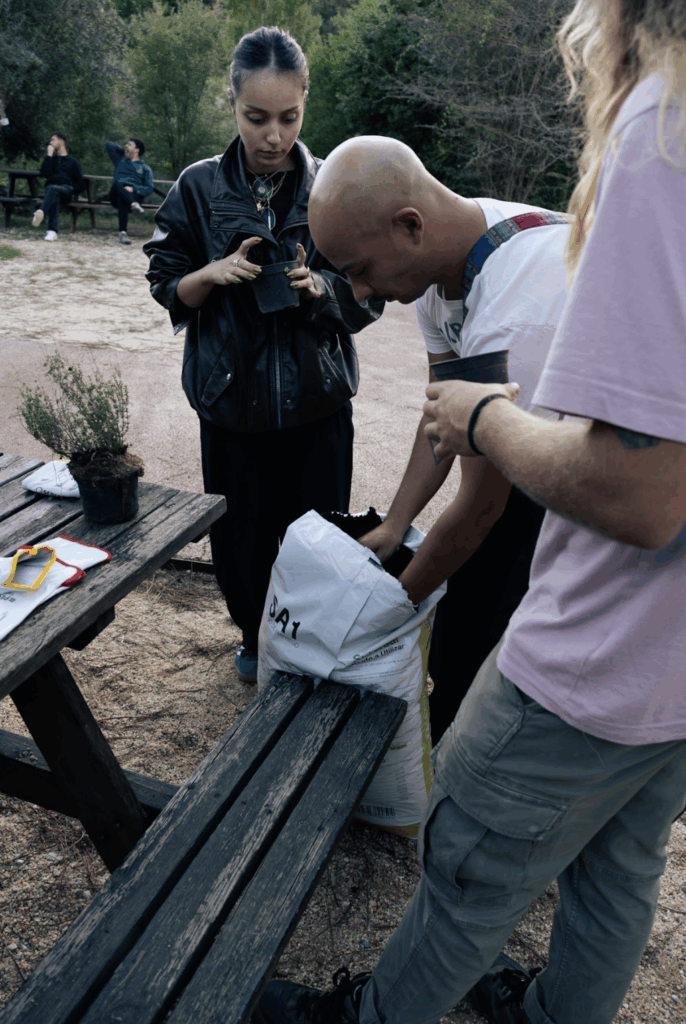
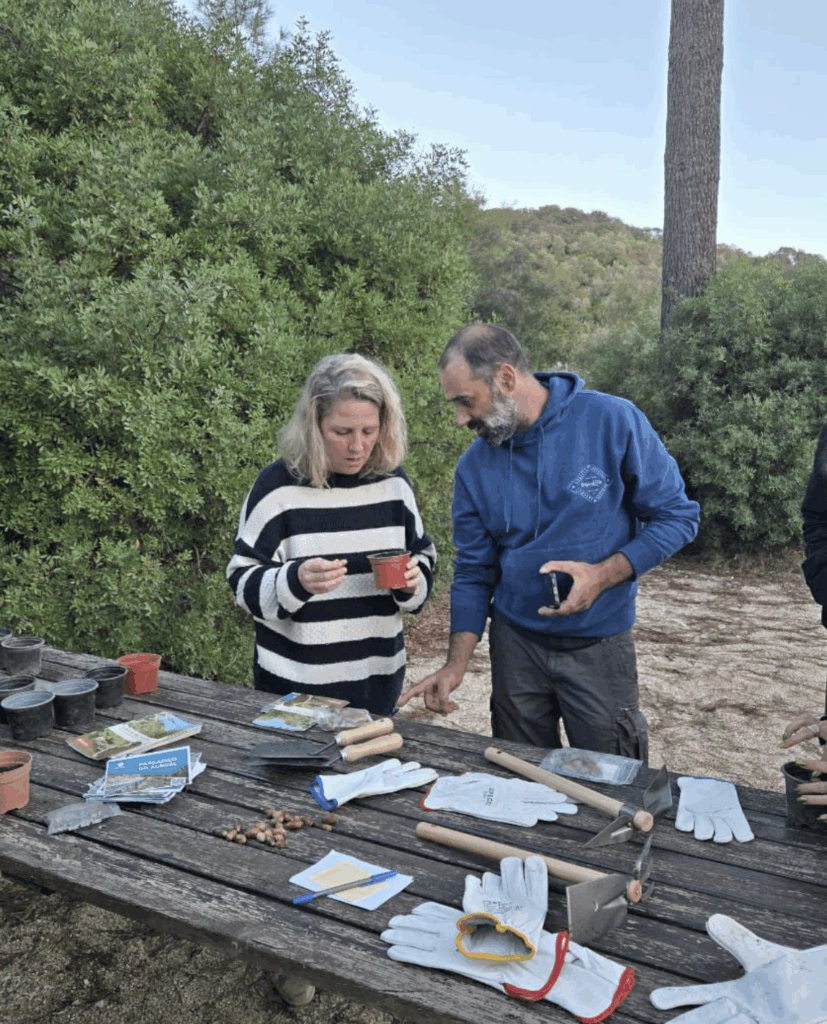
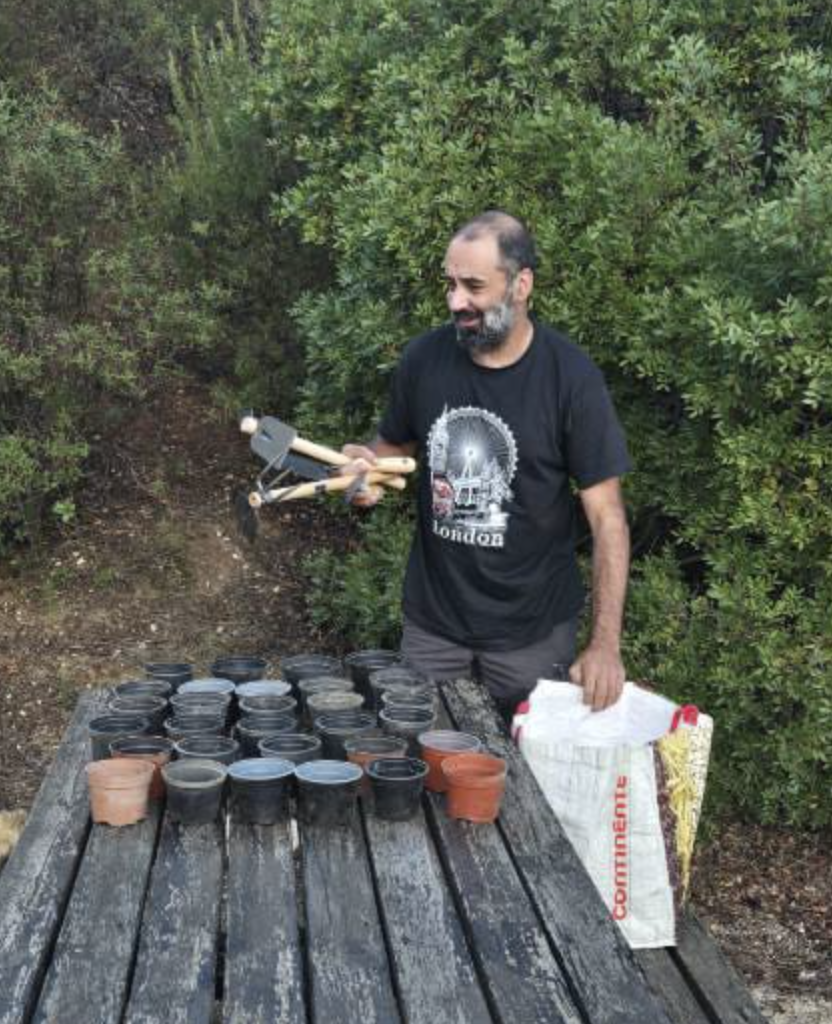
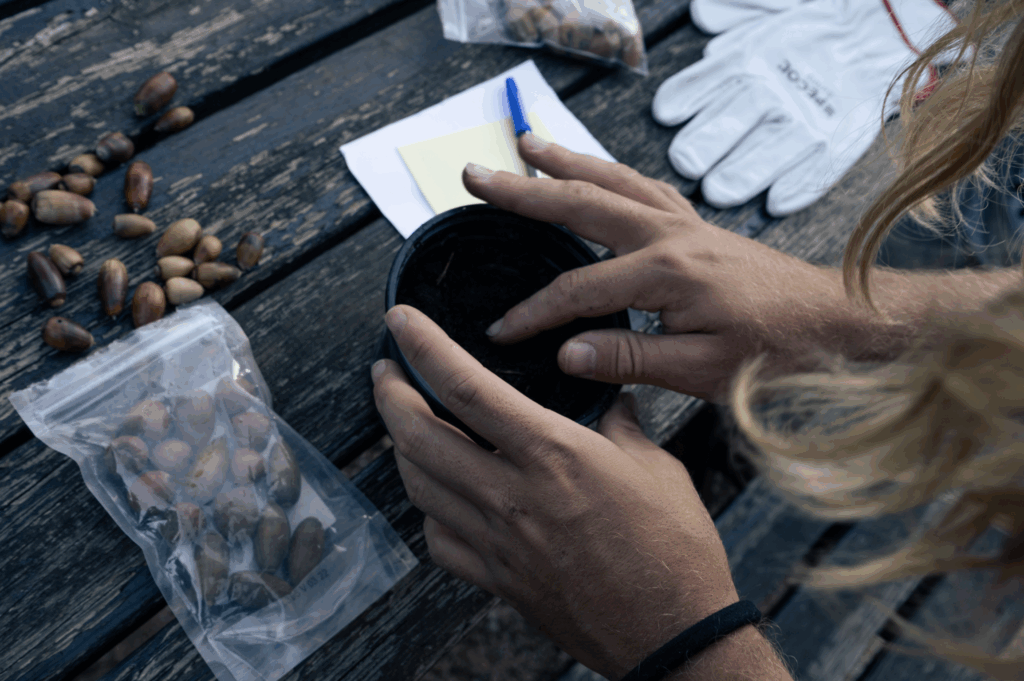
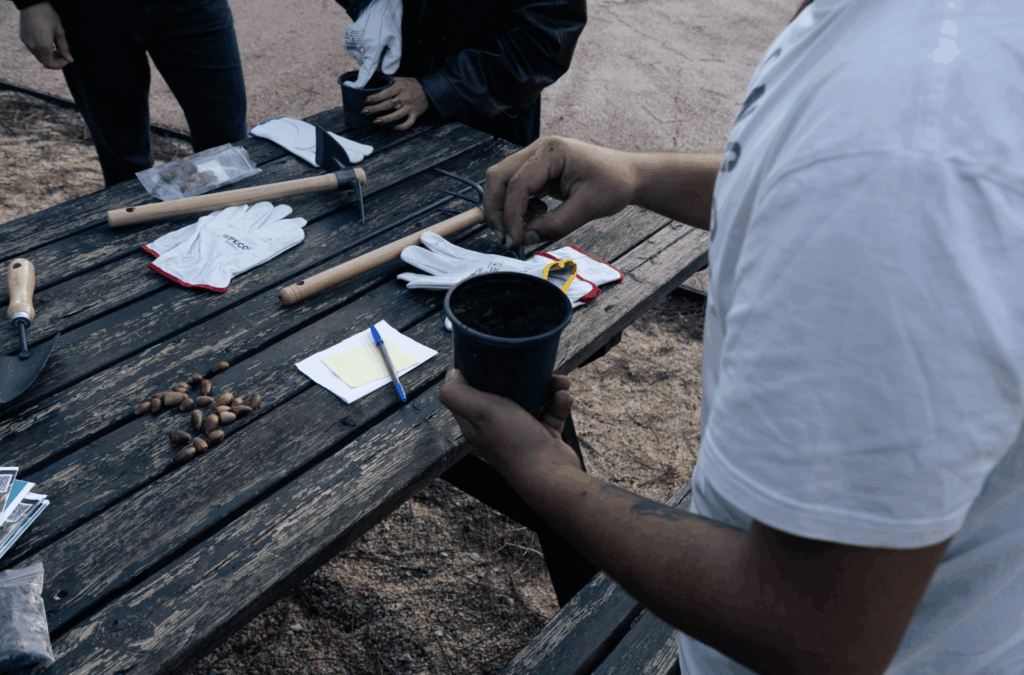
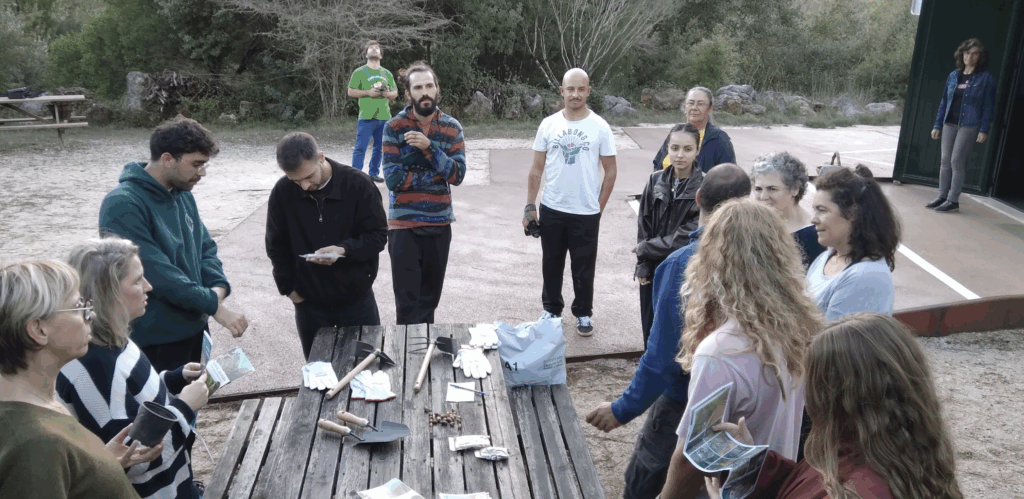
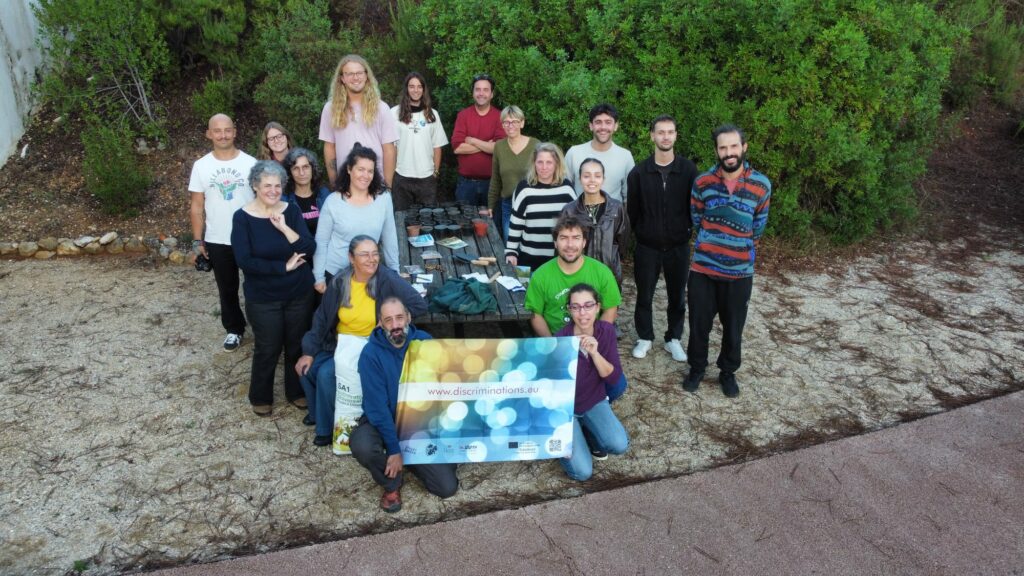
The team: Filipa Coelho, Gonçalo Reis, Jordão Martins, Rebeca Martins, Francisco Amado and Kevin Flores, Pedro Oliveira, Neusa Madeira, Talha Erdoğan, Sercan Kan, Marion Leost, Nathalie Louvel, Joël Martins, Antonin Alloggio thank you to the entire team at the Ourèm Museum: Ana Carvalho (museum director), Luisa Marques, Maria Helena Antunes, Maria Manuela Lourenço, Deolinda Silva, Hélder Farinha, Fernanda Santos and Sónia Santos, for their warm welcome.
Intercultural encounter at the Fátima community centre (Casa do povo)
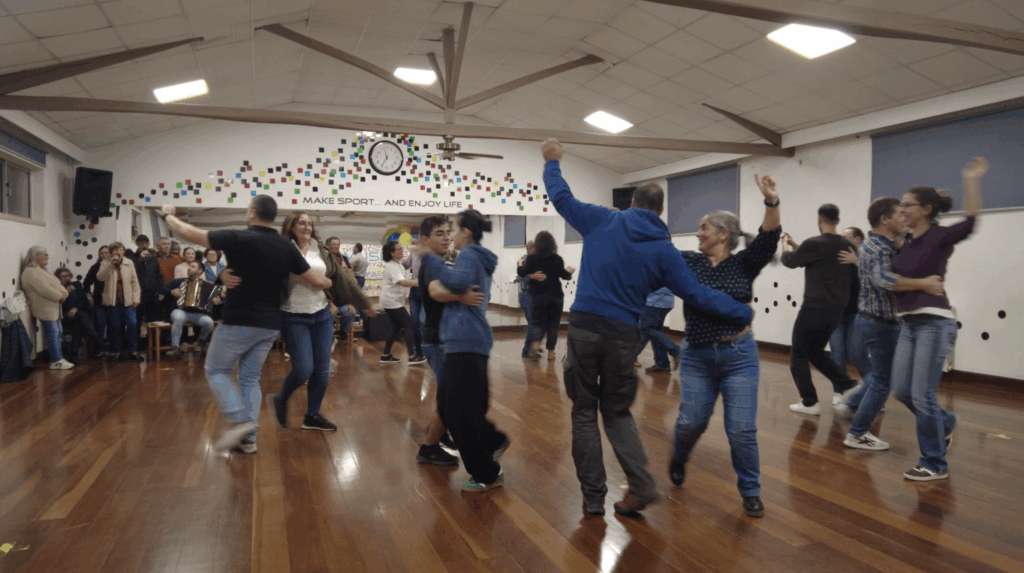
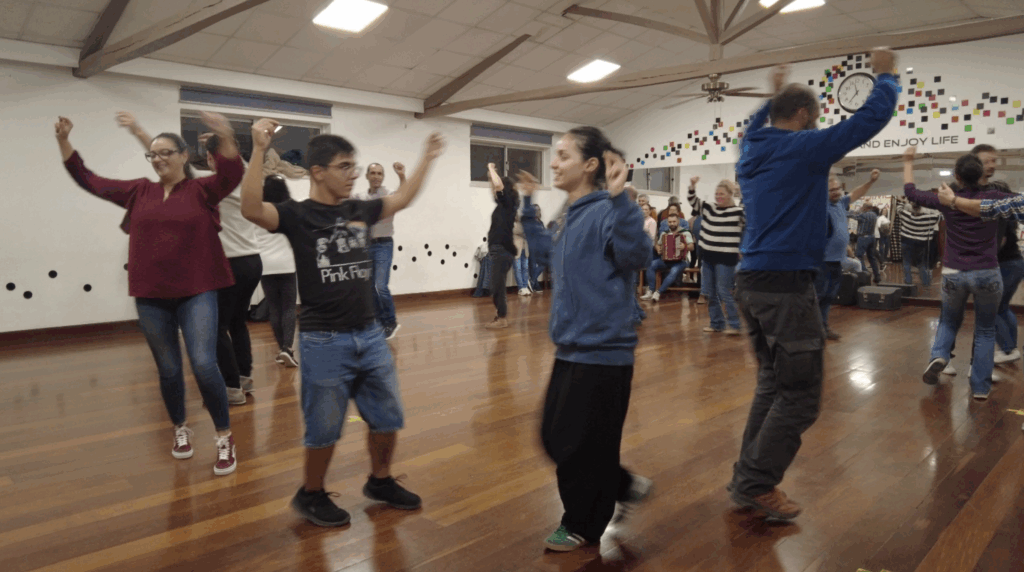
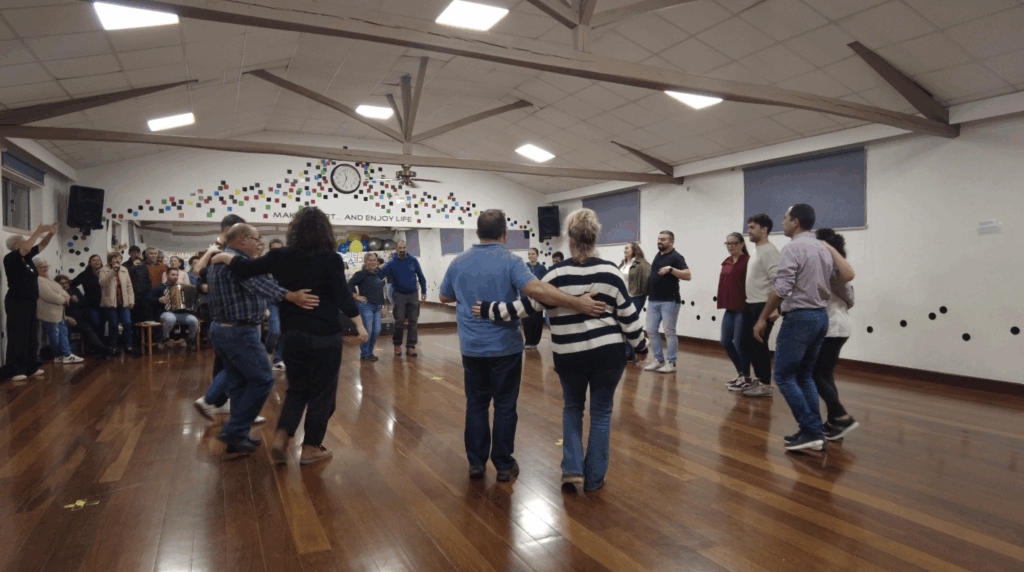
After a day of filming and meetings, the Fátima community centre welcomed us into its premises. There, the group discovered the region’s folk dances, as well as traditional instruments and songs. It was also at the community centre that we gathered at the end of each day to review the day’s events and refine the programme for the following day.
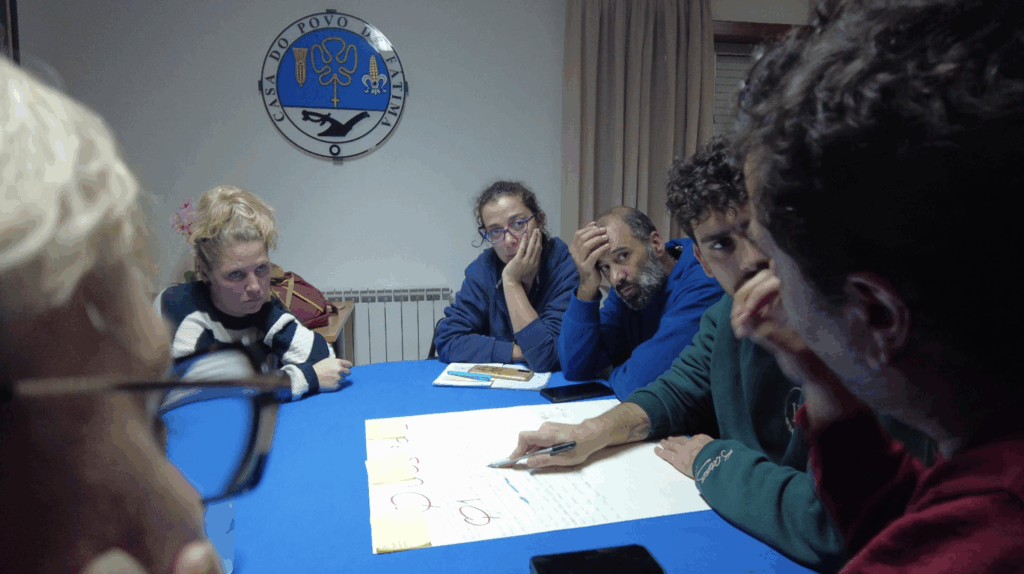
Interviews

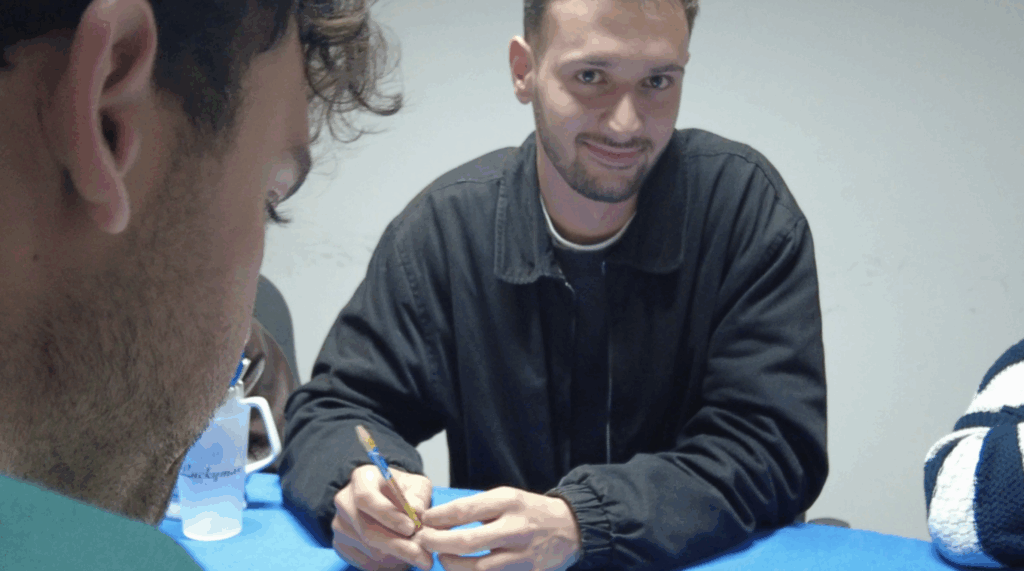
Together with all our partners, we decided to film three interviews with three different profiles of people working on the issue of discrimination identified by Salamandra Activa. The questions prepared by youth workers and young people were addressed to: Sandra Pinheiro – Graduate in Sociology, Languages and International Relations from the Faculty of Arts and Humanities of the University of Porto (FLUP). Rui Filipe Monteiro Soares – member of the Roma community and master’s student in sociology at FLUP (Faculty of Arts and Humanities of the University of Porto) and finally António Castanheira – Municipal Councillor.
To conduct the filmed interviews, we were welcomed at the Municipal Museum of Ourém.
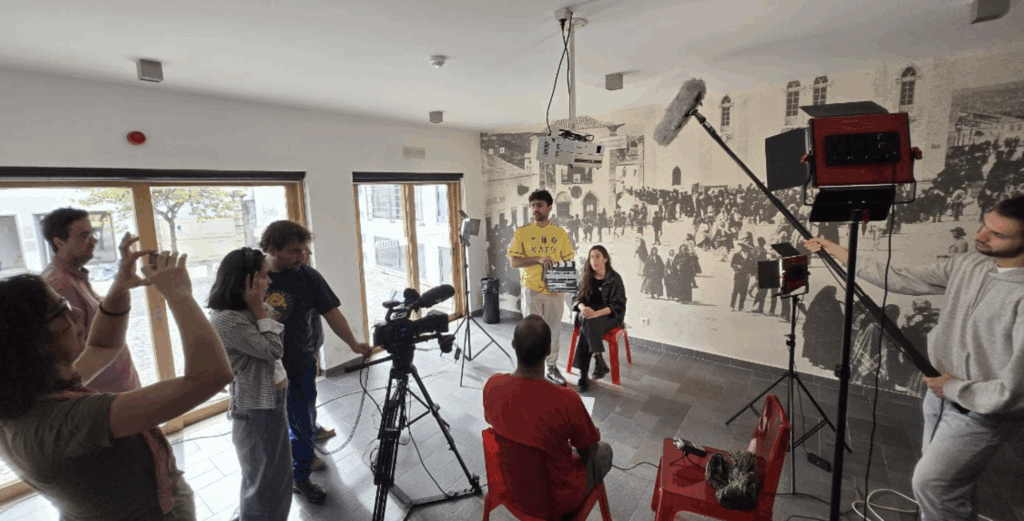
Sandra Pinheiro is currently a fellow of the ROMA project at the University of Porto: ‘Conhecer, Mapear, Incluir: População Rom/Cigana em Portugal (Knowing, Mapping, Including: The Rom/Gypsy Population in Portugal). She also participates in creative and production projects in theatre and the performing arts.
Rui Filipe Monteiro Soares is a member of the Roma community and a master’s student in sociology at FLUP (Faculty of Arts and Humanities, University of Porto). He talks to us about his background and the stereotypes/stigmas surrounding the Roma population.
António Castanheira is the Councillor responsible for the Municipal Plan for Equality and Non-Discrimination, as well as being the head of the Social Action Division of the municipality of Ourém. In this interview, he talks about the actions being taken to combat discrimination and reduce inequalities. In this interview, he discusses RADAR SOCIAL, a series of measures introduced by the municipality’s teams.
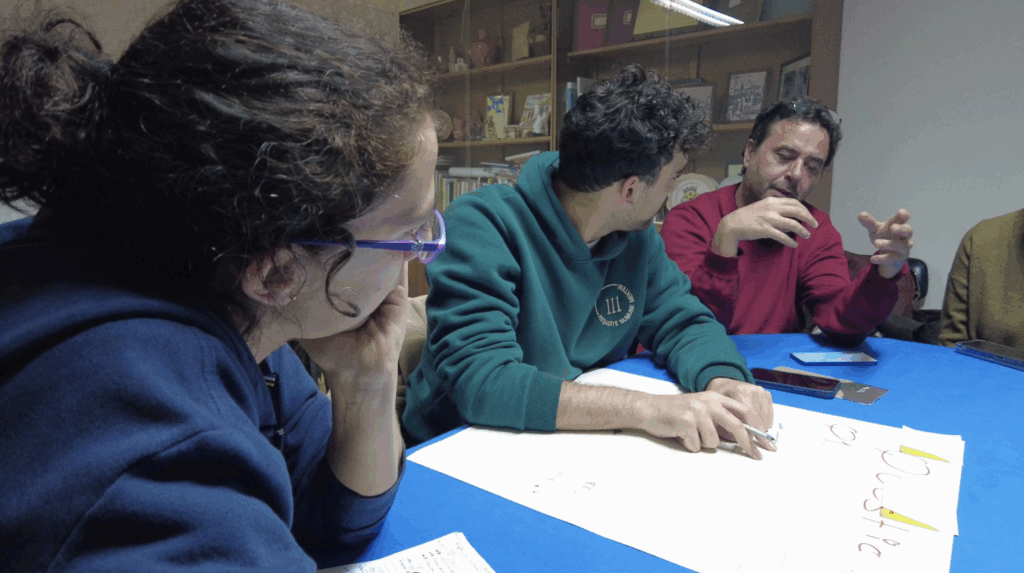
The questionnaires were developed by young people and youth workers to initiate filmed discussions with various witnesses.
Sandra Pinheiro
Can you introduce yourself? Can you tell us about your background and explain why you chose to work in the field of sociology? More specifically, what motivated you to work with and on the Roma community? What kind of research are you doing on our theme of ‘discrimination’? What has been the most rewarding moment in your work? Are Roma people victims of discrimination and, if so, what kind? Why do you think this is? Roma people are often referred to as ‘gypsies’. What is the difference between “Roma” and ‘gypsy’? We would like to know if the word “Gypsy” is a pejorative term. Are Roma represented politically and how do politicians act? What measures have been taken in Portugal regarding discrimination against Roma and other forms of discrimination? How does discrimination affect people psychologically? And socially? What challenges did you face when working with groups that are victims of discrimination? How can we prevent discrimination? Have you ever been a victim of discrimination yourself, and how did it offend you? Why and how did you found Feminist Collective Letters? Can you explain what it is?
Rui Filipe Monteiro Soares
Could you introduce yourself? Could you tell us about your background and explain why you chose to specialise in sociology? What type of research are you currently working on, and what is your approach? As a member of the Roma community, you will be aware that different names are given to the Roma in different countries: ciganos in Portugal, gitans in France and gypsies in others. What do you think about this? Is the word ‘gypsy’ a pejorative term? What is the worst discrimination you have experienced? How did you react? How is life at university? Do you think that, as a member of the Roma community, you are more sensitive to discrimination? As members of a discriminated group, do you think that members of the Roma community discriminate against other groups? Could you explain this and give some examples? Are there any NGOs working with the Roma community? What kind of work do they do? Based on your experience as a student, how can we prevent discrimination?
António Castanheira
Could you introduce yourself? Could you tell us about your background and how you became a councillor? How does this work in Portugal? Our group is working on the issue of discrimination. Could you describe the situation in Ourem? What difficulties are encountered in this area? What is the council doing to remedy the situation? Are there any measures or support mechanisms in place? And what is the overall situation in Portugal? And in Europe?
Presentation of the SOCIAL RADAR system
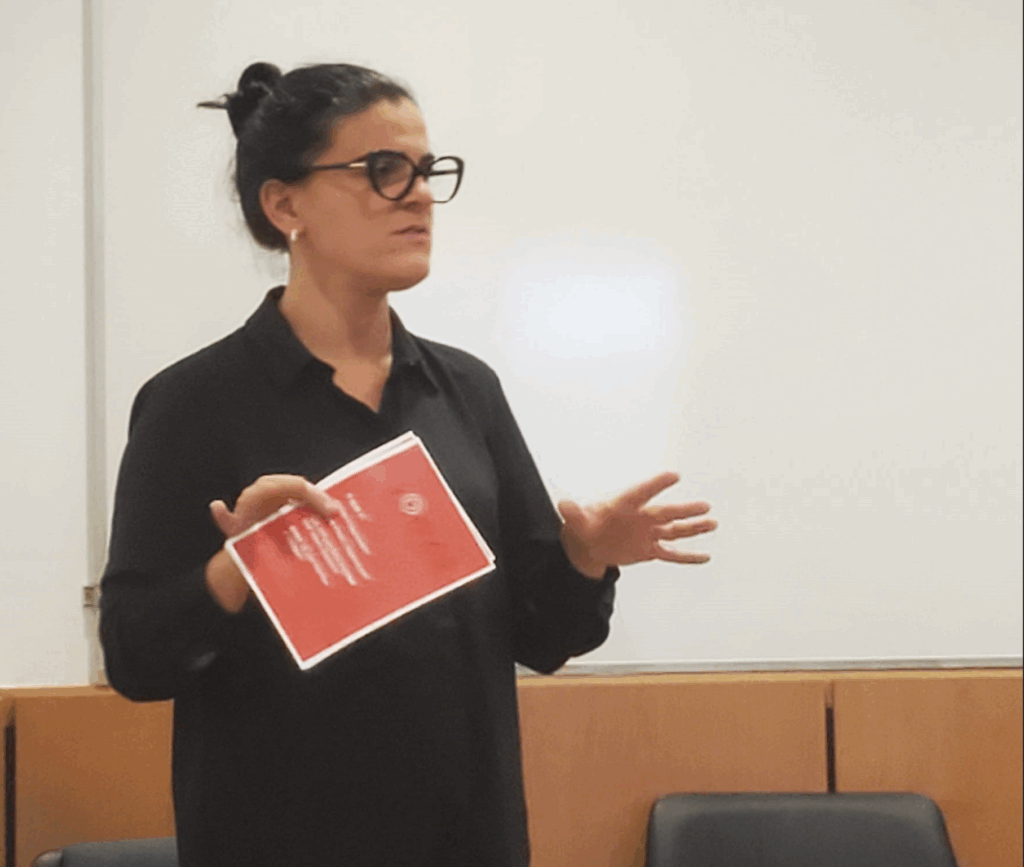
The group attended a presentation on the RADAR SOCIAL scheme set up in the municipalities around the towns of Ourèm and Fátima, presented the day before by António Castanheira and led by Sara Cordeiro. This scheme consists of promoting among the population the need for citizens and neighbours to be attentive to the difficulties that certain residents living far from urban centres may encounter; one scheme among many others.
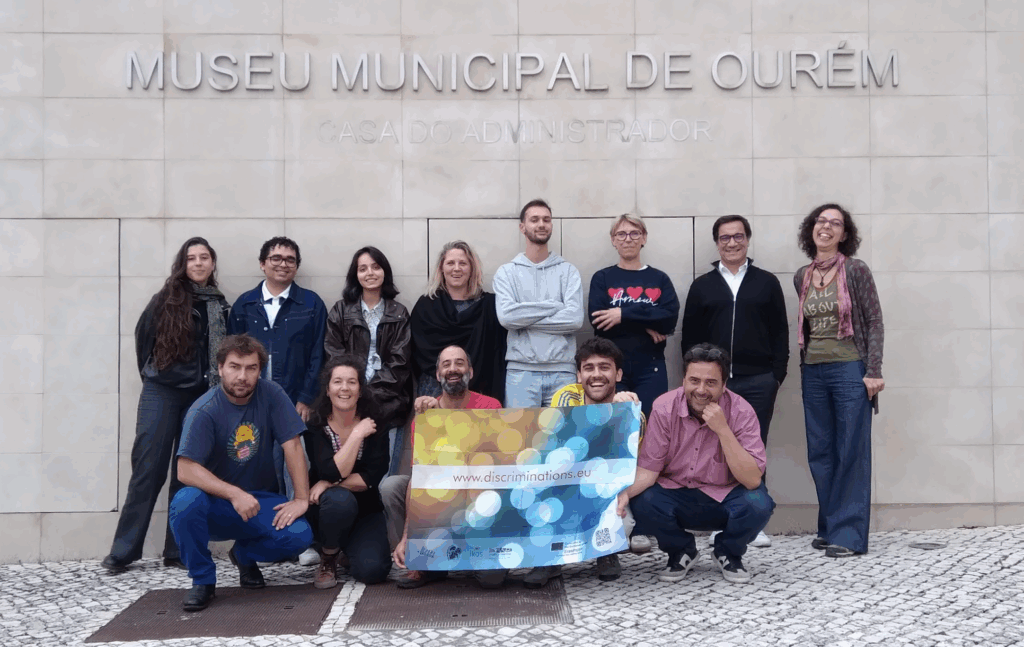
The next stage of the project involves holding dissemination/multiplier events in each country, followed by a final review between partners in France at the end of January.
FINAL MEETING – PROJECT REVIEW
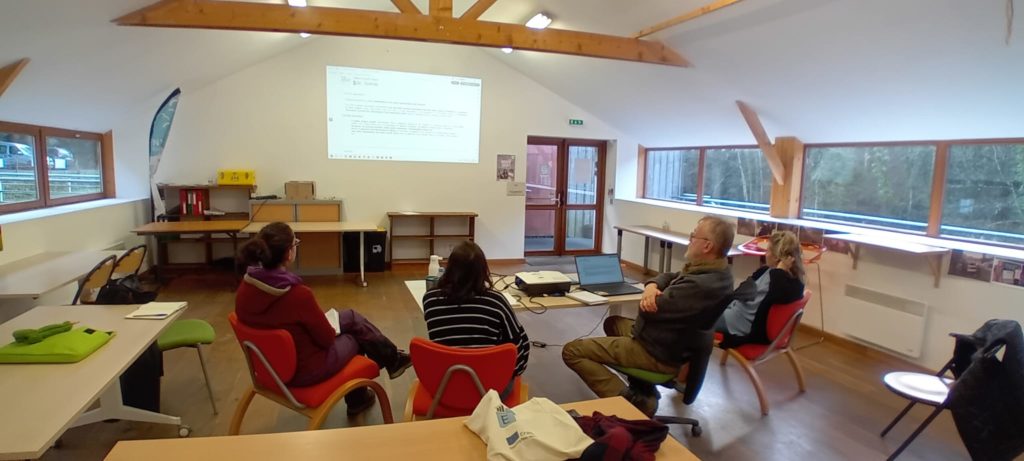
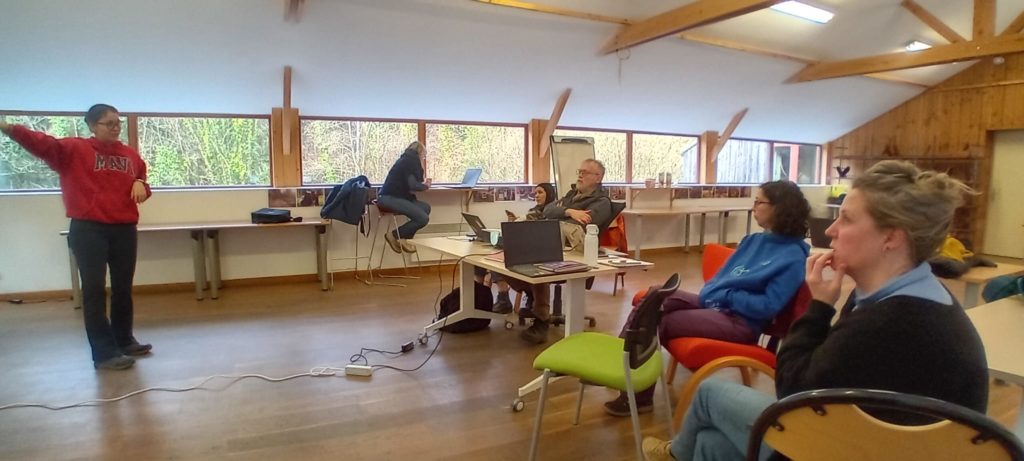
The objectives of this final meeting for the partners were to:
- Take stock of the actions carried out in 2025 during and outside of the workshops, which helped to raise awareness among youth workers and young participants about the issue of discrimination.
- Take stock of all the resources used (budgetary and human) and the results achieved.
- Prepare for the multiplier event at the MIR (Maison Internationale de Rennes) on 29/01/2025.
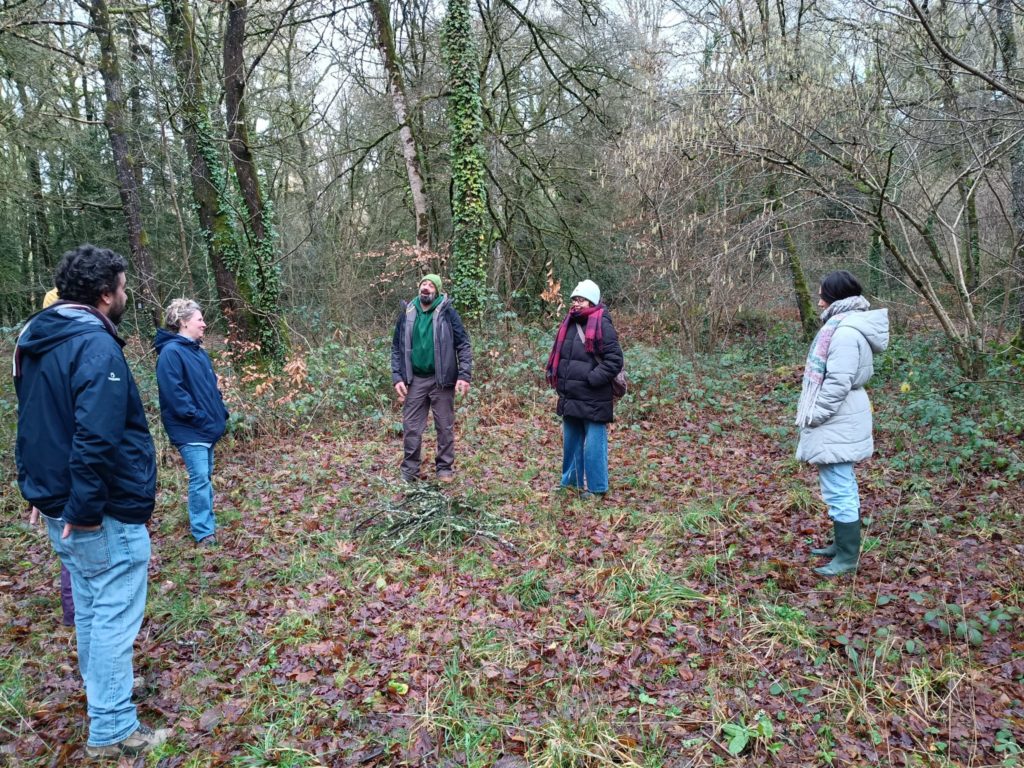
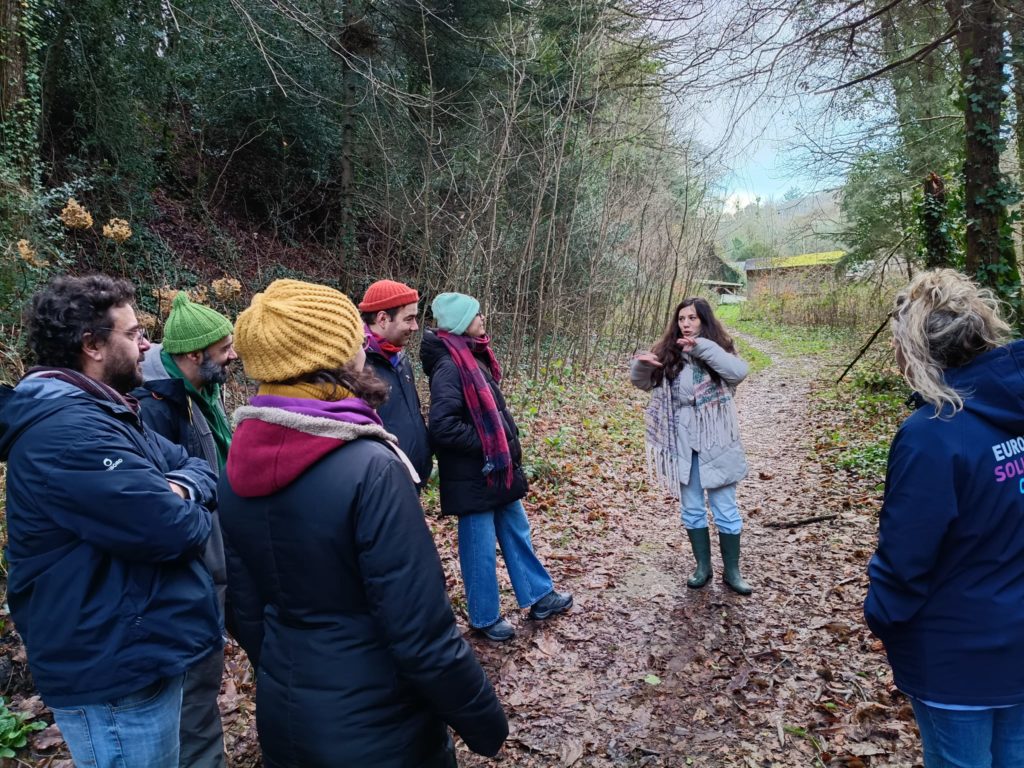
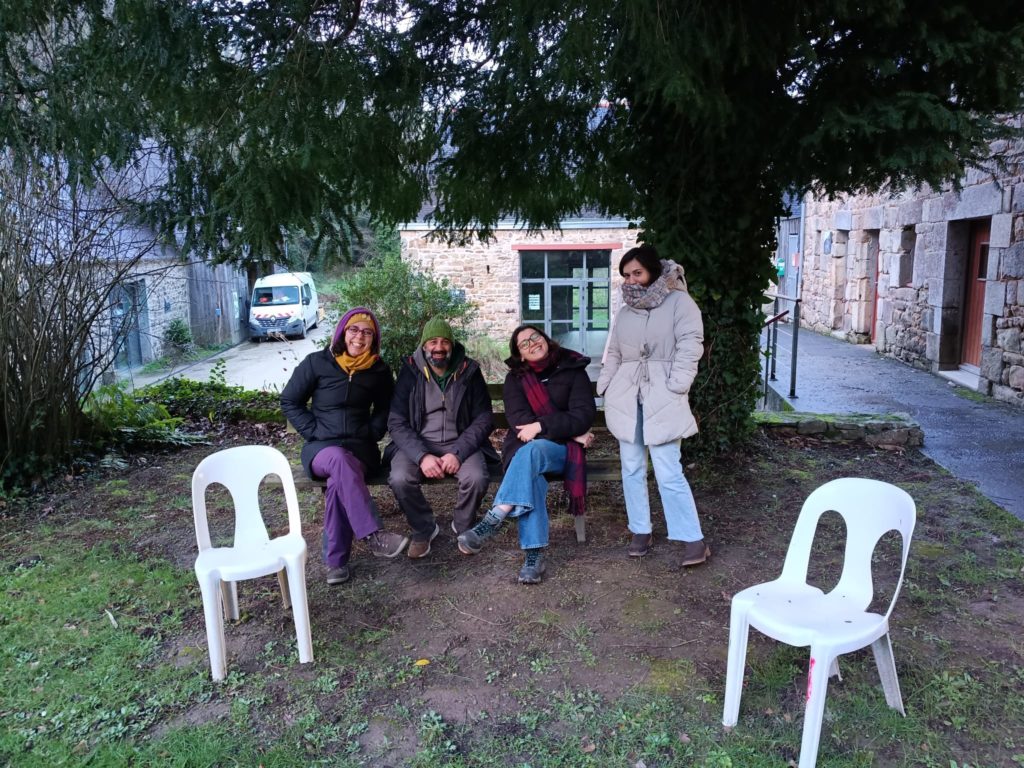
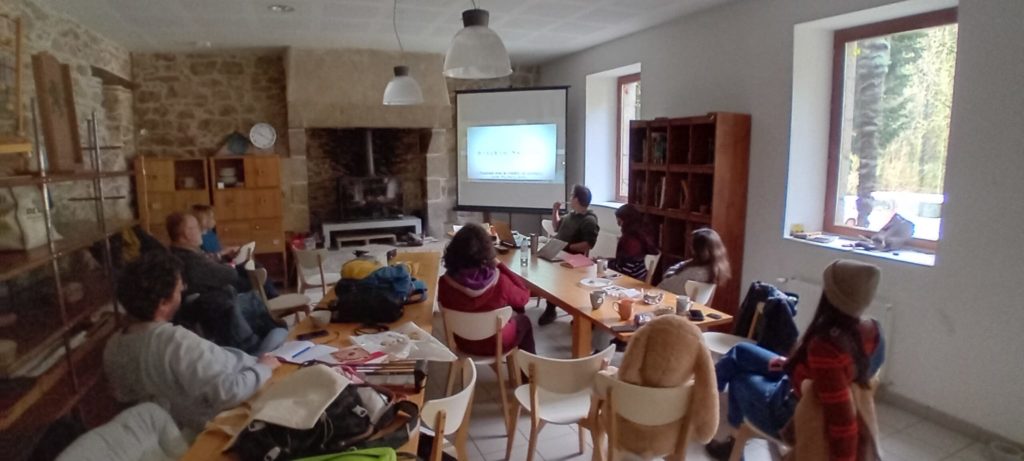
These sessions were conducted informally in the natural setting of Le Palacret (a branch of Études et Chantiers), initially in an introspective manner and then through sharing and discussion.
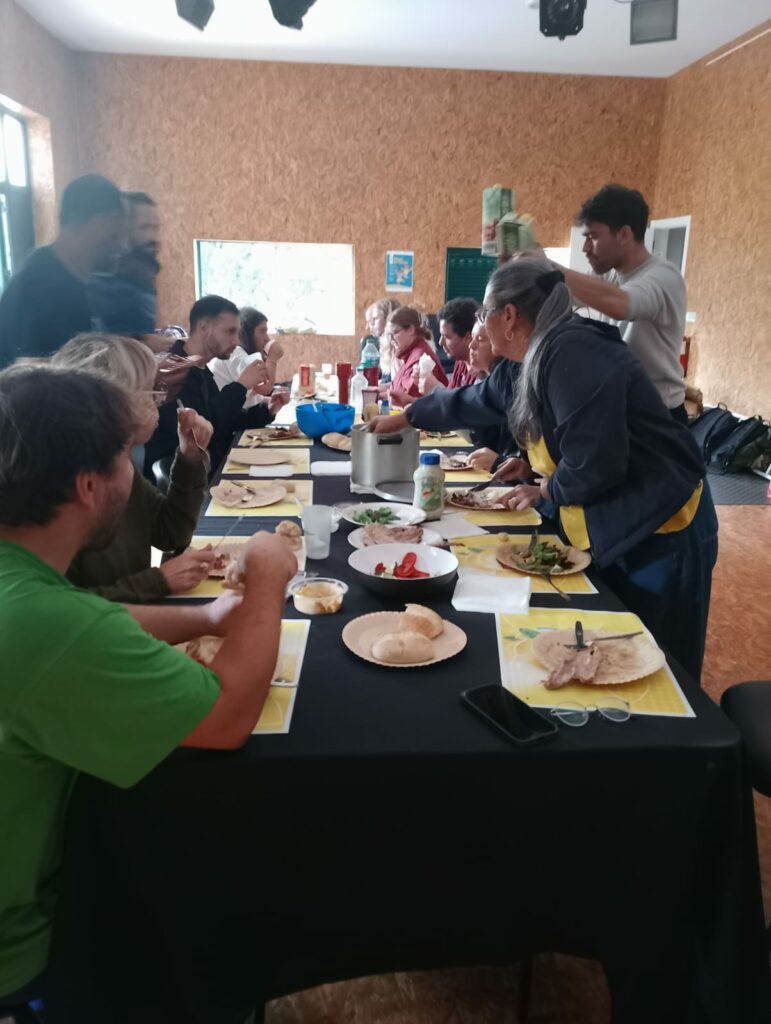
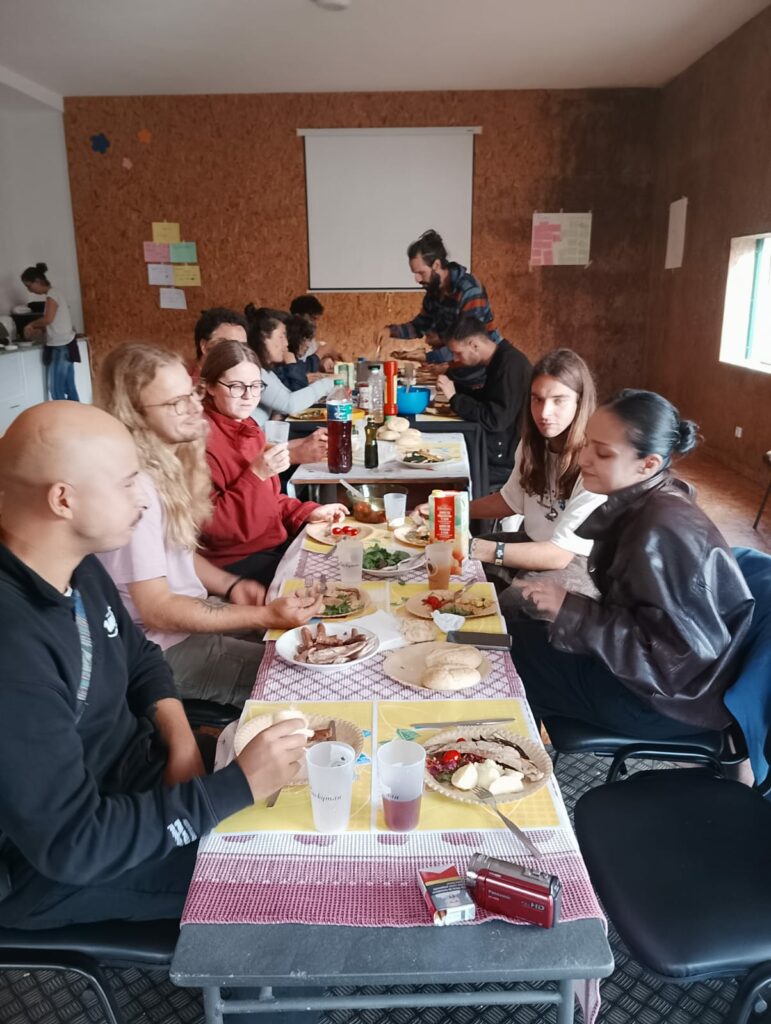
In order to preserve the environment and because the venue allowed us to do so, we cooked our meals together. This group organisation led to numerous intercultural exchanges.
Finally, we also began to enter the report on the Erasmus+ platform.
“MULTIPLIER EVENT” IN RENNES
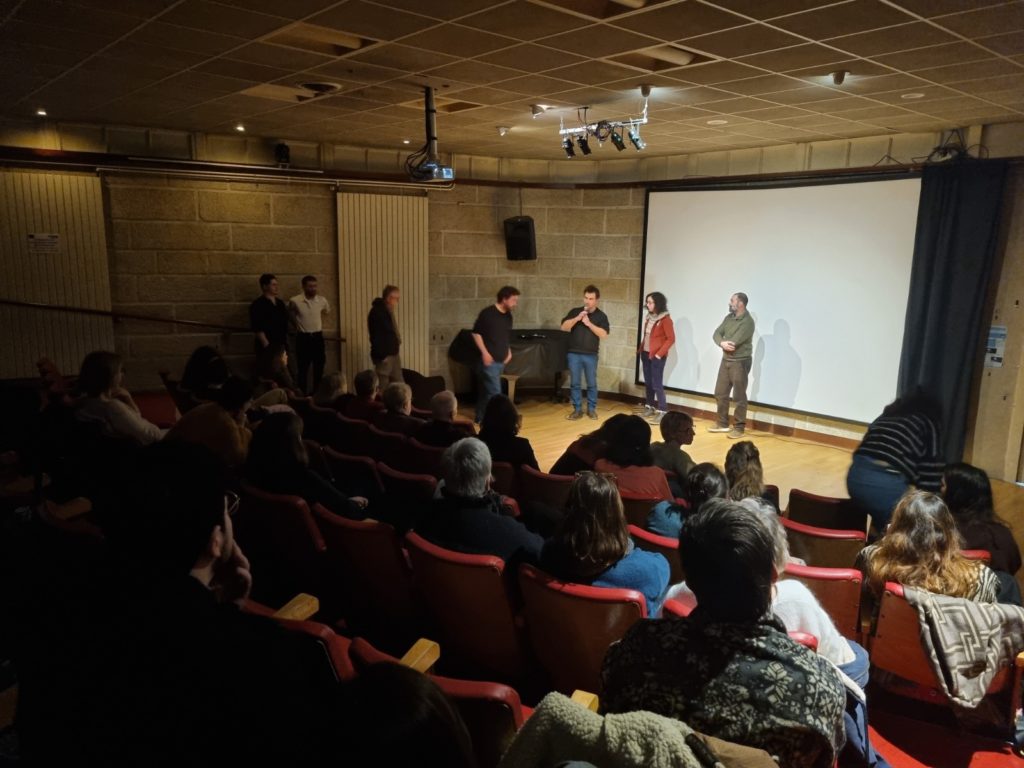
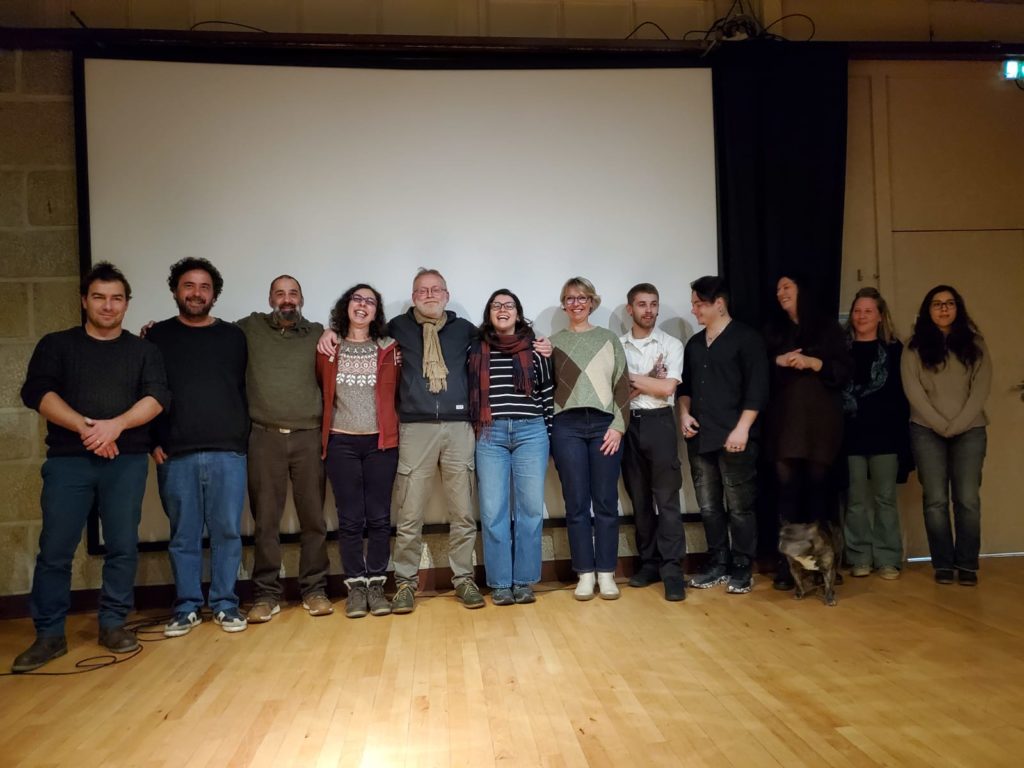
We decided to organise a presentation of the European component of the project www.discriminations.eu in Rennes at the Maison Internationale de Rennes in order to reach a wide audience. We scheduled this event on the last day of the final meeting so that all the partners would be represented (IKOS, Salamandra Activa, POINT BARRE, Etudes & Chantiers). We planned this dissemination event in three stages: a screening of a film about the making of the project, formal discussions between the audience and the project participants, and informal discussions over a drink.
… end…